
On 8 July 2025, the Council of the European Union formally approved Bulgaria's accession to the eurozone on 1 January 2026. Bulgaria will thus become the 21st country to adopt the common currency.
On 30 June 2021, the Българска народна банка (Bulgarian National Bank, BNB) and the Ministry of Finance submitted a draft national plan for the introduction of the euro in the Republic of Bulgaria. Bulgaria's commitment to adopting the single European currency was affirmed in the Treaty of Accession of the Republic of Bulgaria and Romania to the European Union.
In 2022, the Bulgarian parliament obliged the government to accelerate its preparations, fearing that the planned deadline might not be met.
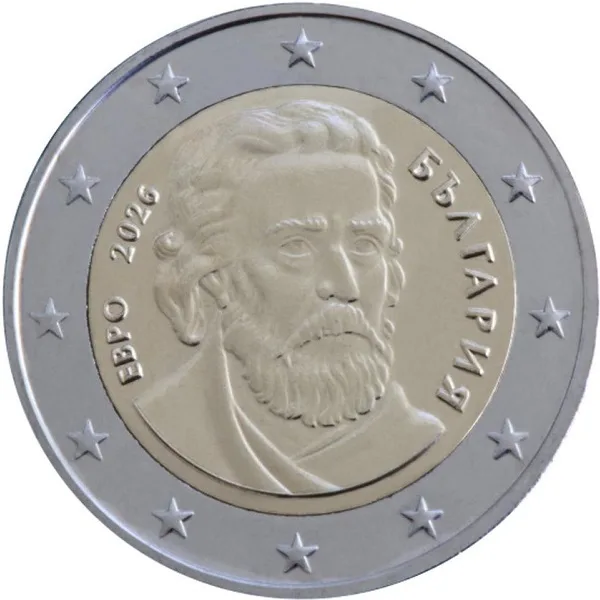
On 16 November 2023, the central bank unveiled the designs for the national sides (obverse) of Bulgarian euro cent and euro coins, including the introductory year "2025".
On 1 February 2024, the Council of the European Union approved the designs for Bulgarian euro cent and euro coins.
On 14 May 2024, the Governor of the Bulgarian National Bank announced that euro introduction on 1 January 2025 might not take place. Due to political disputes, the legislative process had not yet been completed. Should the process not conclude by the end of 2024, the euro would likely be introduced the following year. Bulgaria had also failed to meet the inflation criteria, leading to the date being pushed back to 1 January 2026.
On 9 April 2025, the central bank unveiled a revised design for the euro cent and euro coins, updating the year from "2025" to "2026".
On 4 June 2025, the European Central Bank (ECB) published a report positively assessing the potential euro introduction in Bulgaria on 1 January 2026.
The currency conversion will be based on the fixed exchange rate of 1 EUR = 1.95583 BGN. Bank accounts will be converted automatically from 1 January 2026 onwards. In the first month after euro introduction, the lev and the euro will both be accepted as legal tender. For the first six months following euro introduction, banks and the Bulgarian Post will offer free exchange of banknotes and coins. From six months to one year after euro introduction, banks will be required to continue exchanging banknotes and coins and may charge a fee. After that date, commercial banks will exchange currency at their own discretion. Exchange at central bank branches will be free of charge and available indefinitely.
Source: ECB, notafilia; Image credit: © Българска народна банка (Bulgarian National Bank), Монетен двор (Bulgarian Mint)