
2-euro coins of Germany
Country information
Germany is the most populous country in the EU and also Europe's largest economy. Its geographical extent has undergone many changes over the centuries. The country's rich cultural heritage includes poets and thinkers such as Luther, Goethe, Schiller, Nietzsche and Kant. Composers including Bach, Beethoven, Brahms and Wagner further enriched classical music across Europe. Together with France, Germany has been one of the driving forces behind European integration.
Mintmarks & mints
| A | Berlin – mintmark of the Staatliche Münze Berlin (20% share of mintage). |
|---|---|
| D | Munich – mintmark of the Bayerisches Hauptmünzamt (21% share of mintage). |
| F | Stuttgart – mintmark of the Staatliche Münze Baden-Württemberg Stuttgart (24% share of mintage). |
| G | Karlsruhe – mintmark of the Staatliche Münze Baden-Württemberg Karlsruhe (14% share of mintage). |
| J | Hamburg – mintmark of the Landesbetrieb Hamburger Münze (21% share of mintage). |
| HH | Heinz Hoyer – initials of the artist, found on the 2-euro commemorative coins of 2006 and 2007. |
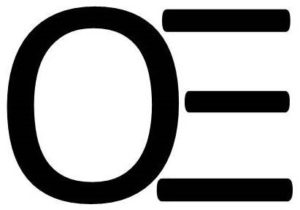 | Erich Ott – initials of the coin designer on the 2-euro commemorative coin of 2008. |
| FB | Friedrich Brenner – initials of the designer, found on the 2-euro commemorative coin 2009. |
| D | Country identifier, used on 2-euro commemorative coins from 2010 onwards. |
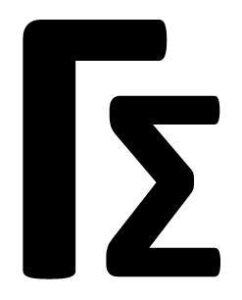 | Georgios Stamatopoulos – initials of the coin designer for the joint 2-euro commemorative coin 2009. |
| Ch | Frantisek Chochola. |
 | Jordi Truxa. |
| BW | Bernd Wendhut. |
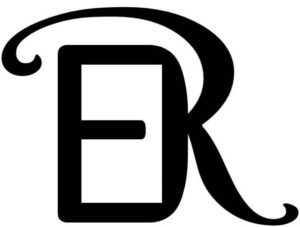 | Eugen Ruhl. |
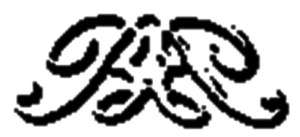 | Bodo Broschat. |
| BW | Bernd Wendhut. |
 | Michael Otto. |
| OS | Olaf Stoy. |
| TW | Tobias Winnen. |
 | Carsten Wolff. |
| TS | Thomas Serres. |
| MD | Marianne Dietz. |
 | Ulrich Böhme. |
Further information
Germany began minting its euro coins on 7 August 1998 at the Bayerisches Hauptmünzamt. A panel of government representatives and numismatists selected three different designs for the national sides of the German euro coins. The 1-euro and 2-euro coins bear the traditional symbol of German sovereignty — the eagle — surrounded by European stars. The motif was designed by Heinz Hoyer and Sneschana Russewa-Hoyer. Edge lettering on the 2-euro coin: EINIGKEIT UND RECHT UND FREIHEIT, along with the federal eagle.
News from Germany
- Germany 2027 €2 Commemorative Coin 'Hans-Dietrich Genscher': Design Revealed 7 October 2026
- Official: Germany Unveils Design for 2027 €2 Commemorative Coin 'North Rhine-Westphalia' 22 July 2026
- Theme of Germany's Second 2-Euro Commemorative Coin 2027 "North Rhine-Westphalia – Aachen Cathedral" Announced 30 March 2026
- Struck Examples of Germany's Second 2-Euro Commemorative Coin 2026 "Klimahaus® Bremerhaven 8° East" Presented 29 January 2026
- Germany Issues Second 2-Euro Commemorative Coin 2026 "Klimahaus Bremerhaven" 29 January 2026
All issues
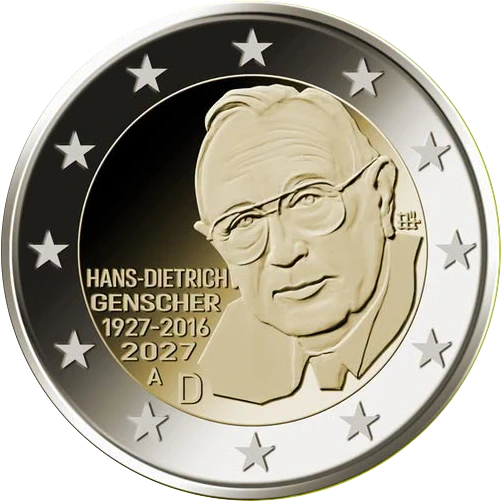
Hans-Dietrich Genscher
Commemorative coin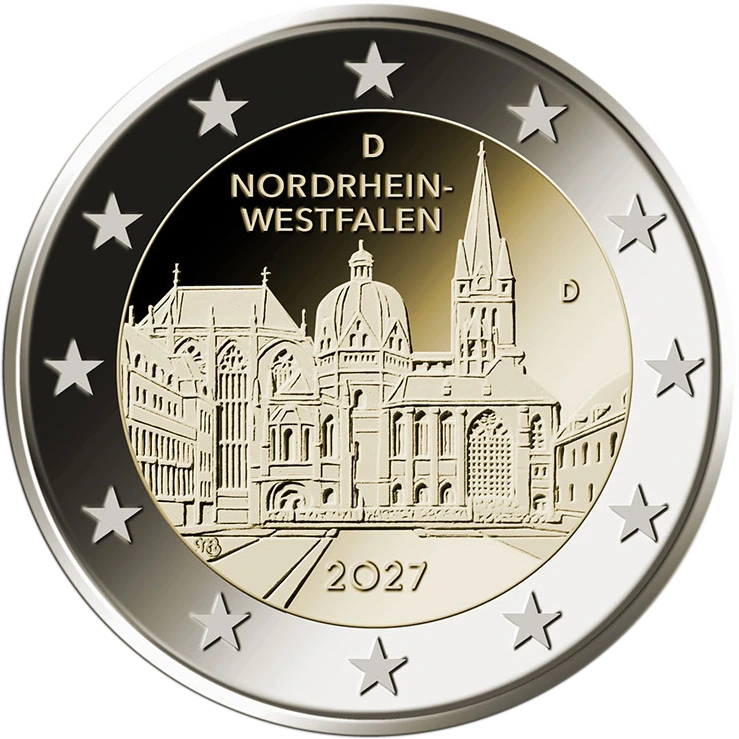
North Rhine-Westphalia
Commemorative coin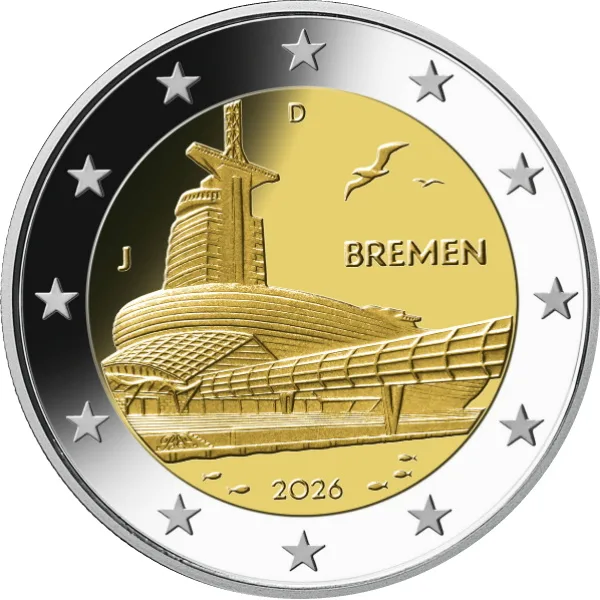
Bremen
Commemorative coin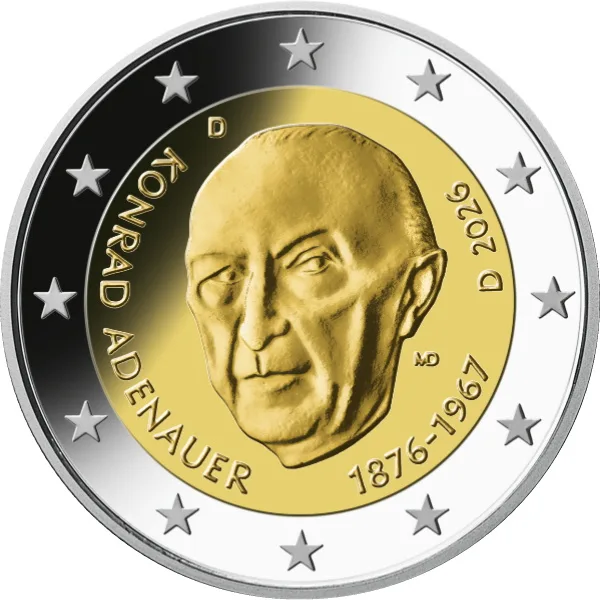
Konrad Adenauer
Commemorative coin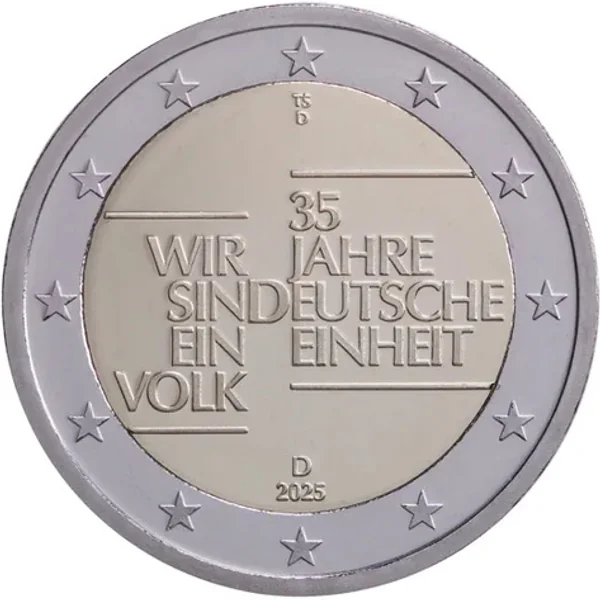
35 Years of German Unity
Commemorative coin
Saarland
Commemorative coin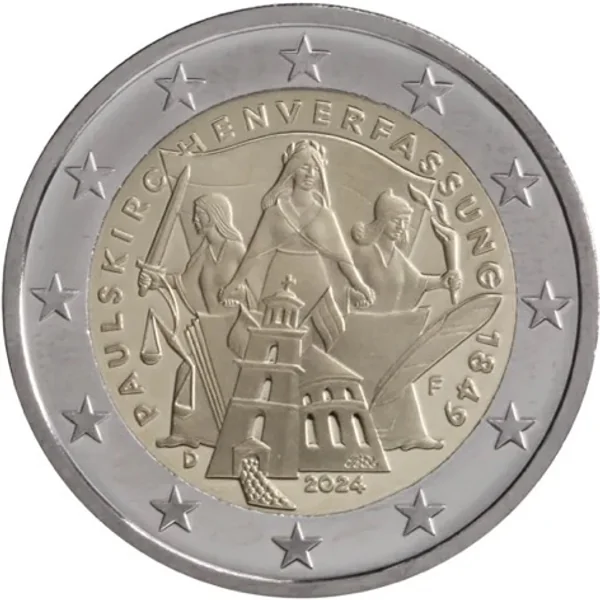
175th Anniversary of the Paulskirche Constitution
Commemorative coin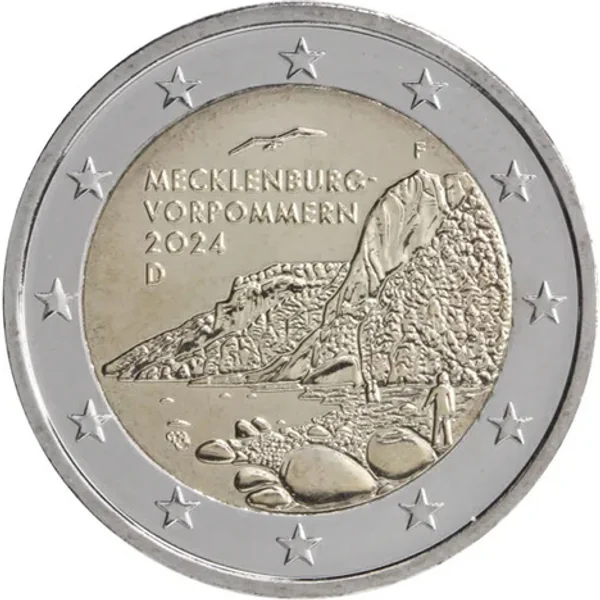
Mecklenburg-Vorpommern
Commemorative coin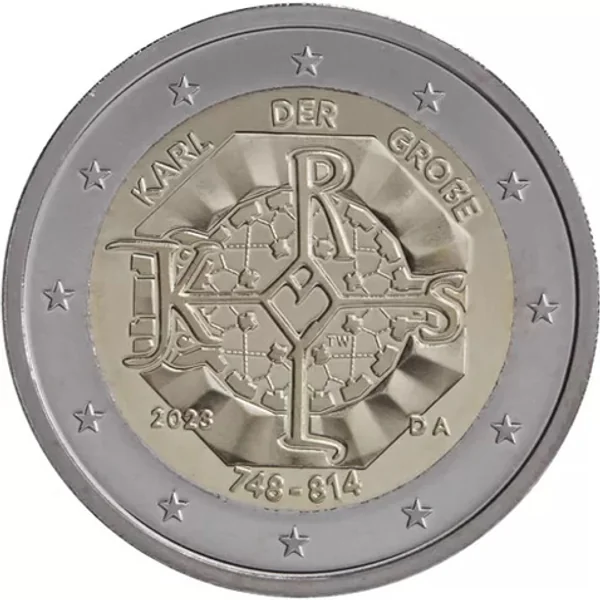
1,275th Birthday of Charlemagne
Commemorative coin
Hamburg
Commemorative coin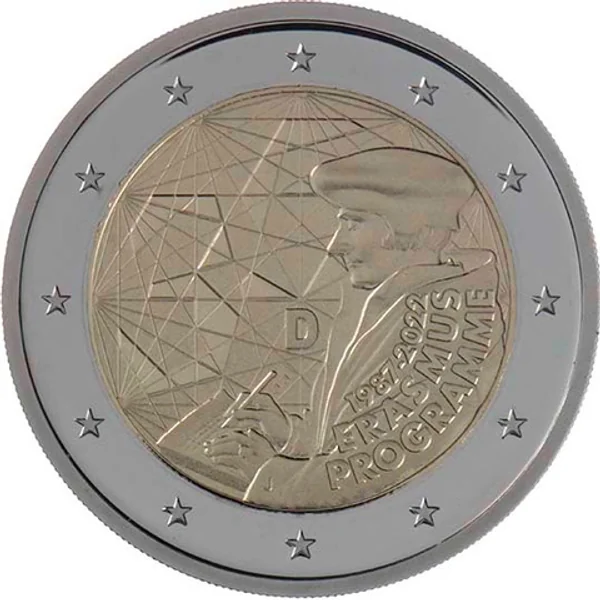
35 Years of the Erasmus Programme
Commemorative coin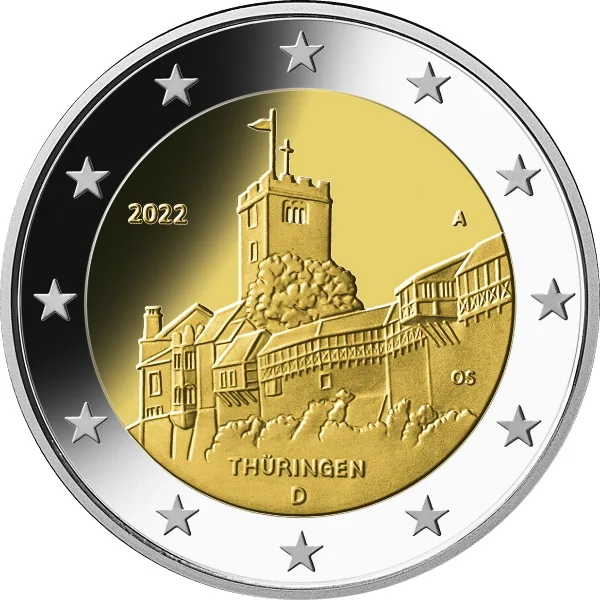
Thuringia
Commemorative coin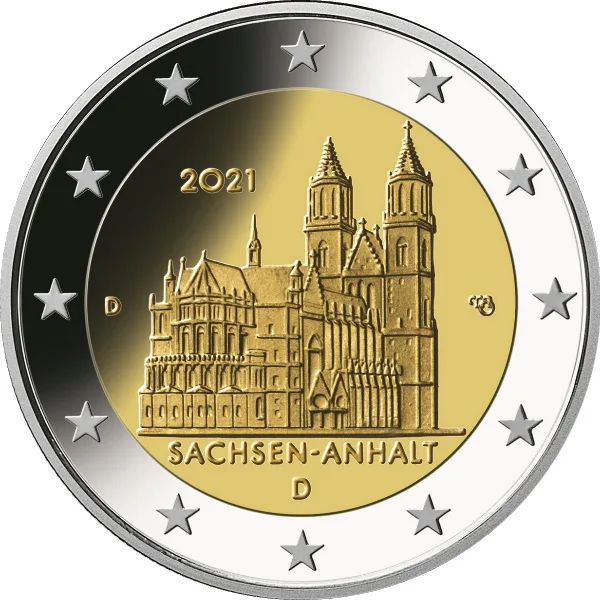
Saxony-Anhalt
Commemorative coin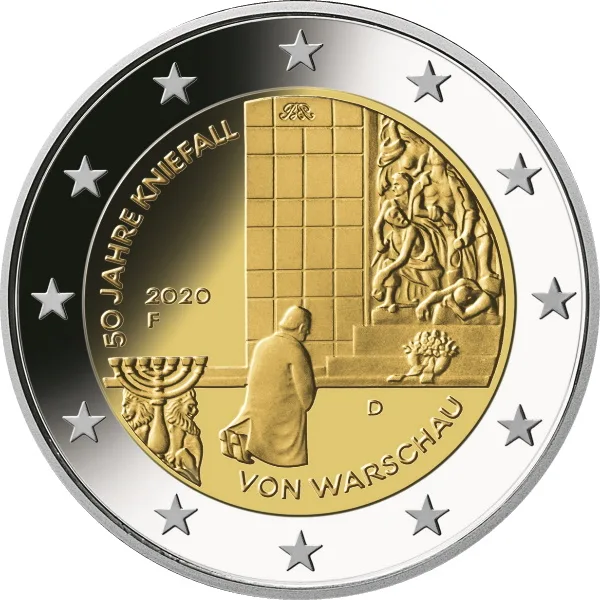
50 Years of the Warsaw Genuflection
Commemorative coin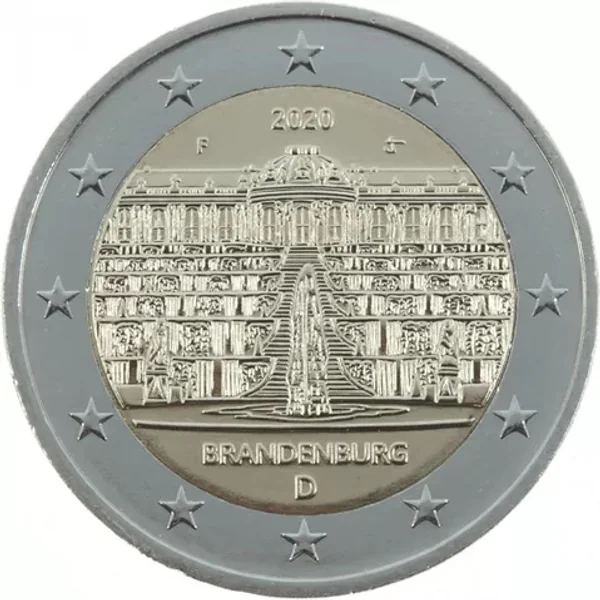
Brandenburg
Commemorative coin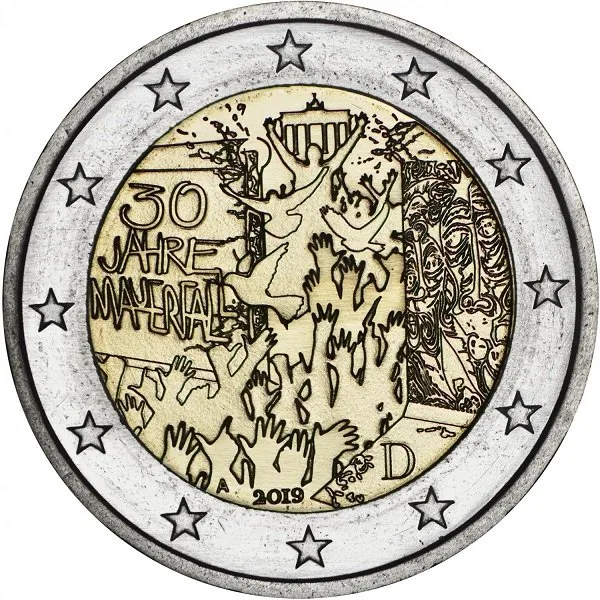
30 Years since the Fall of the Berlin Wall
Commemorative coin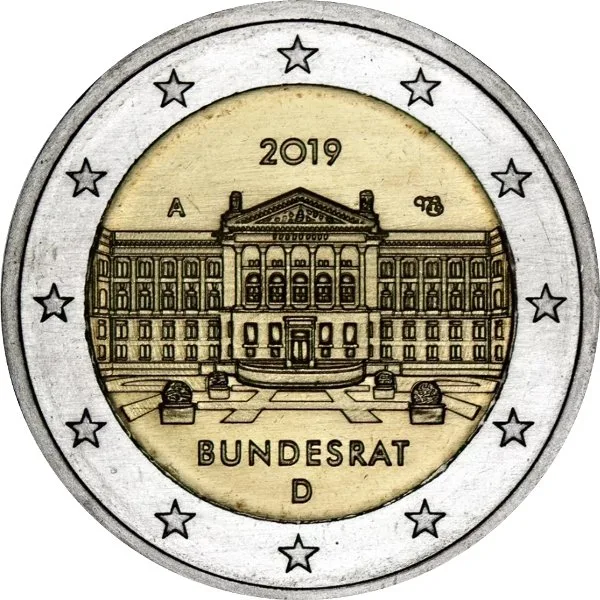
70 Years of the Bundesrat
Commemorative coin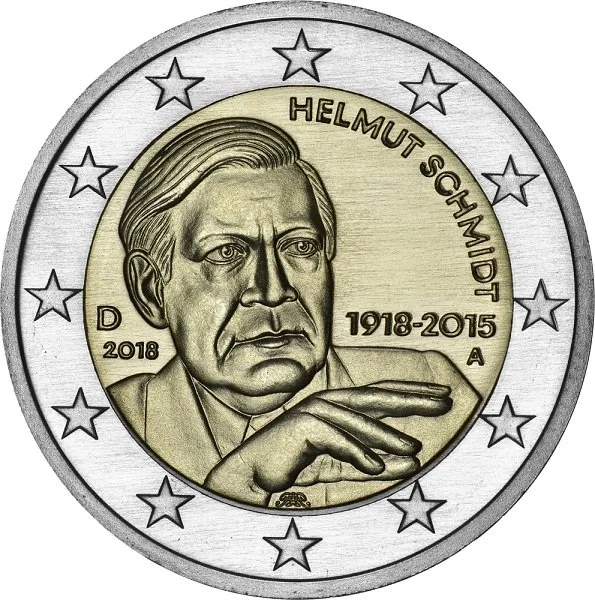
100th Birthday of Helmut Schmidt
Commemorative coin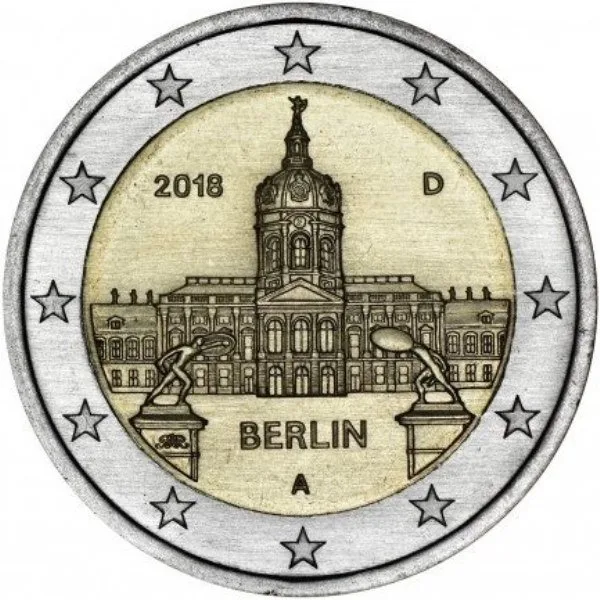
Berlin
Commemorative coin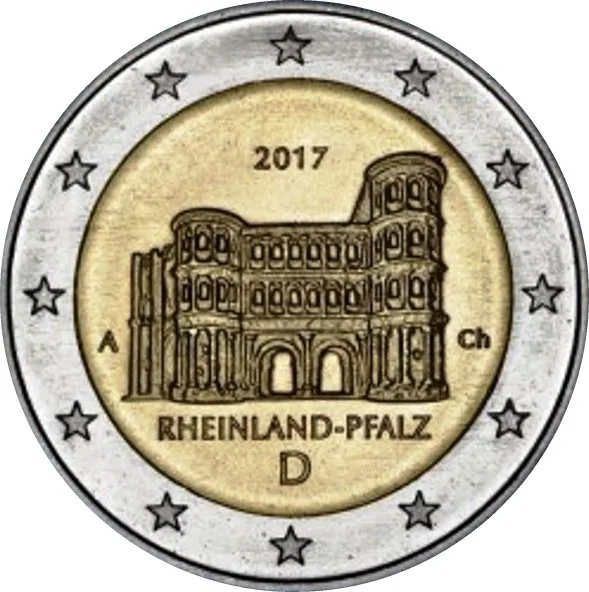
Rhineland-Palatinate
Commemorative coin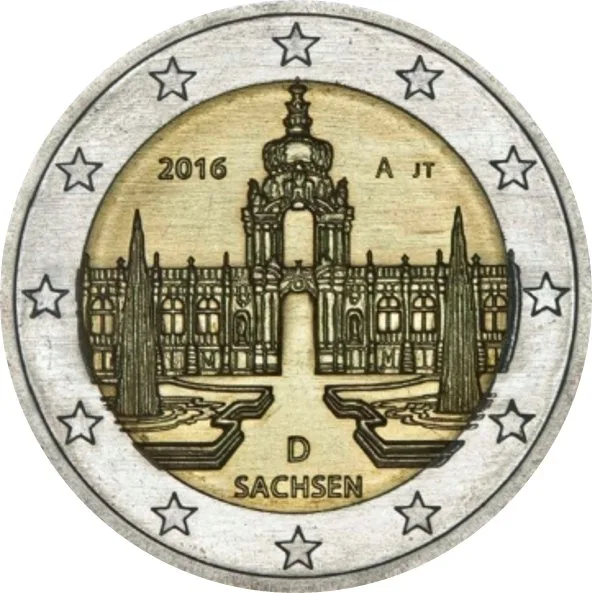
Saxony
Commemorative coin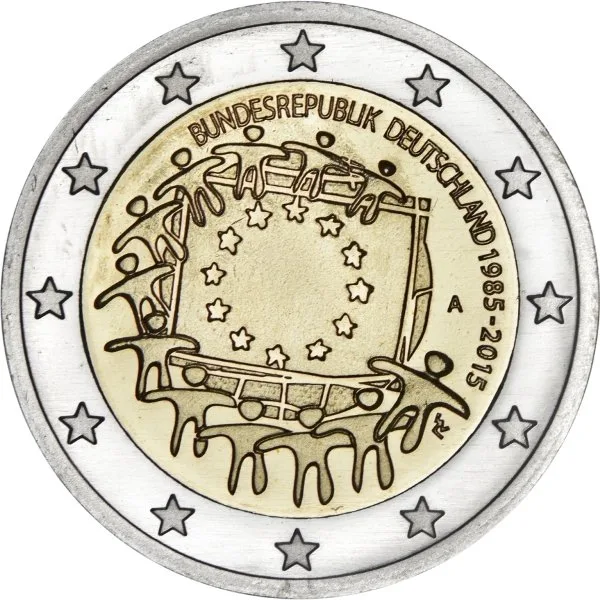
30 Years of the European Flag
Commemorative coin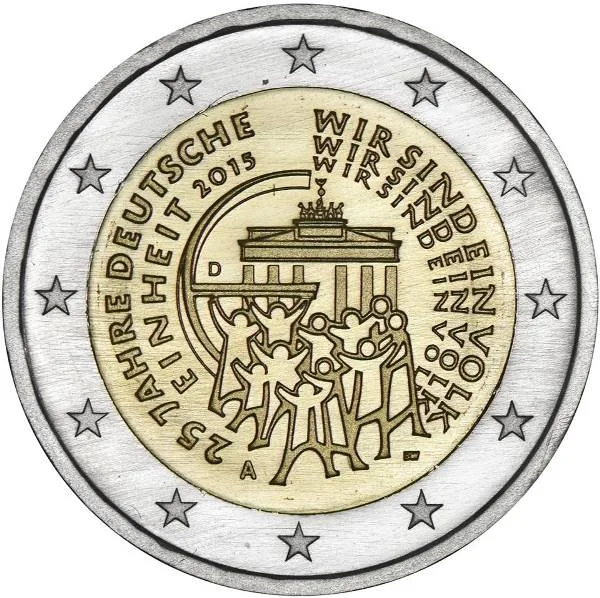
25 Years of German Unity
Commemorative coin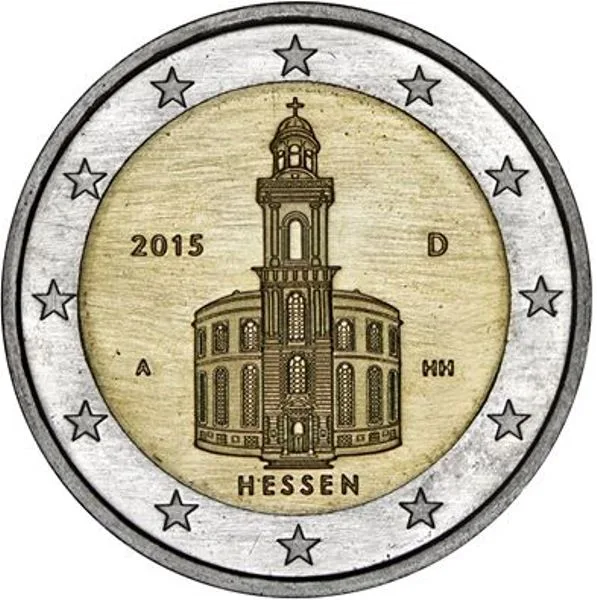
Hesse
Commemorative coin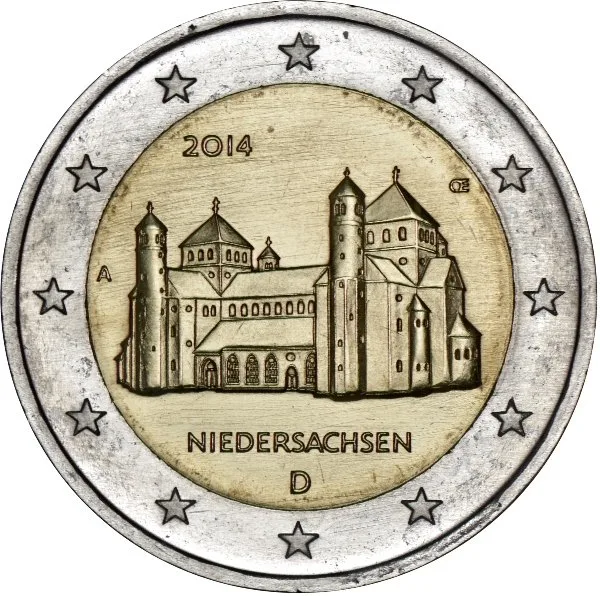
Lower Saxony
Commemorative coin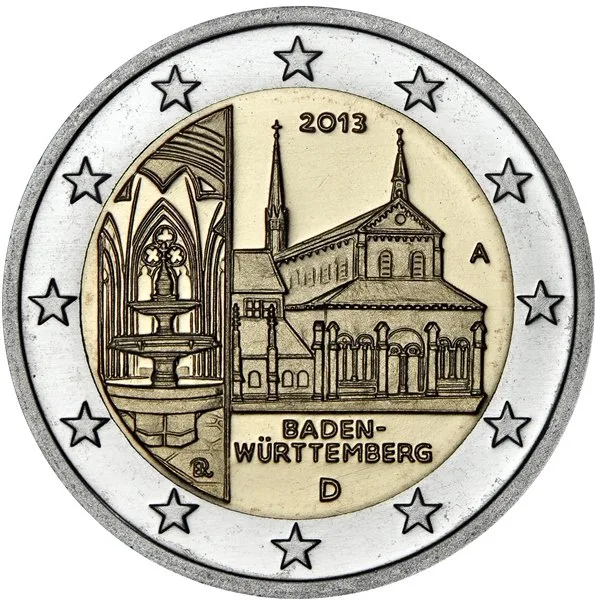
Baden-Württemberg
Commemorative coin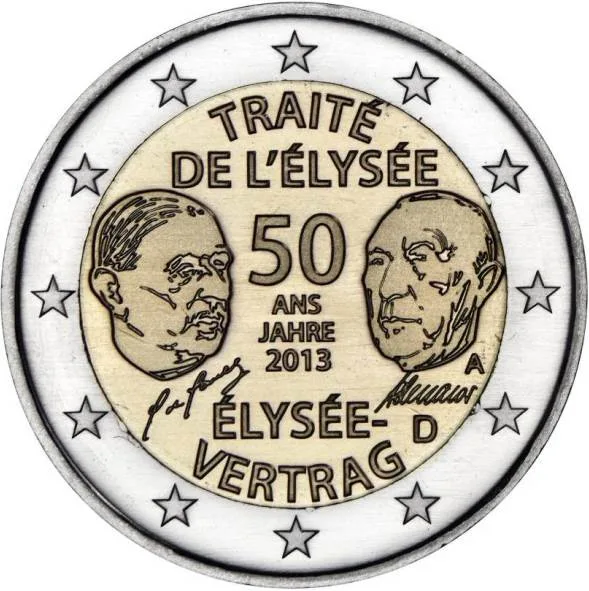
50 Years of the Élysée Treaty
Commemorative coin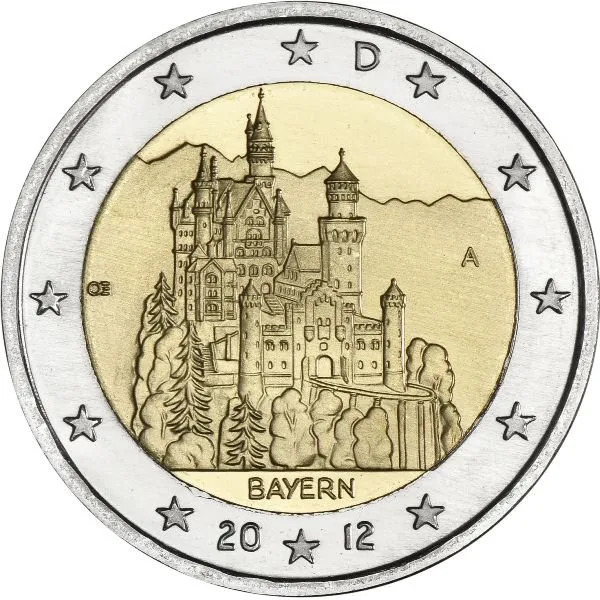
Bavaria
Commemorative coin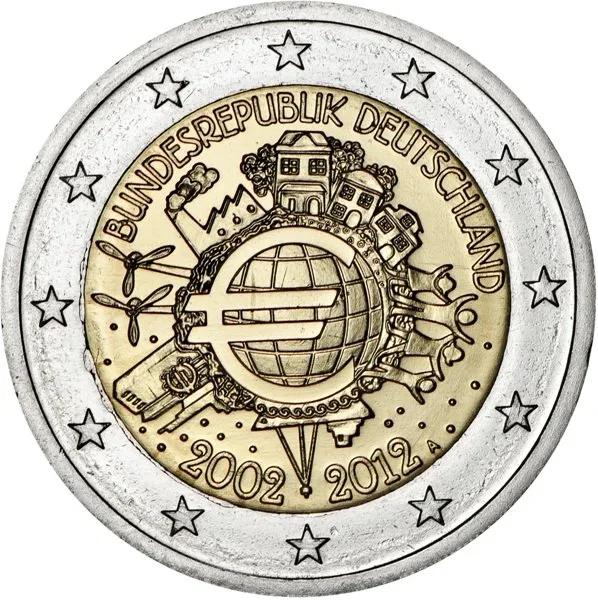
10 Years of Euro Banknotes and Coins
Commemorative coin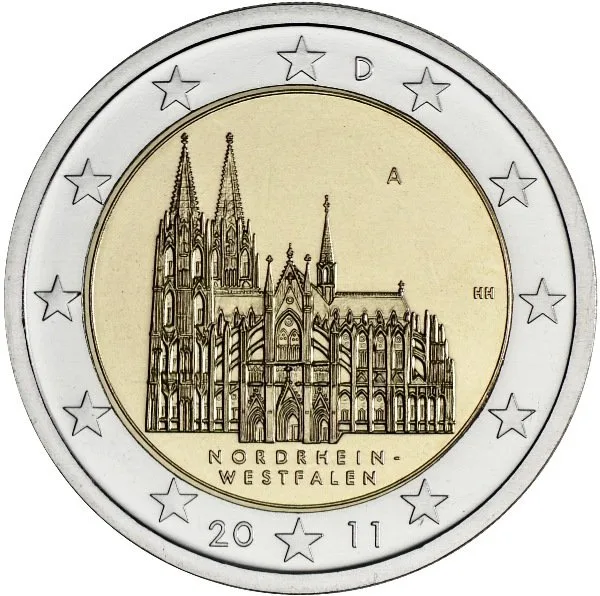
North Rhine-Westphalia
Commemorative coin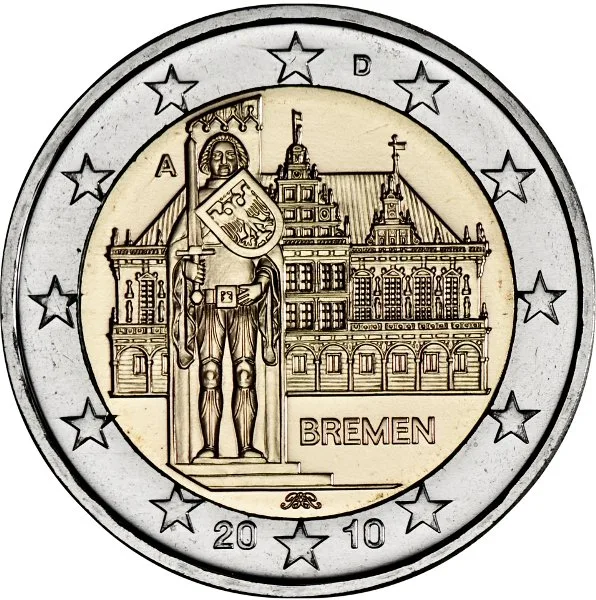
Bremen
Commemorative coin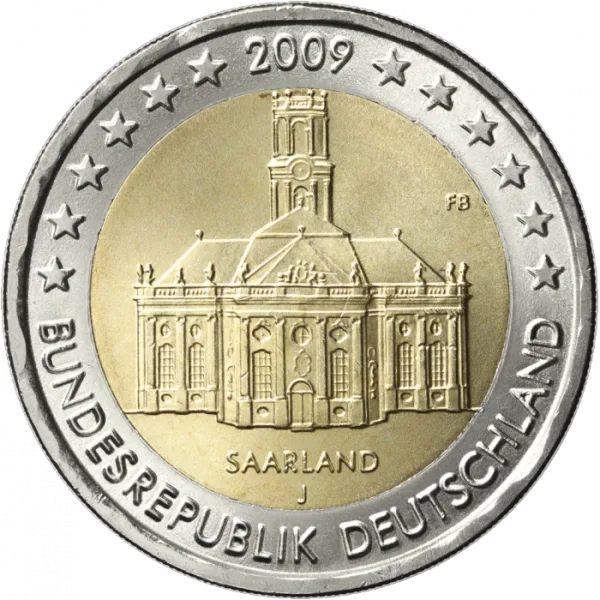
Saarland
Commemorative coin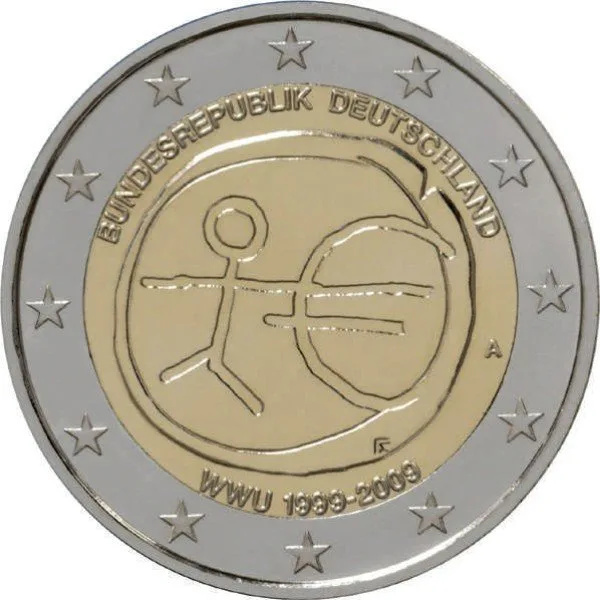
10 Years of Economic and Monetary Union
Commemorative coin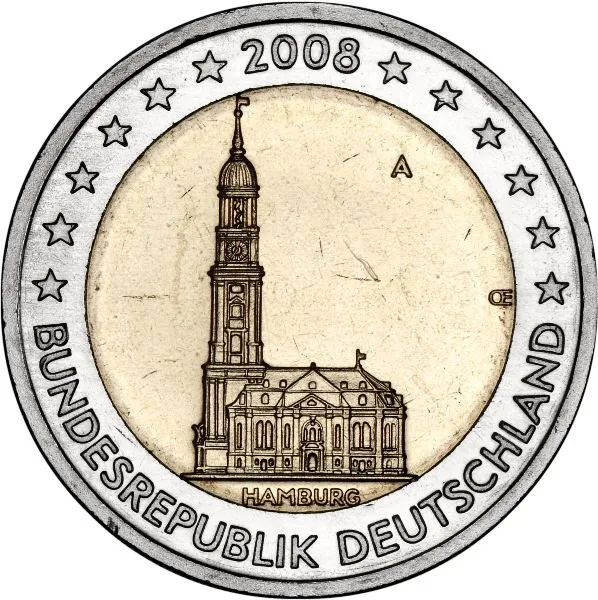
Hamburg
Commemorative coin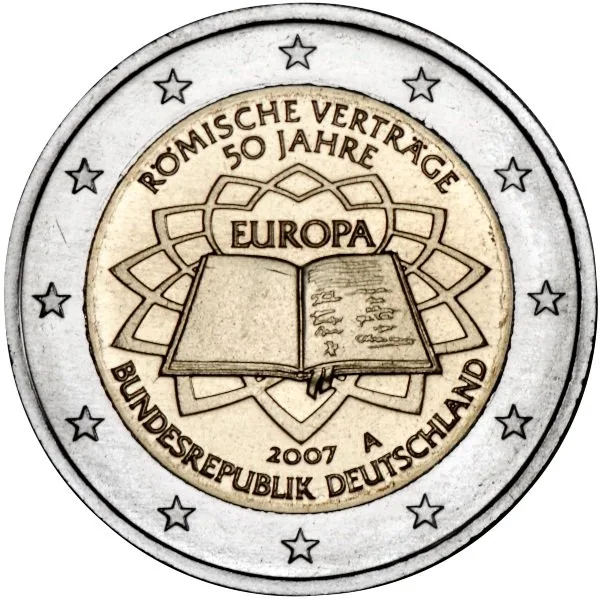
50 Years of the Treaty of Rome
Commemorative coin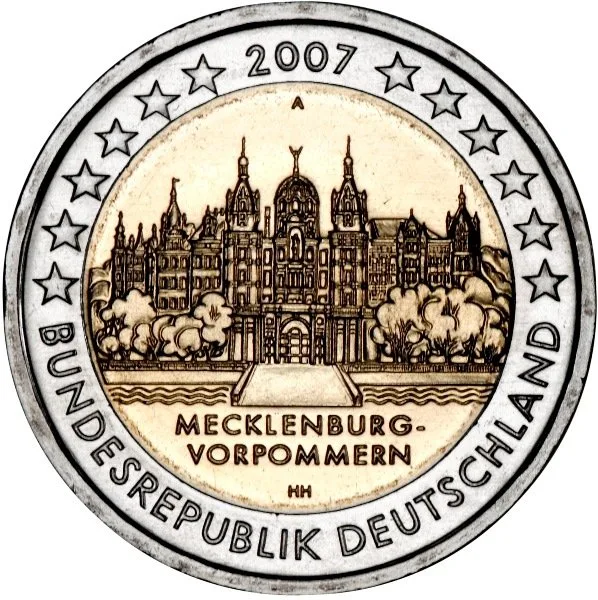
Mecklenburg-Vorpommern
Commemorative coin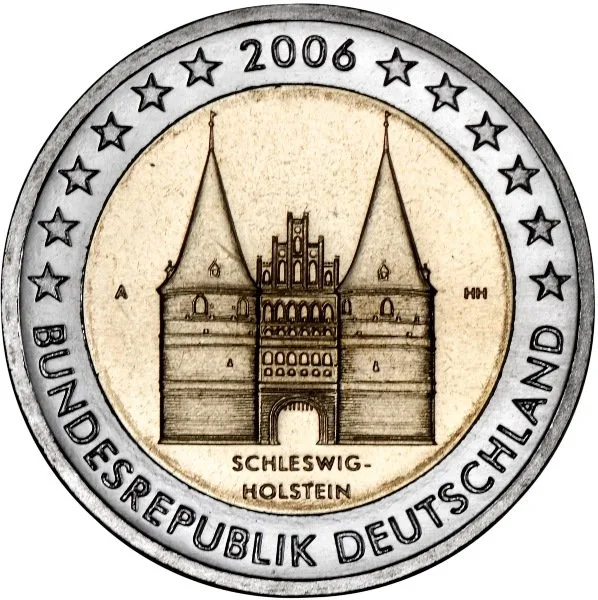
Schleswig-Holstein
Commemorative coin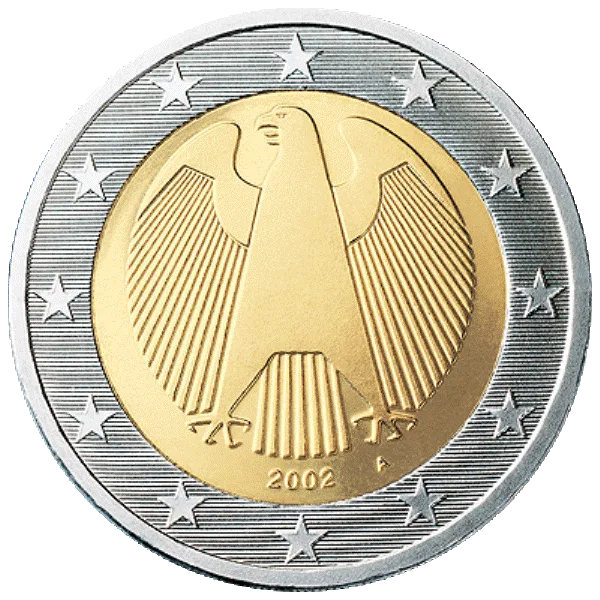
Federal Eagle
Circulation coinIs a 2-euro coin from Germany worth anything?
Most 2-euro coins from Germany are worth their 2-euro face value – only a few low-mintage issues or coins in top condition fetch more. Check your German coin by motif, year and rarity: