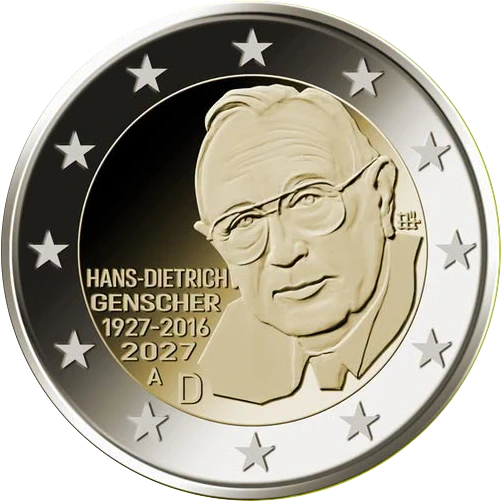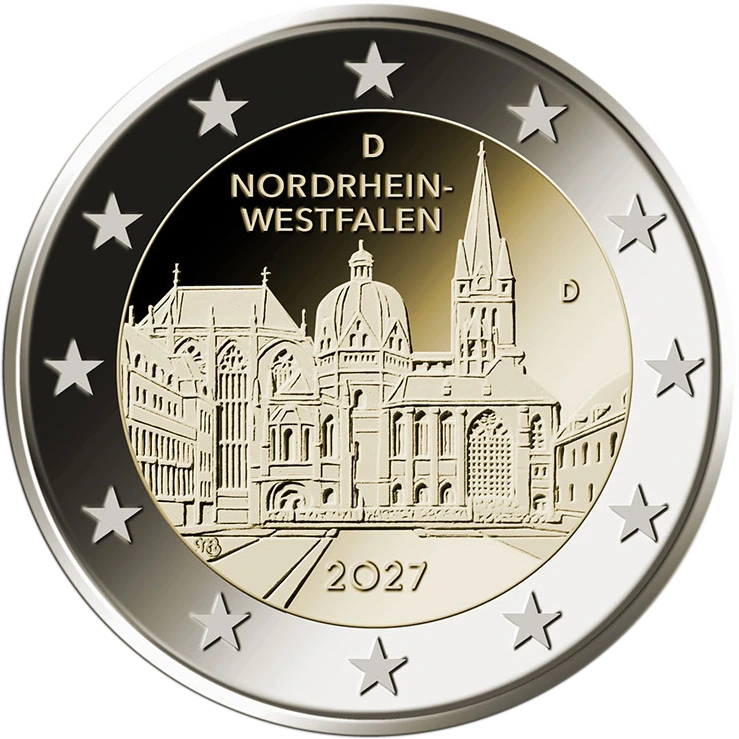
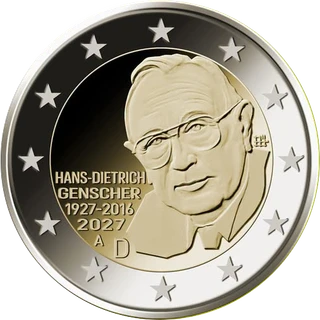
Germany 2027 €2 Commemorative Coin 'Hans-Dietrich Genscher': Design Revealed
Germany's Federal Ministry of Finance has released the official design of the 2027 German €2 commemorative coin 'Hans-Dietrich Genscher'. read more
The site has just been relaunched. If something is broken, missing or you don’t like it – we read every message.
Every 2-euro commemorative and circulation coin in the eurozone – by country and year, with images, mintages, rarity and market values. Since 2004.
Germany's Federal Ministry of Finance has released the official design of the 2027 German €2 commemorative coin 'Hans-Dietrich Genscher'. read more
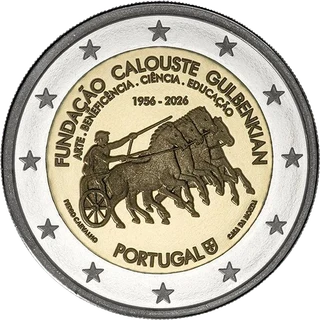
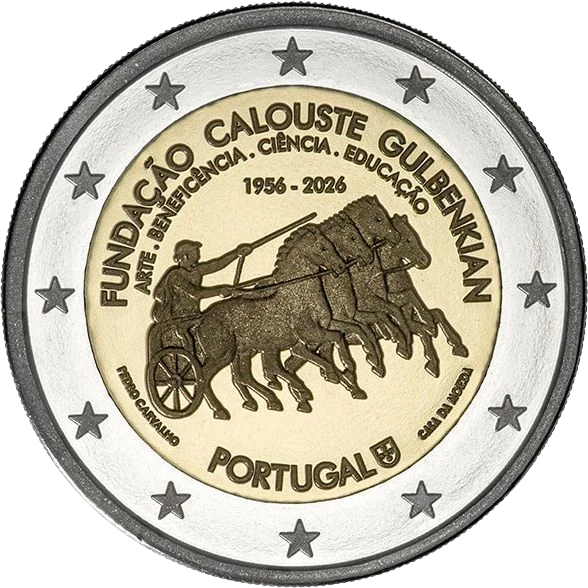
This Wednesday, October 7, 2026, Portugal officially released its second commemorative €2 coin of the year. read more
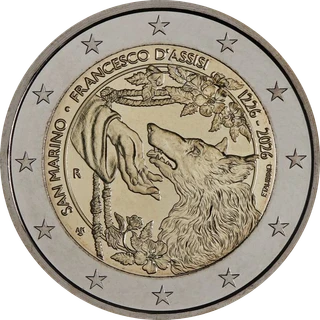
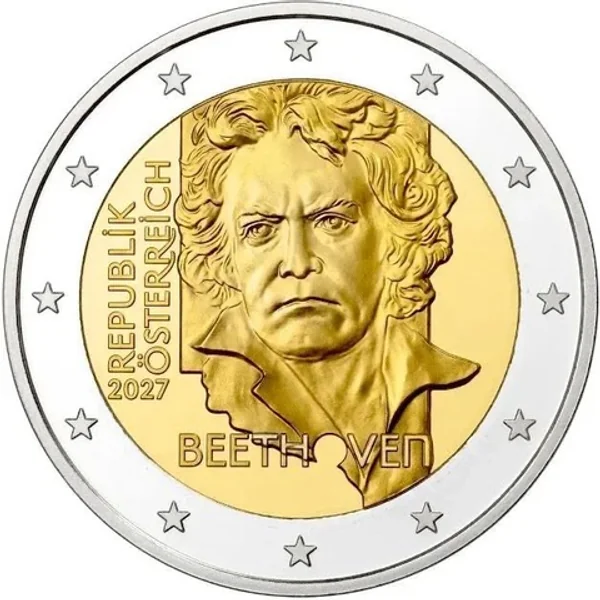
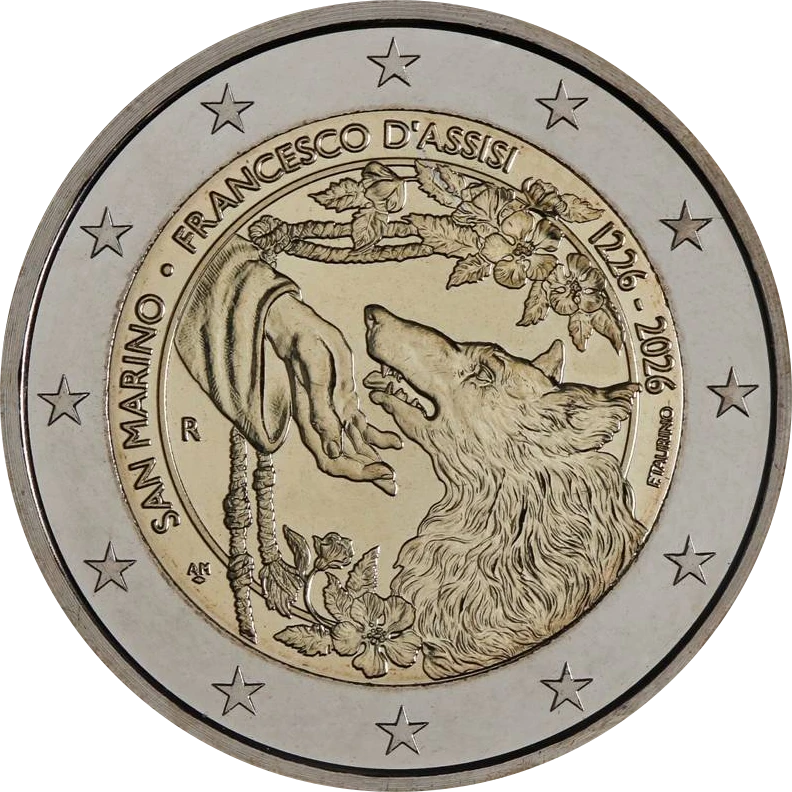
The Republic of San Marino officially released its highly anticipated second €2 commemorative coin of the year on Tuesday, October 6, 2026. read more
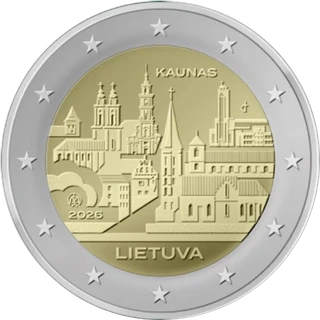
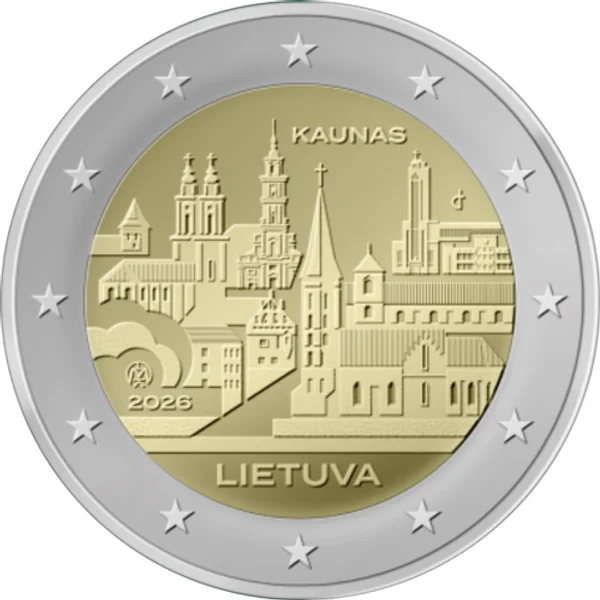
Lithuania issued its second 2-euro commemorative coin of the year today, Thursday, October 1, 2026. read more
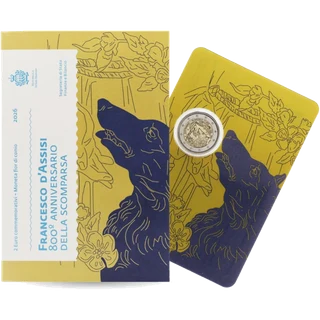
The Republic of San Marino has released official images of its upcoming 2026 €2 commemorative coin honoring the 800th anniversary of the death of St. Francis of Assisi. read more
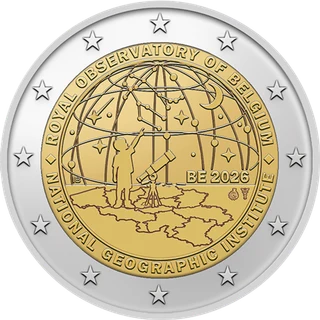
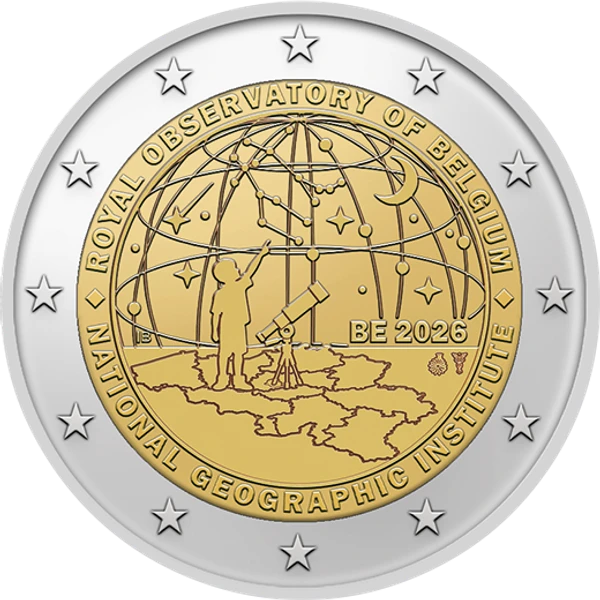
The design of Belgium's second €2 commemorative coin for 2026 was unveiled today, with the coin officially issued at the same time. read more
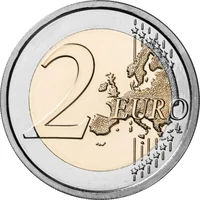
When euro cash was introduced on 1 January 2002, an entirely new collecting field was born. Each of the twelve founding countries — plus the microstates Monaco, San Marino and the Vatican — issued its own 2-euro circulation coin with a national side and a shared common side. The design changes only rarely, for example when a head of state changes.
The common side was redrawn in 2007 to show the whole European continent instead of only the EU members. The coin is bimetallic (copper-nickel ring, three-layer core), weighs 8.5 g at 25.75 mm, and its edge lettering differs from country to country.
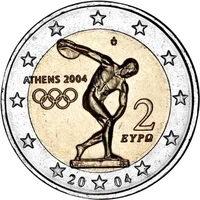
A 2003 decision of the European Commission allowed commemorative 2-euro coins from 2004 onwards. The very first was issued by Greece for the Athens Olympics. Each country may issue up to two per year; unlike higher-value commemoratives, 2-euro commemoratives are legal tender across the entire eurozone.
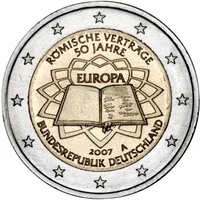
For pan-European anniversaries all eurozone countries strike the same motif — a joint issue. Five have appeared so far, a sixth is scheduled for 2029:
More than 700 different 2-euro coins have now been issued — the full list is in the catalogue.
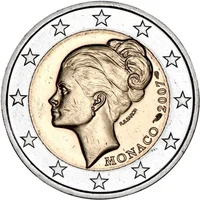
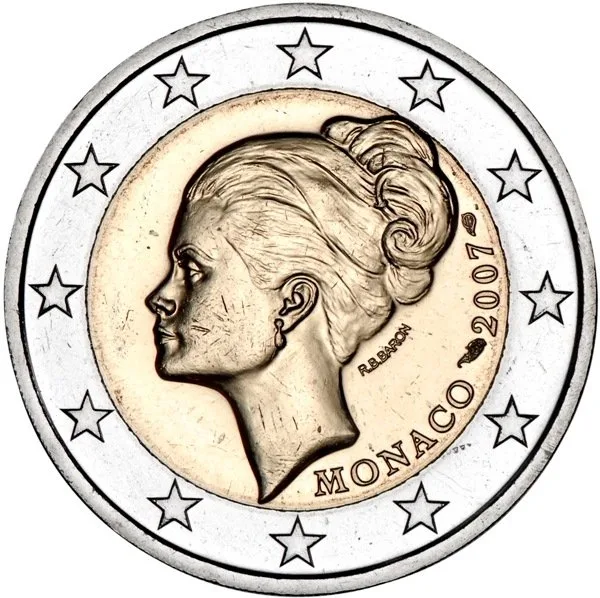
The most valuable and, at a mintage of just 20,001, also the rarest regular 2-euro coin in uncirculated grade is Monaco's 2007 issue for the 25th anniversary of the death of Princess Grace (Grace Kelly) — one of the most sought-after pieces in the field.
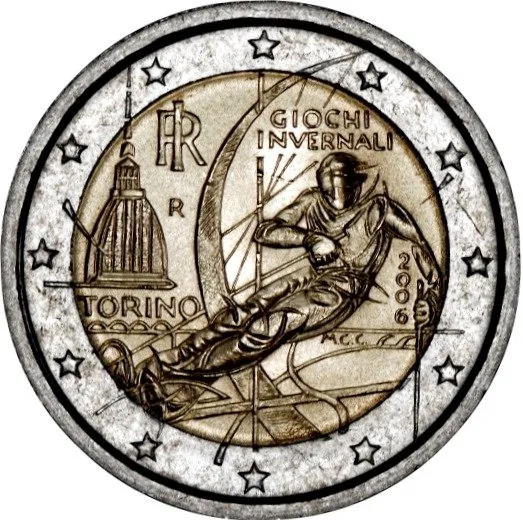
It can pay to check your change: we give a value rating for every coin (see market prices). Even common coins have their appeal — Italy's 2006 Turin Winter Olympics issue, at 40 million pieces, is the highest-mintage coin in the field. Other sought-after low-mintage issues:
The microstates Monaco, the Vatican, San Marino and Andorra issue their own euro coins under monetary agreements. The first three have done so since 2002, Andorra since 2014. Their very low mintages make them especially prized — you will almost never find them in circulation.
Some dealers offer gold-plated or coloured 2-euro coins for collectors. Such alterations legally void their status as legal tender, so they are pure collectables with no face value.
So-called medals without an official denomination are sometimes sold as trial strikes but rarely have genuine collector value. When in doubt, check our catalogue: if an issue is listed, it is official and can be bought from our partner dealers.
New releases appear here continuously. You can also get them by email: subscribe to our free monthly newsletter.
“Collecting 2-euro coins is hugely popular – above all because of the varied designs, high mintages and low cost. Today it is one of the most popular fields of collecting in the eurozone.”
Sebastian Richter, Editor-in-Chief
Many countries issue coins in series that run for years. The longest and best known is Germany's federal-states series (Bundesländer). Other examples:
| Series | Country |
|---|---|
| Croatian Cities | Croatia |
| Counties of Estonia | Estonia |
| Paris 2024 Summer Olympics | France |
| Federal States Series | Germany |
| Unity and Justice and Freedom | Germany |
| Regions of Latvia | Latvia |
| Ethnographic Regions | Lithuania |
| Lithuanian Cities | Lithuania |
| Constitutional History of Malta | Malta |
| From Children with Solidarity | Malta |
| Maltese Walled Cities | Malta |
| Native Species | Malta |
| Prehistoric Sites of Malta | Malta |
| The Ancient Grimaldi Fiefs | Monaco |
| UNESCO World Heritage | Spain |
The quantity & quality below apply to the selected year. You can also adjust several years one after another and save them all together at the end.
The note is saved as soon as the quantity is at least 1.
The note is saved as soon as the quantity is at least 1.
The note is saved as soon as the quantity is at least 1.
Wishlist – which quality are you still looking for?
The selection below applies to the selected year. You can also adjust several years one after another and save them all together at the end.
Which quality are you looking for?
Save your coins, manage your collection and build a personal wishlist – completely free.