How exactly is a 2-euro coin made, which steps are involved and what does it take to produce one? Back in 2008 we followed the entire, elaborate production process from start to finish for you. Since our visit, however, the minting industry has changed at breathtaking speed.
Unlike back then, most coin designers today no longer draw the motif on paper but create it directly on the computer using specialist 3D software. The steps that follow have been transformed by digitalisation as well: where days of craftsmanship once went into plaster models, shellac sealing and wax moulds, the relief is now often produced straight away as a digital data set.
Even the vast mechanical pantograph (the reducing machine), which used to spend hours physically tracing the model, has largely become a thing of the past. Modern mints instead use high-precision 3D laser scanners and computer-controlled CNC milling machines or engraving lasers that burn the motif directly into the steel block, accurate to the micrometre.
The elaborate mechanical hubbing process used to reproduce the dies is also increasingly being replaced by efficient high-performance minting lasers. Even the final quality control has had a digital upgrade: where random checks with a magnifying glass and callipers once dominated, high-speed optical camera systems now scan the coins fully automatically in a fraction of a second within the running production process.
Join us now on a journey back to 2008 and discover how much genuine craftsmanship went into every single coin back then – and, in its essentials, still does today.
From the first design to the finished minting die
Before a 2-euro coin jingles in our purse, it has already been through an elaborate design and production process. From the artist’s first design drawings and the making of a plaster model through the production of the minting die and the blank material to the striking of the coin, countless working hours pass. Only then does the finished coin finally make its way into circulation.
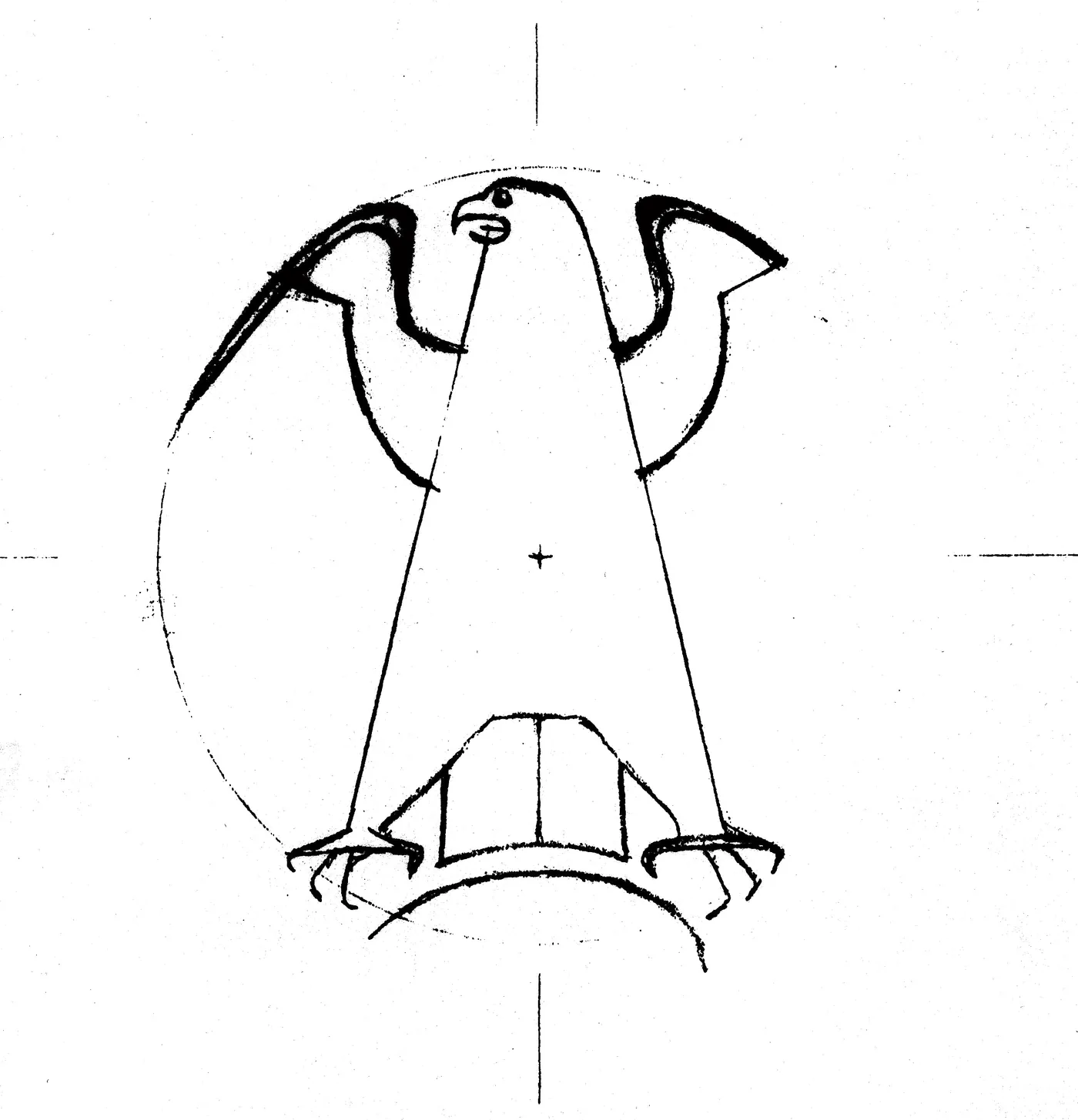
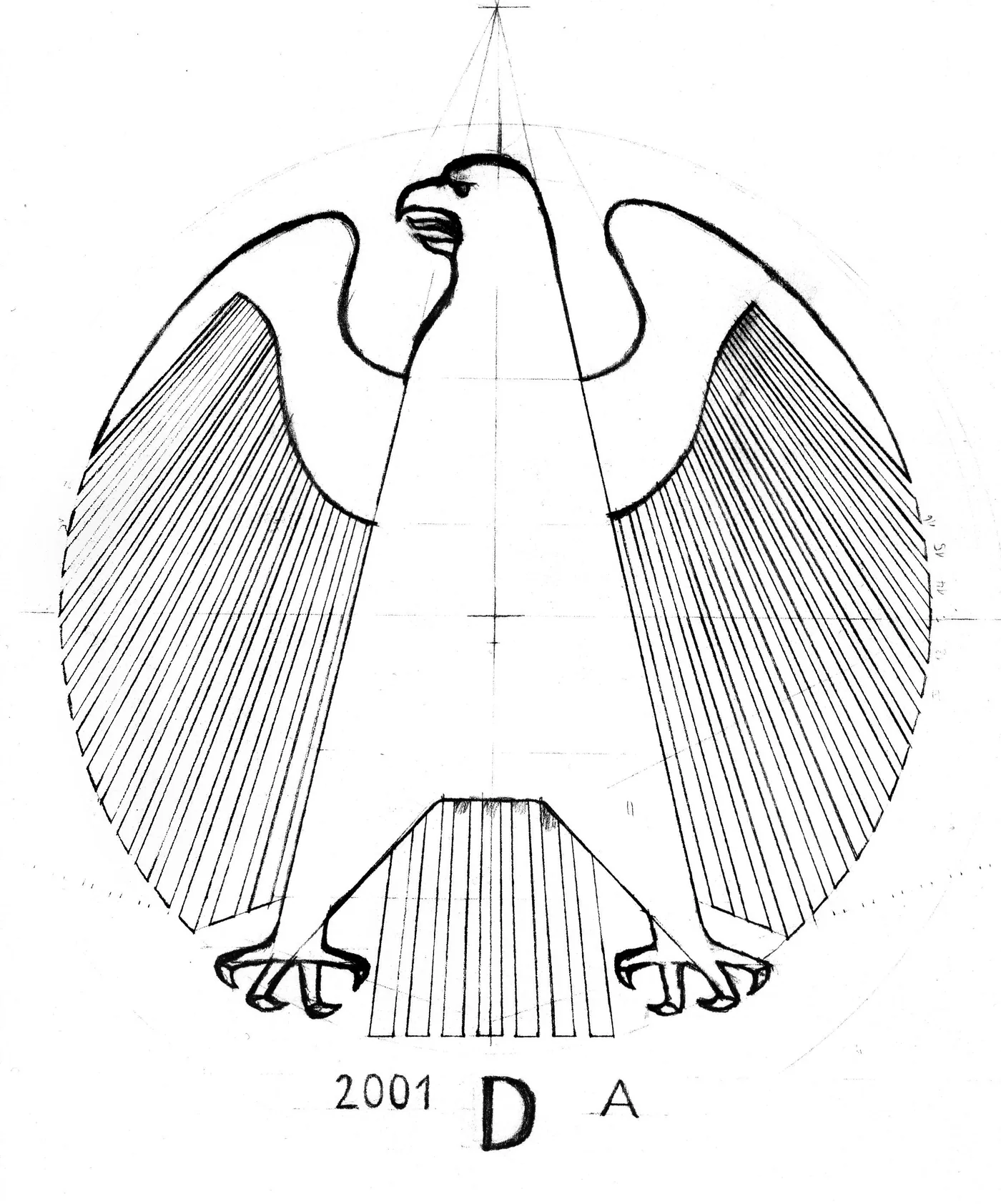
The basis of every coin is created by the artist, who, after initial idea sketches on a given theme, puts several design drawings on paper by hand, as pencil sketches, at a size of around 15 cm (1)/(2).
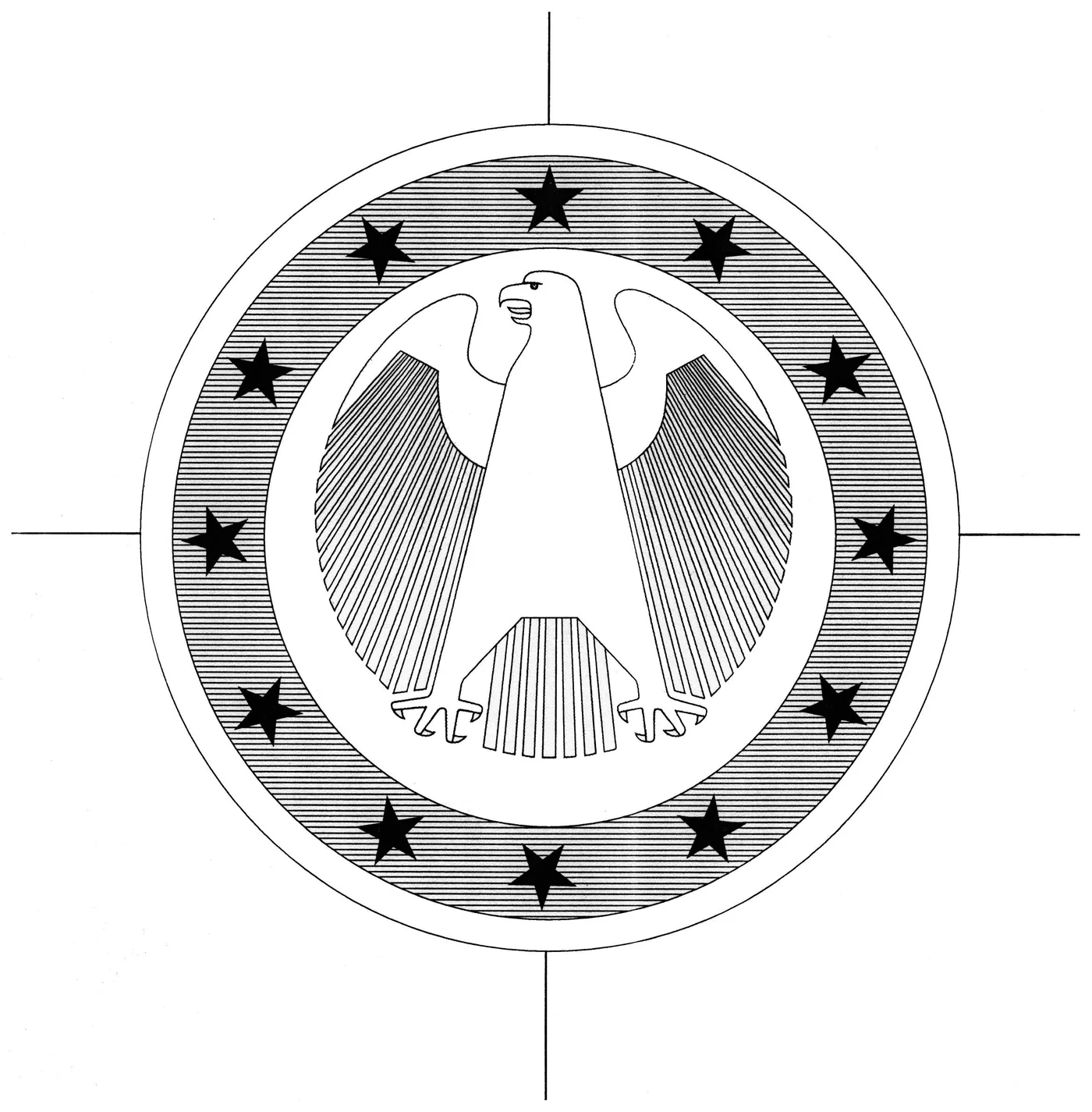
Once the decision for one design has been made, it is scanned in and arranged on the computer in a circle together with the twelve European stars, the mint mark of the minting facility and the year of issue (3).
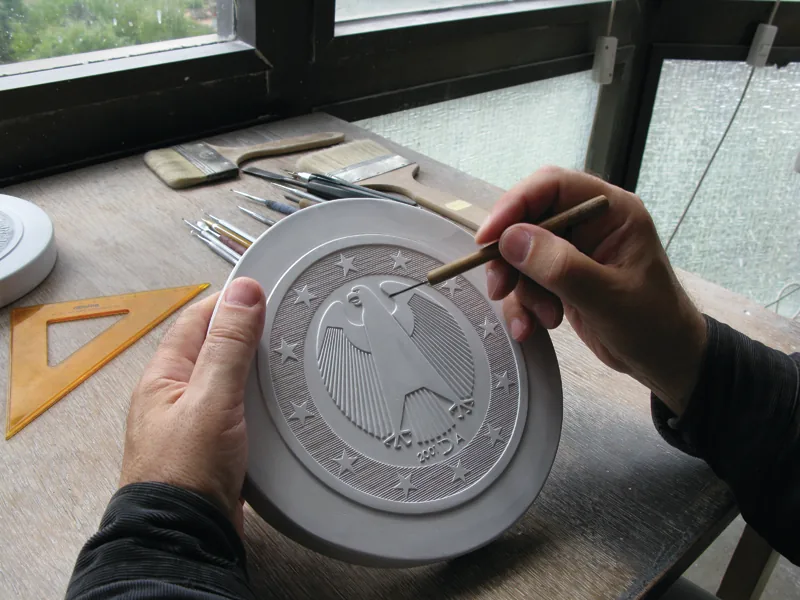
Following the drawn design, the artist then produces a plaster model considerably larger than the later coin. To do this, the finished design drawing is transferred onto the plaster in mirror image using a solvent. In further steps, the artist cuts the motif into the plaster in negative and in mirror image and seals it with shellac. The model is then insulated with liquid wax. Only now can the plaster model be fitted with a collar and liquid plaster poured onto the negative. In the first positive created this way, every detail is worked in by hand, step by step (4).
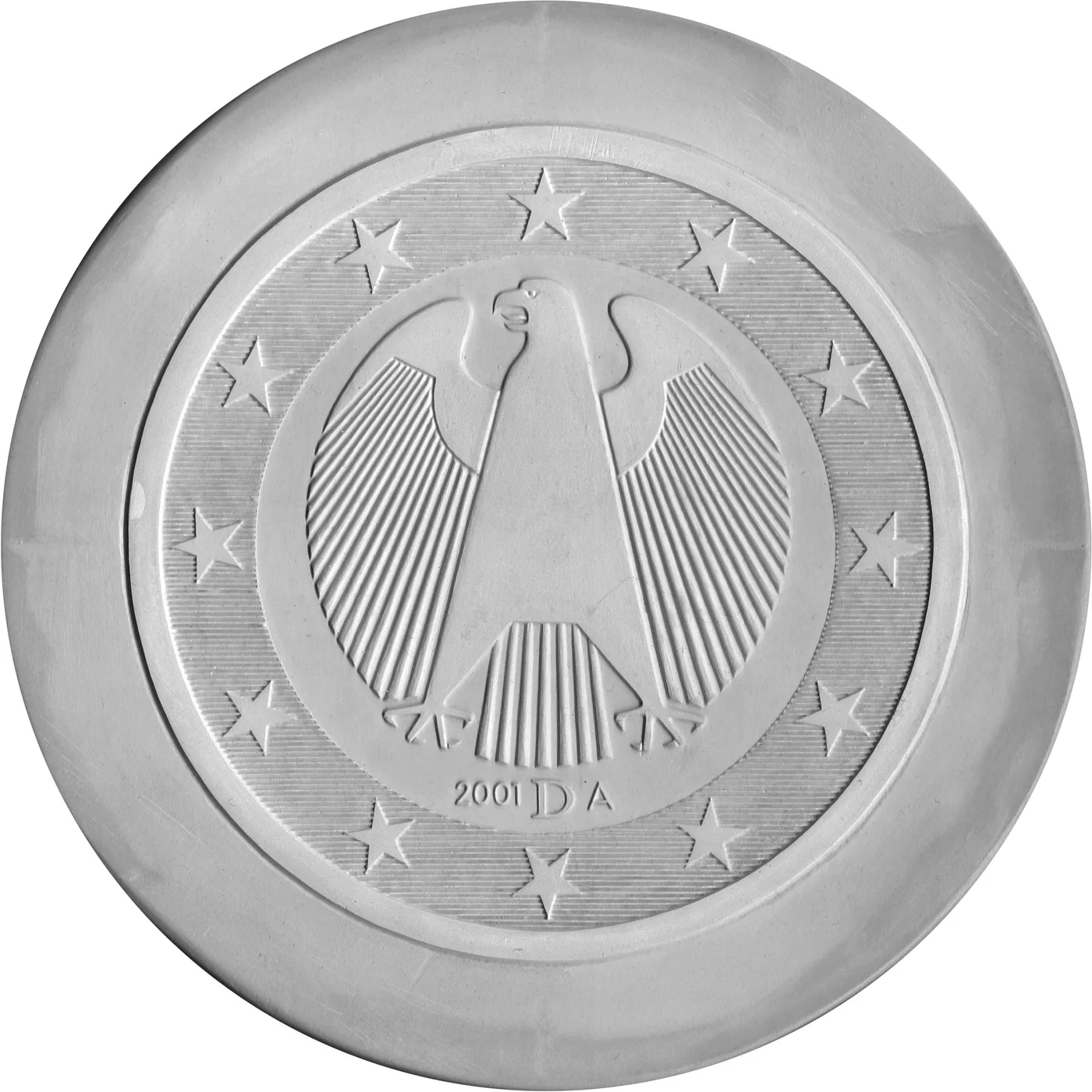
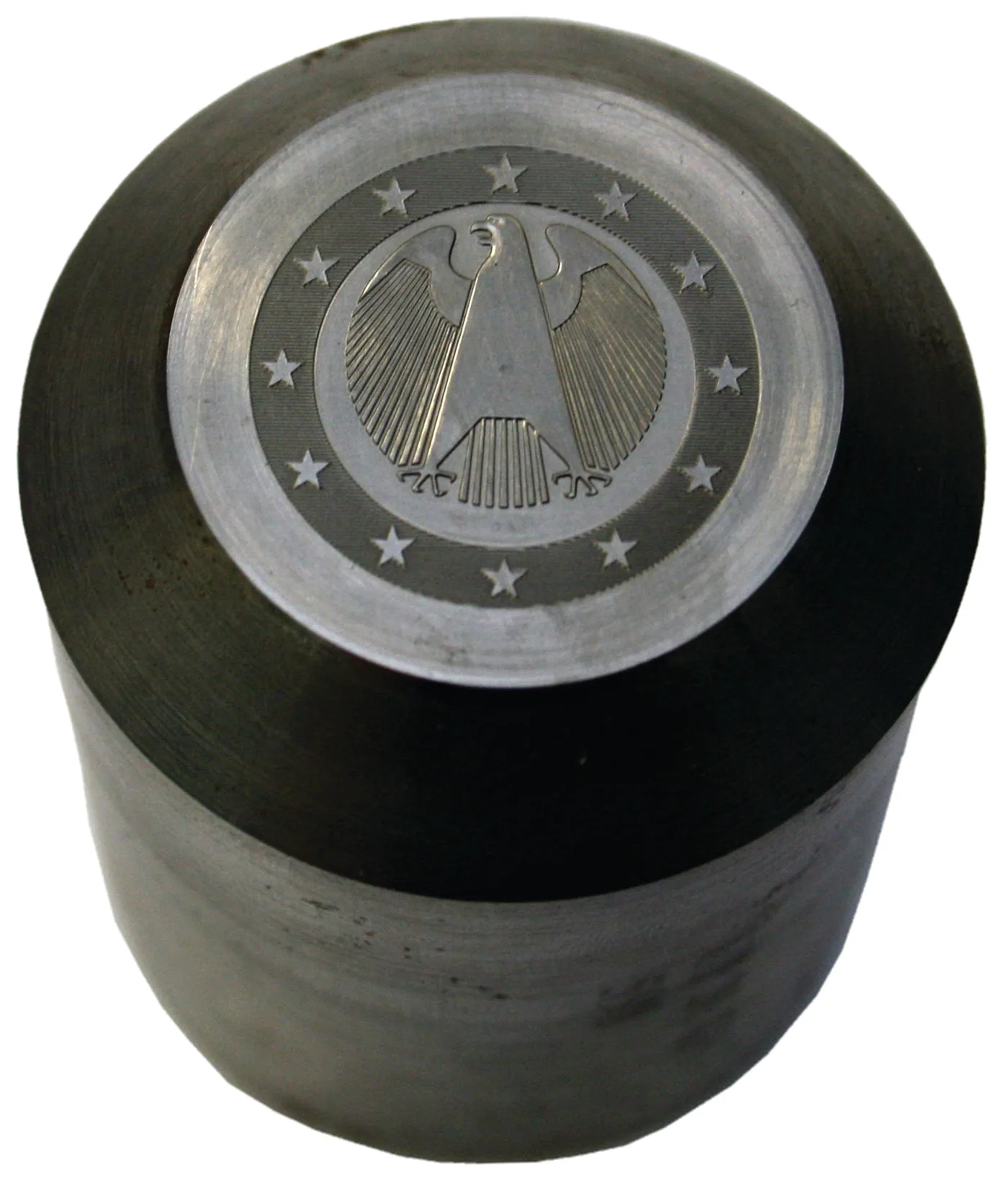
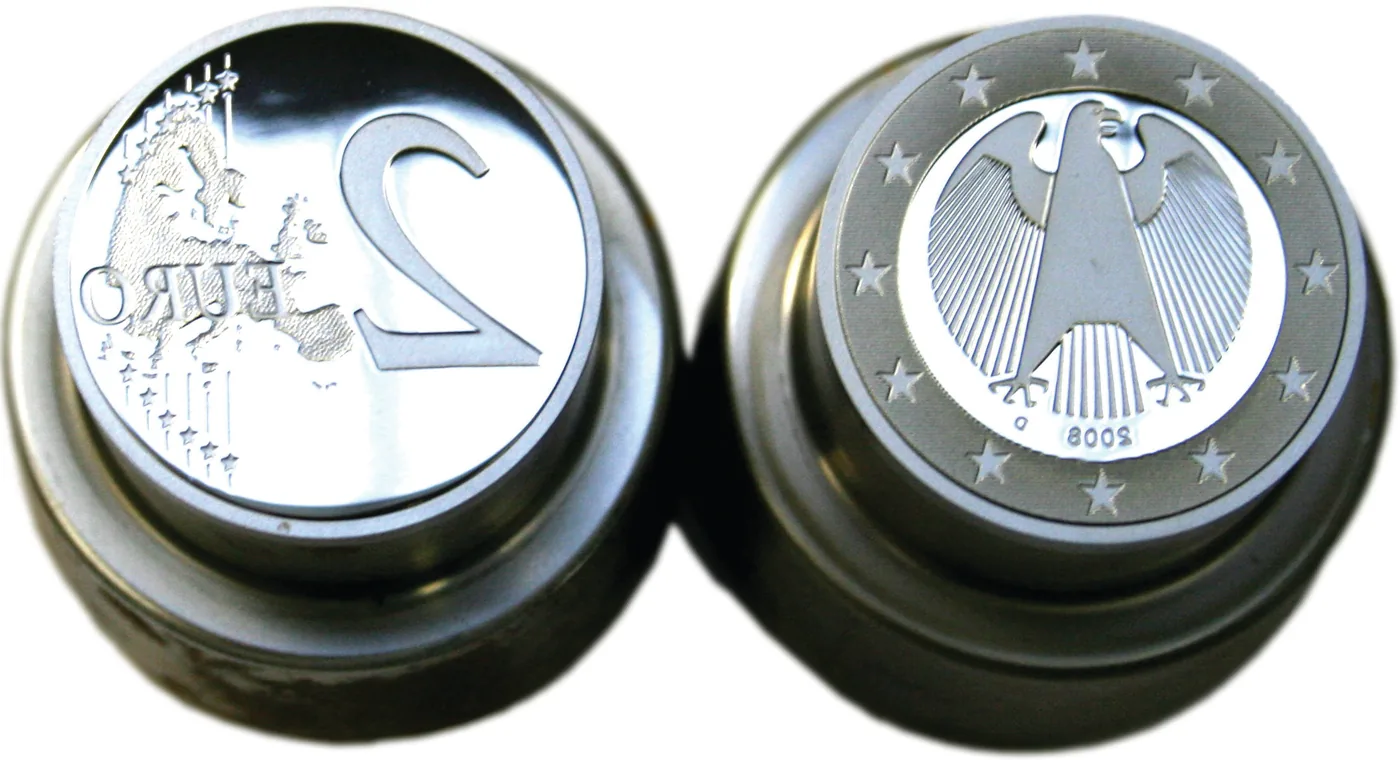
From this enlarged plaster model (5), modelled down to the last detail, an intermediate impression yields a positive synthetic resin form. Clamped into a reducing machine (pantograph), a stylus traces the model in three dimensions while a cutter transfers the relief to a steel block at the desired original size. The resulting master punch (6) is then reworked by the engraver with the utmost precision in its contours and sculptural detail, and subsequently hardened. In several hubbing operations, the actual minting dies are finally produced from the master punch in negative. After hubbing, they are turned into the correct shape, hardened and hard chrome-plated to extend their service life. With the finished minting die (7), hundreds of thousands of new coins can now be struck.
Producing the blank material
In order to strike 2-euro coins with the minting die, the 2-euro blank material first has to be produced, with the prescribed alloy and precisely defined physical and technical properties. In a foundry, the coin metal for the later blanks is produced first. For 2-euro coins the copper-nickel alloy Cu 750 / Ni 250 is used; it is a proven alloy and, thanks to its distinctive physical properties, extremely difficult to counterfeit.
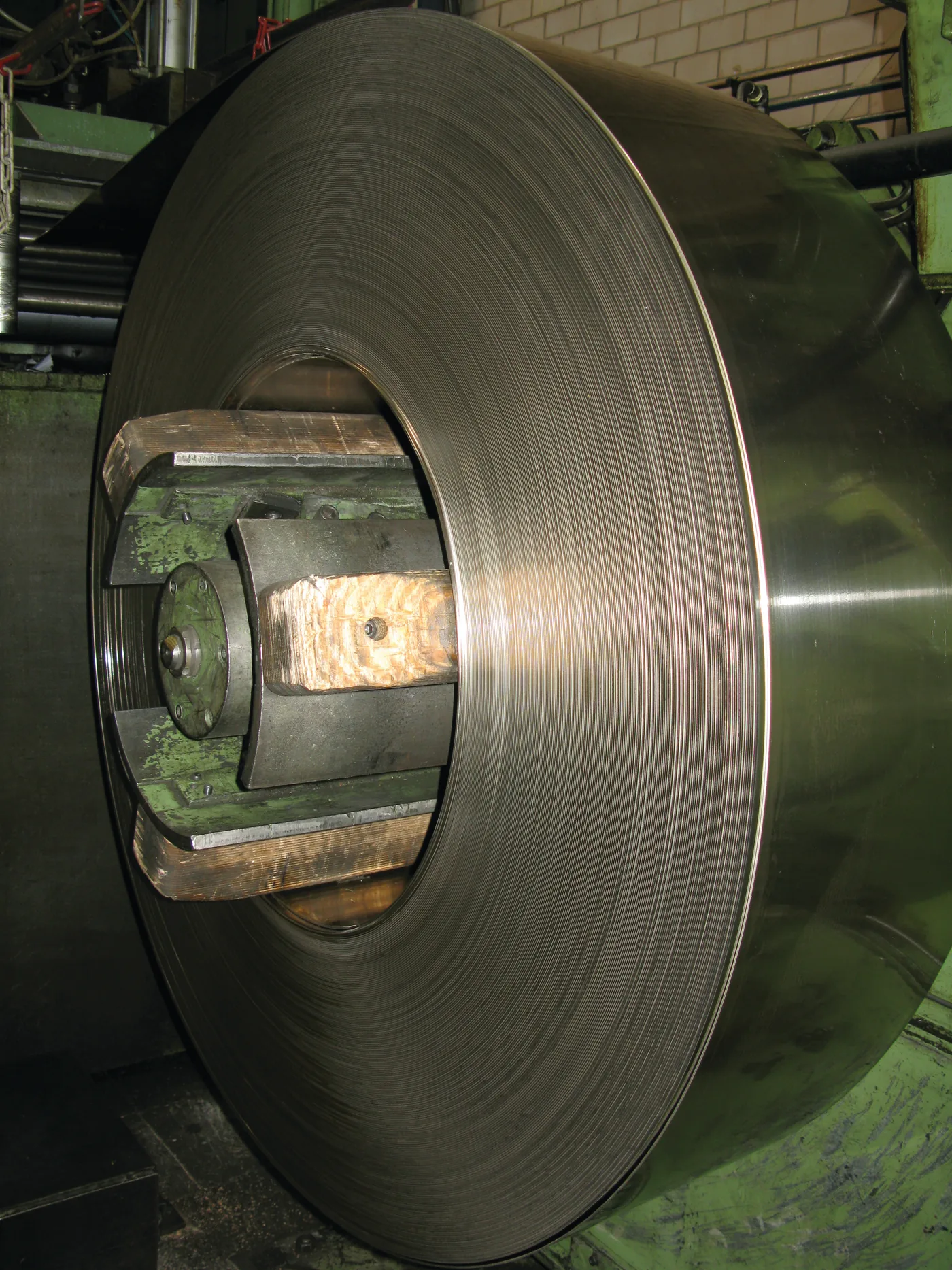
To produce the blank material, so-called slabs are first cast in a continuous casting process: metal blocks 6 to 7 m long weighing up to 10 t. In the rolling mill these are then rolled down to the desired thickness of around 2 mm in several steps. The resulting thin metal strips are cut to punching width and wound into large coils, the so-called punching rings (8).
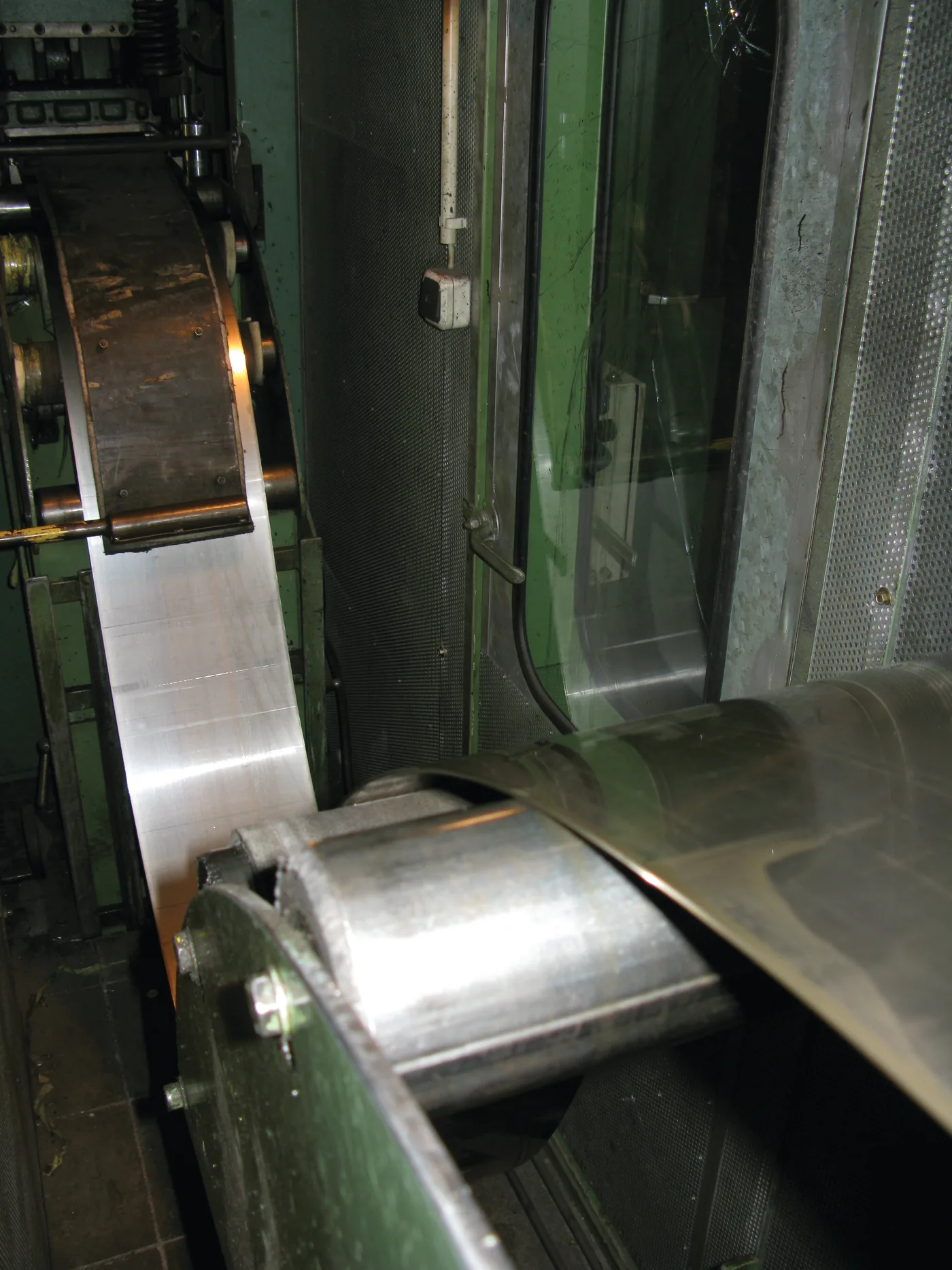
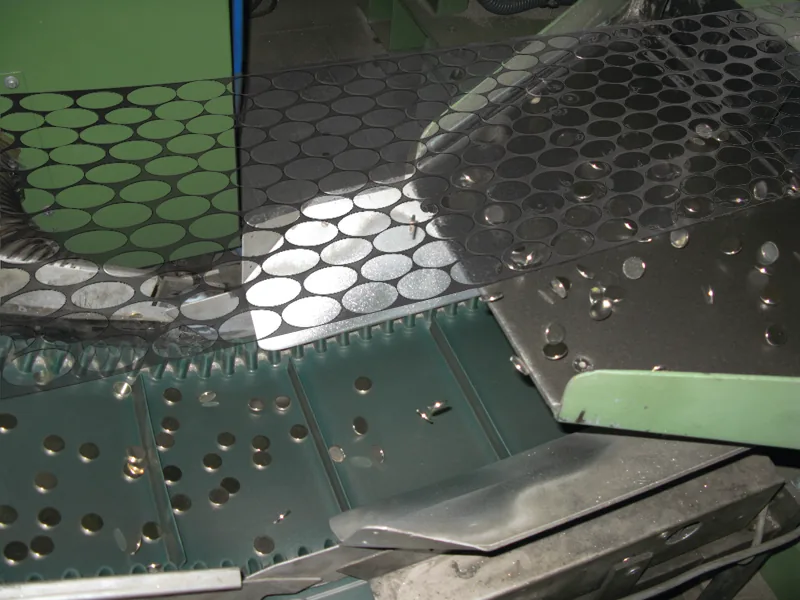
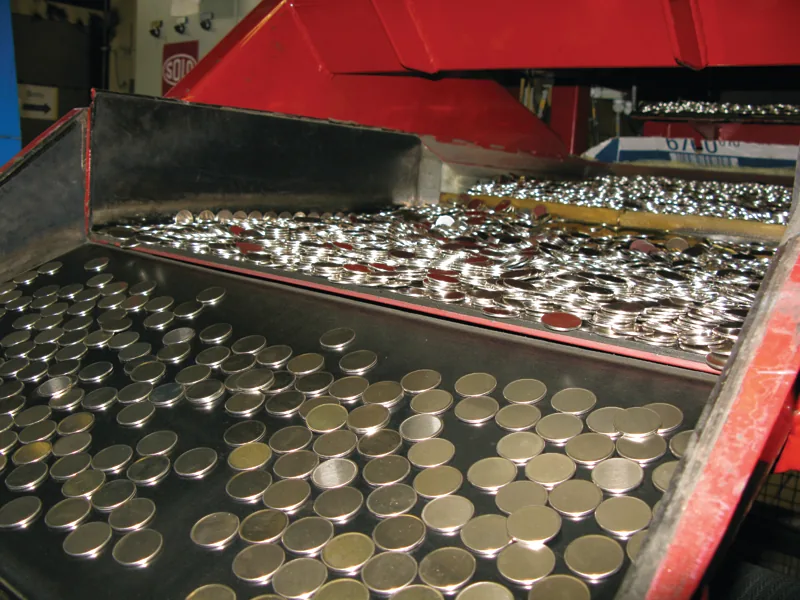
The coin blanks are then punched out of the metal strips (9) by the punching machine at a rate of up to 6,000 pieces per minute (10) and immediately checked for their technical properties such as weight and thickness. The punching waste is melted down again and returned to the production process.
Now the blanks still need a rim. To this end they run through the reeding tool in the reeding machine, driven by a rotary table. This upsets the edge of the blank. The blanks then pass through a belt furnace at 600 to 1,000 degrees (11). This softens the blank material and prevents rapid wear of the minting die when the coins are struck later on.
Before delivery to the various mints, the finished blanks are washed and dried and given a final inspection.
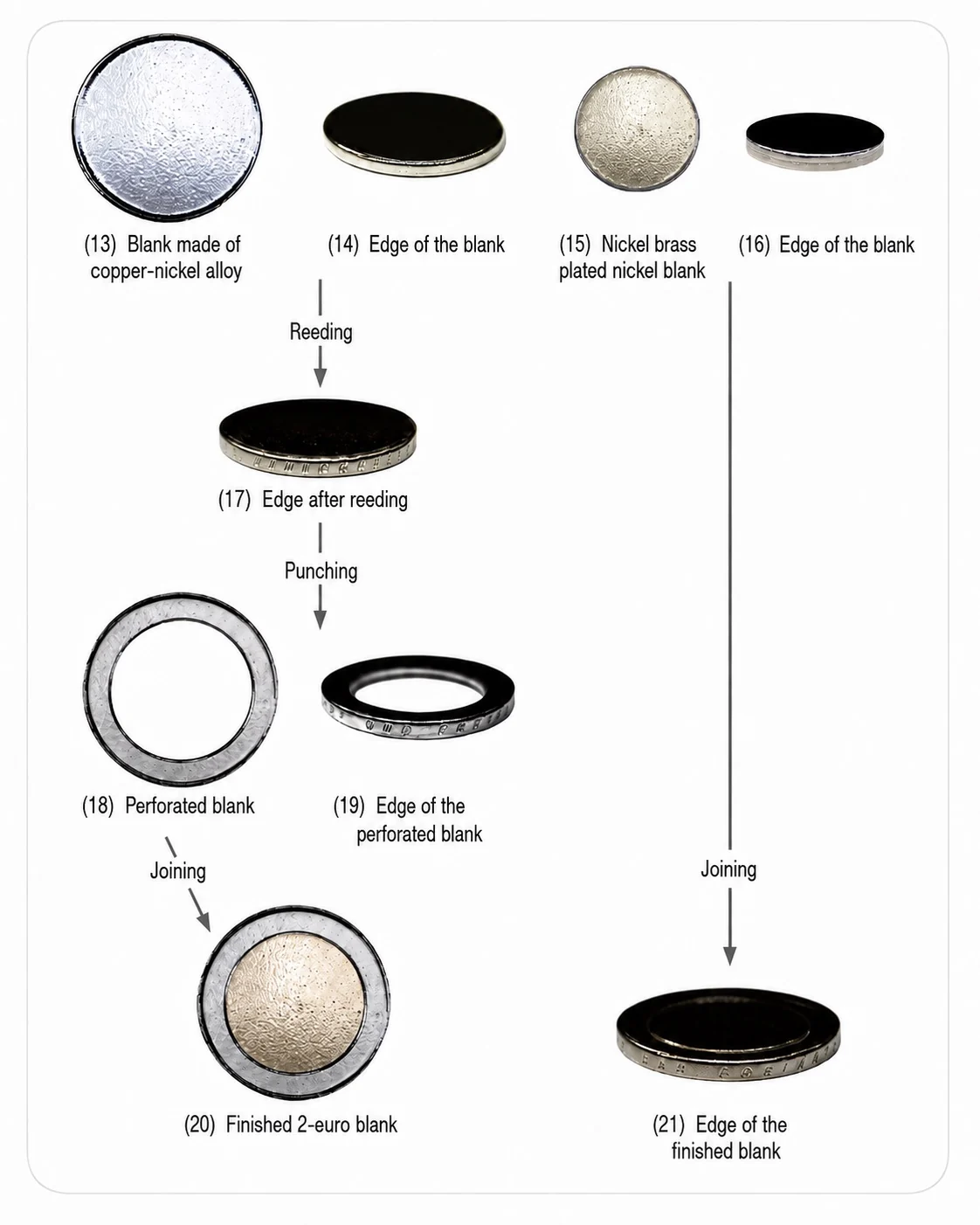
Since the 2-euro piece is a bi-metallic coin, two different blank parts have to be produced first: one blank made of a copper-nickel alloy and a second blank made of the three-layer material nickel brass-nickel-nickel brass for the later centre core of the 2-euro coin.
Only during a later step, at the mint, is the copper-nickel blank given its edge lettering and then punched with a hole. Now the two blank parts can be joined into a finished 2-euro blank (12).
How a bi-metallic coin blank is made
Striking the 2-euro coins
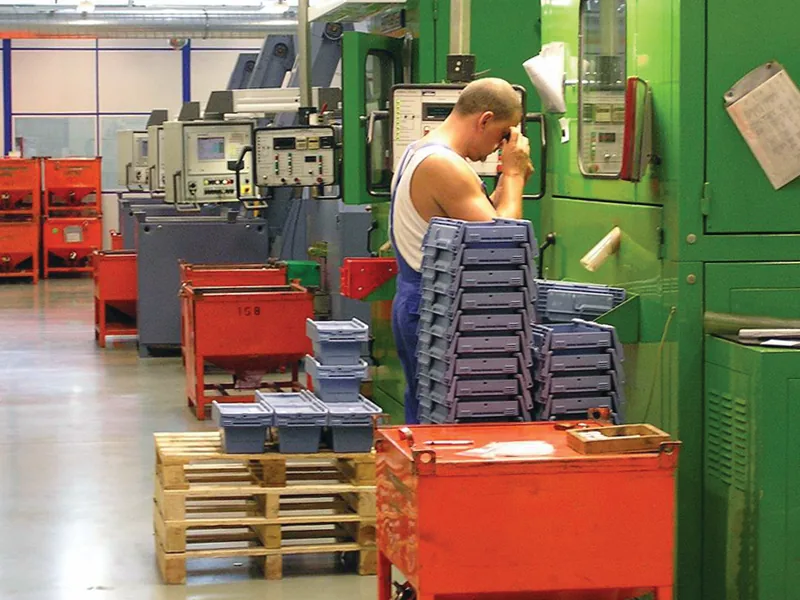
The finished coin blanks are delivered to the mint’s loading airlock in large wooden crates weighing up to 600 kg. After unloading, the blanks are counted and checked by machine. The counted and weighed blanks are then transported in containers to the minting hall and the coining presses.
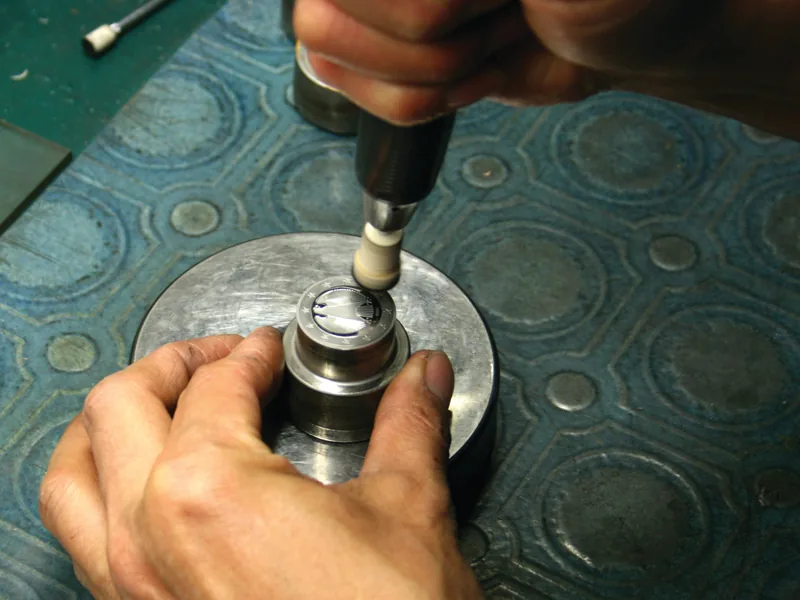
2-euro coins are struck today on modern bi-metallic coining presses that achieve outputs of up to 850 coins per minute. Not all countries of the monetary union use ready-made 2-euro blanks for striking. In the Federal Republic of Germany the coining presses for 2-euro coins are fed in parallel via magazines for the rings and for the cores. Only the high striking pressure joins ring and core together during the minting process. Ready-made 2-euro blanks are used above all for striking coins in proof and brilliant uncirculated quality, and in some other countries also for producing circulation coins.
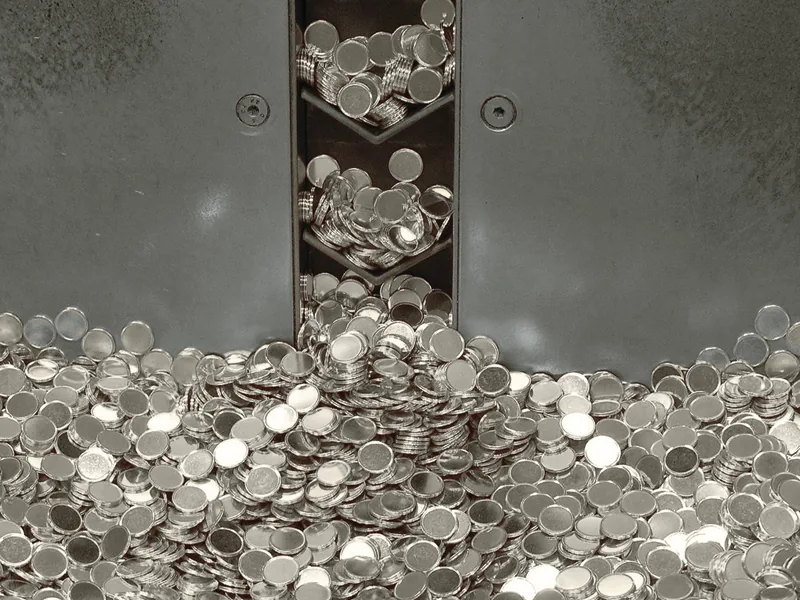
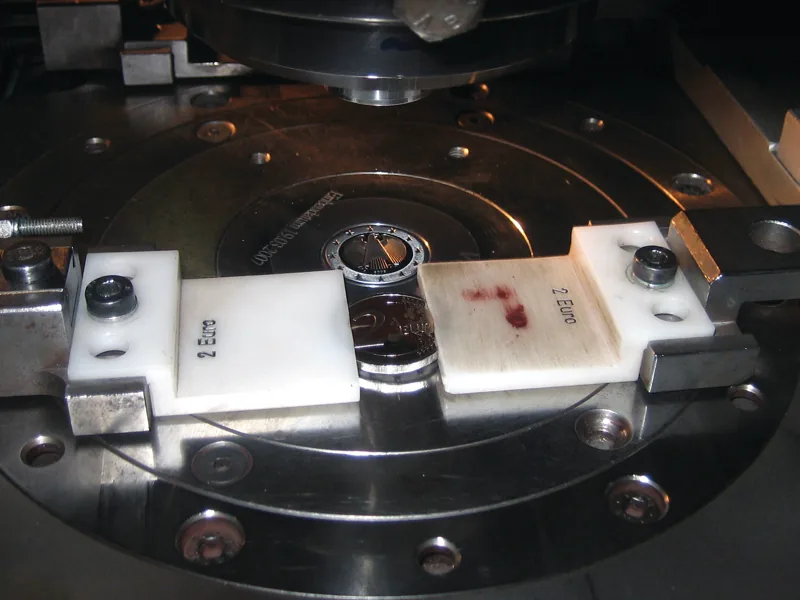
Before the striking of tens of thousands of 2-euro coins can begin, the dies are cleaned and polished once more (22). The blanks are then fed to the coining press via steep conveyor belts (23). At breakneck speed and with a striking pressure of up to 100 t, the two dies drive the denomination and the motif into the blank. The finished 2-euro coin is then ejected (24) and drops into the container standing in front of the press.
Obverse, reverse and the milled edge are always struck in a single blow. Between the upper and lower die sits the so-called collar, a steel ring in which the blanks come to rest and whose diameter corresponds to that of the coins being struck. This prevents the metal from escaping under the high striking pressure.
The struck coins then undergo random quality control. An employee uses callipers and a magnifying glass to check the flawless quality of the finished coins (25).
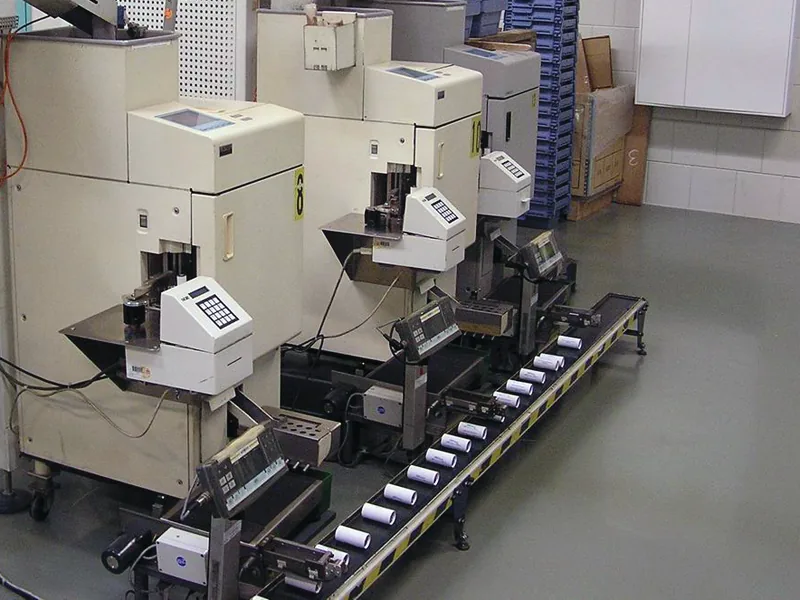
After their release, machine packaging follows. Twenty-five 2-euro coins at a time are rolled into paper printed with the denomination (26). Before ten of these rolls are in turn shrink-wrapped in plastic film, each one races individually across a set of scales that sorts out incorrectly filled rolls.
The coins are now ready for their journey to the Bundesbank branches, from where they are delivered to many smaller banks and thus enter circulation. Some of these coins will in all likelihood soon turn up in someone’s purse.