
The Phenomenon of Mint Errors: When Machines Malfunction and a Rare, Unique 2 Euro Coin Is Born
The production of 2 euro bimetallic coins is a highly precise industrial process involving forces measured in tonnes. Despite the strictest quality controls and state-of-the-art testing procedures, defective pieces occasionally leave the mints in rare cases. These so-called mint errors are not damage acquired through circulation, but rather the result of technical irregularities in the production process. For numismatists, such pieces document the complex minting process, while for collectors they represent fascinating rarities that often achieve top prices on the market.
But how can a genuine mint error be identified and distinguished from subsequent manipulation or ordinary wear? Our overview not only helps you identify rare varieties in your change, but also helps you better assess the potential value of these collector’s items.
Below we have compiled the most important and spectacular mint errors that exist among 2 euro coins.
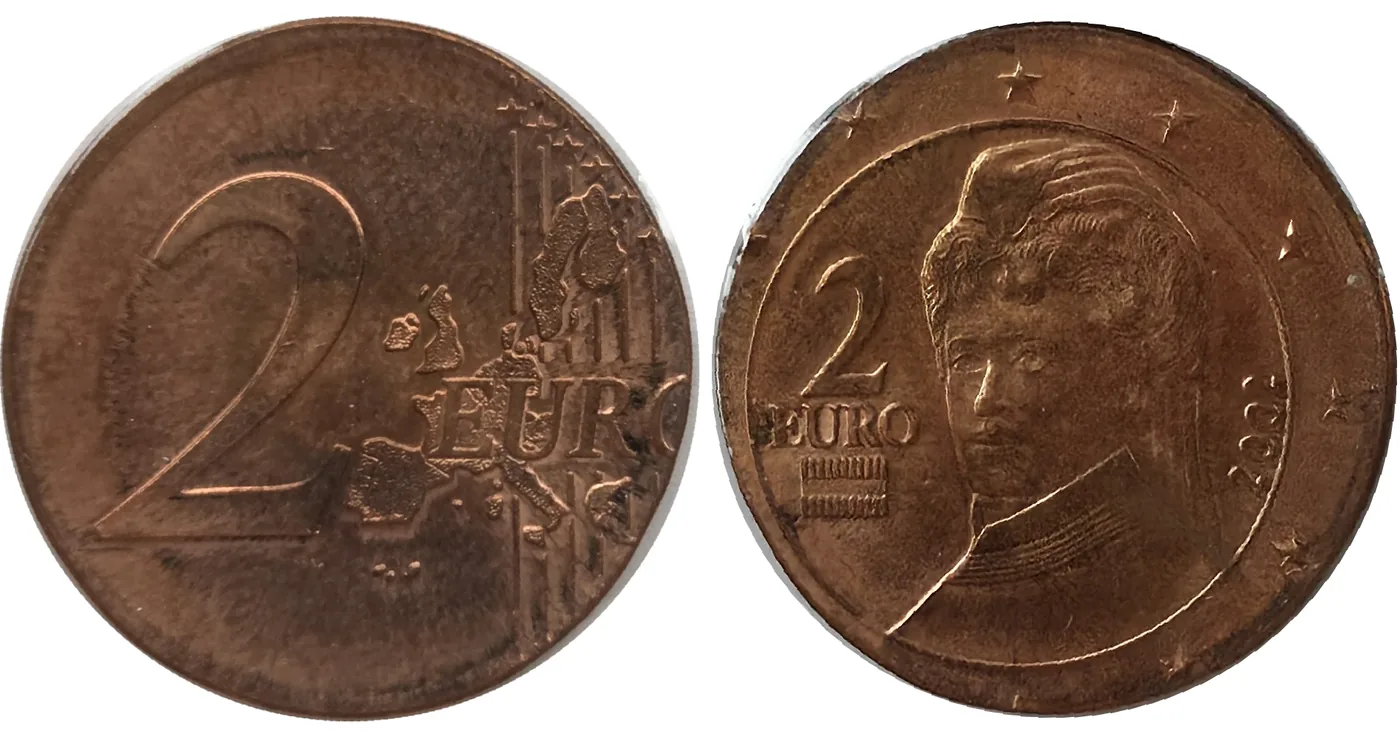
Wrong Planchet Error (Foreign Planchet Strike)
A wrong planchet error always results from a fault in the automated feeding of planchet material. At the mints, different denominations — and sometimes foreign currencies as well — are struck on parallel production lines. If a planchet intended for a different denomination accidentally enters the transport channel and thus the striking press for the 2 euro coin, this foreign planchet is struck with the 2 euro dies.
Since the physical properties and hardness of a foreign planchet almost never match those of a genuine 2 euro planchet, the result is a coin with a partially incomplete design and an atypical weight. In practice, wrong planchet errors occur almost exclusively on blanks with a smaller or, at most, identical diameter. A larger diameter is blocked by the mechanical limits of the feed channels as well as by the collar, meaning such pieces almost never make it through the press. Rare exceptions are planchets that are only slightly larger but thinner, where the material is forced into the collar by the extreme striking pressure, or cases where the collar itself jams and the strike occurs without any lateral constraint.
Double Strike (Multiple Strike)
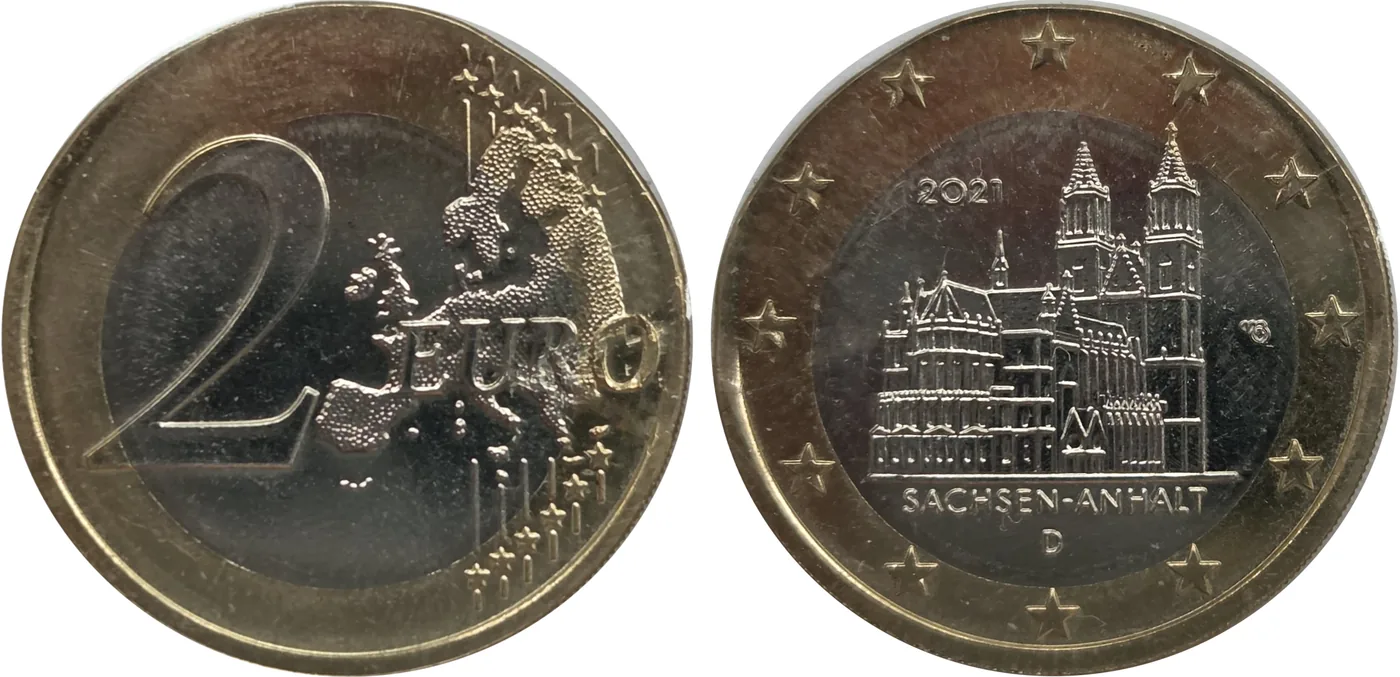
A double strike — also referred to in numismatics as a multiple strike — differs fundamentally from a doubled die. While the latter already arises during the manufacture of the dies themselves, a multiple strike is an error occurring during the ongoing striking process, in which a single coin is struck twice, or even several times, in succession by the dies.
A multiple strike always results from a malfunction of the ejection system. After a coin has completed the regular striking process, the lower die lifts it upward out of the rigid collar. At exactly the same moment, the feed mechanism pushes a new planchet into the striking area and, with its leading edge, simultaneously ejects the finished coin. However, if the coin sticks to the upper or lower die due to the enormous striking pressure, or slips through, it remains in the striking area. Since the new planchet cannot physically be deposited because the space is occupied, it is carried back out again as the mechanism retracts. As a result, no new planchet is present in the striking area for the next strike — only the already-struck coin. Because the piece almost always shifts slightly during the failed ejection, the second strike occurs offset from the first. The result is a fascinating mint error highly sought after by collectors. A strongly offset multiple strike, for example, can produce doubled denomination digits, making each such coin an absolutely unique specimen.
Off-Centre Strike
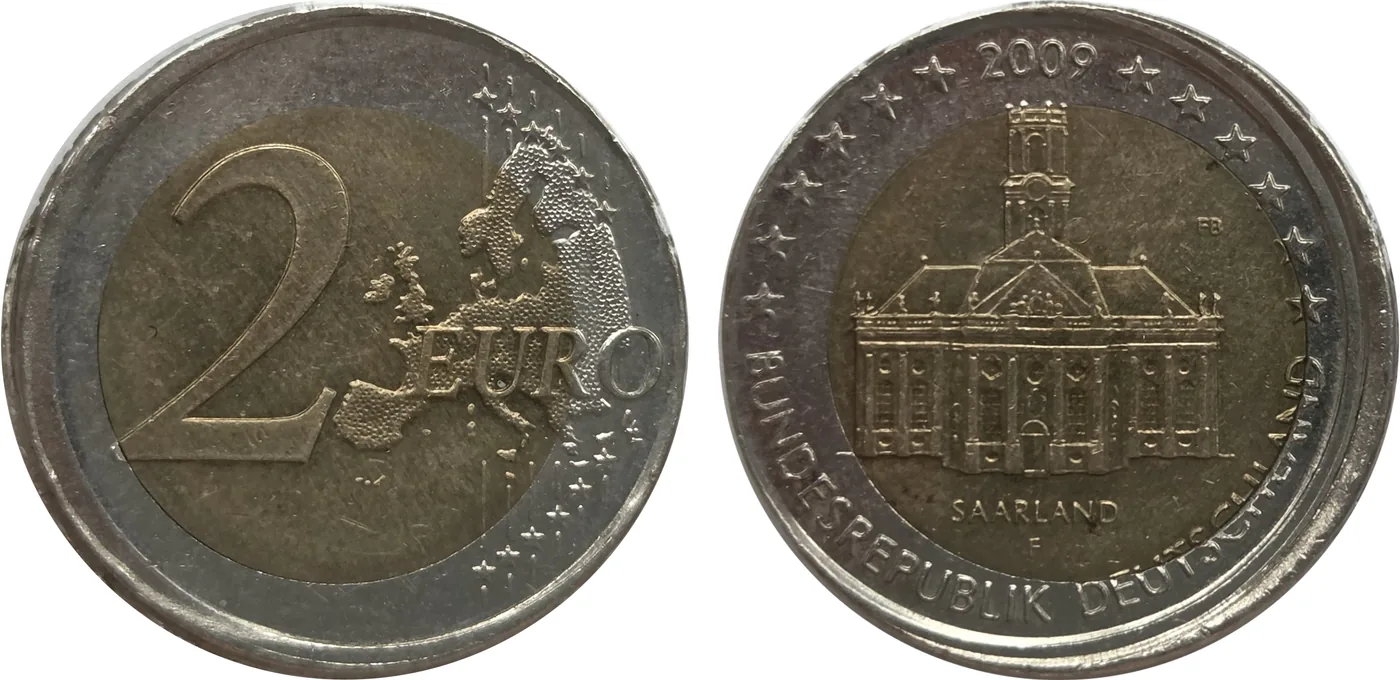
In modern coin presses, the surrounding collar sits rigidly and immovably in the tool holder of the coining station, while the lower die inside the collar is slightly recessed. Off-centre striking occurs when the planchet is not placed exactly in the middle during feeding. For example, if the transport mechanism operates with minimal asynchrony and the planchet consequently does not slide deep enough into the chamber of the collar, but instead comes to rest askew on its upper edge. If the strike then takes place at that moment with the full striking pressure of around 100 tonnes, the upper die hits the blank in this extreme misaligned position. The result is a coin on which the design is noticeably shifted asymmetrically to one side. On the opposite side, a characteristic unstruck, completely smooth metal rim remains in the original state of the planchet. Since the coin never touched the inner wall of the collar on the protruding side, the typical edge reeding is also entirely absent there.
The higher the percentage degree of this displacement, the rarer and more sought-after the piece is for collectors. Since modern coin presses are equipped with optical sensors and light barriers that detect misaligned planchets within milliseconds and immediately stop the machine, off-centre strikes in modern circulation coinage are extremely rare exceptions.
Single-Metal Mis-Strike
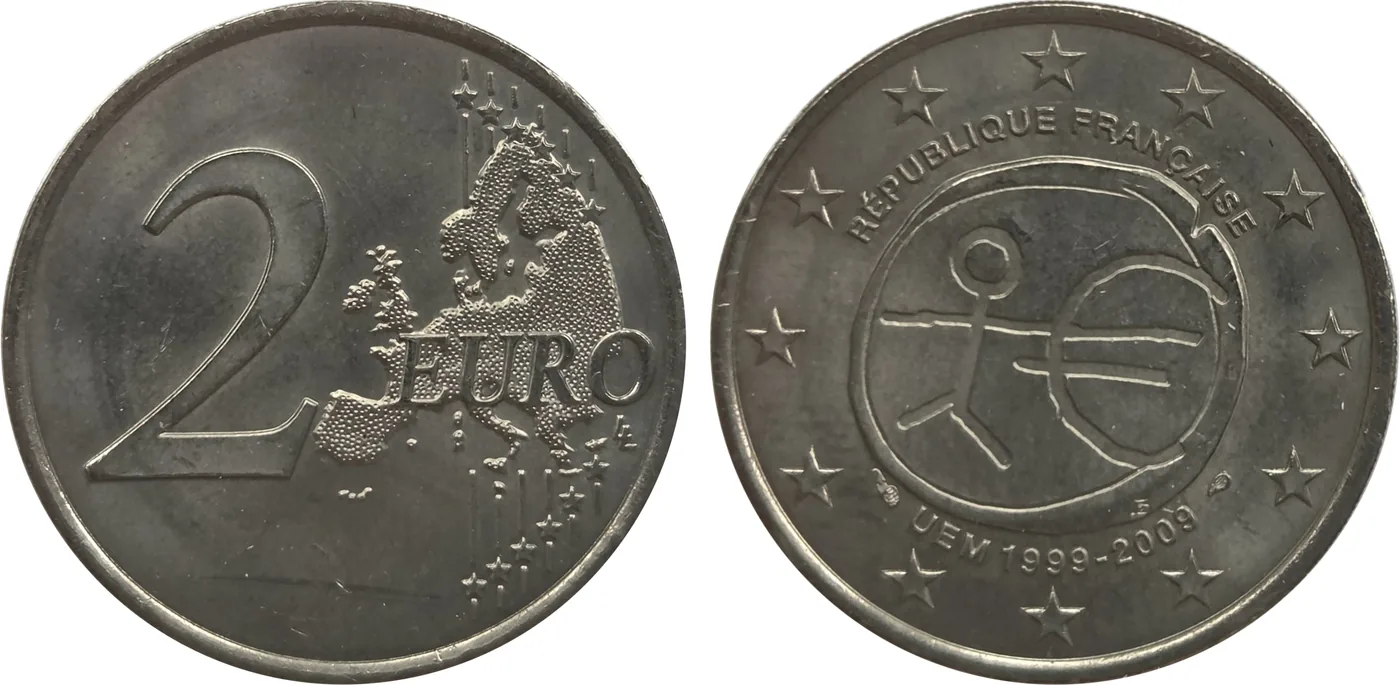
The classic 2 euro coin is a bimetallic coin consisting of a ring and a core. The outer ring is made from a copper-nickel alloy (Cu 750 / Ni 250), while the core consists of the three-layer material nickel-brass-nickel-nickel-brass. Before a 2 euro coin can be struck, the planchet material for the ring and the core of the future coin is produced in advance.
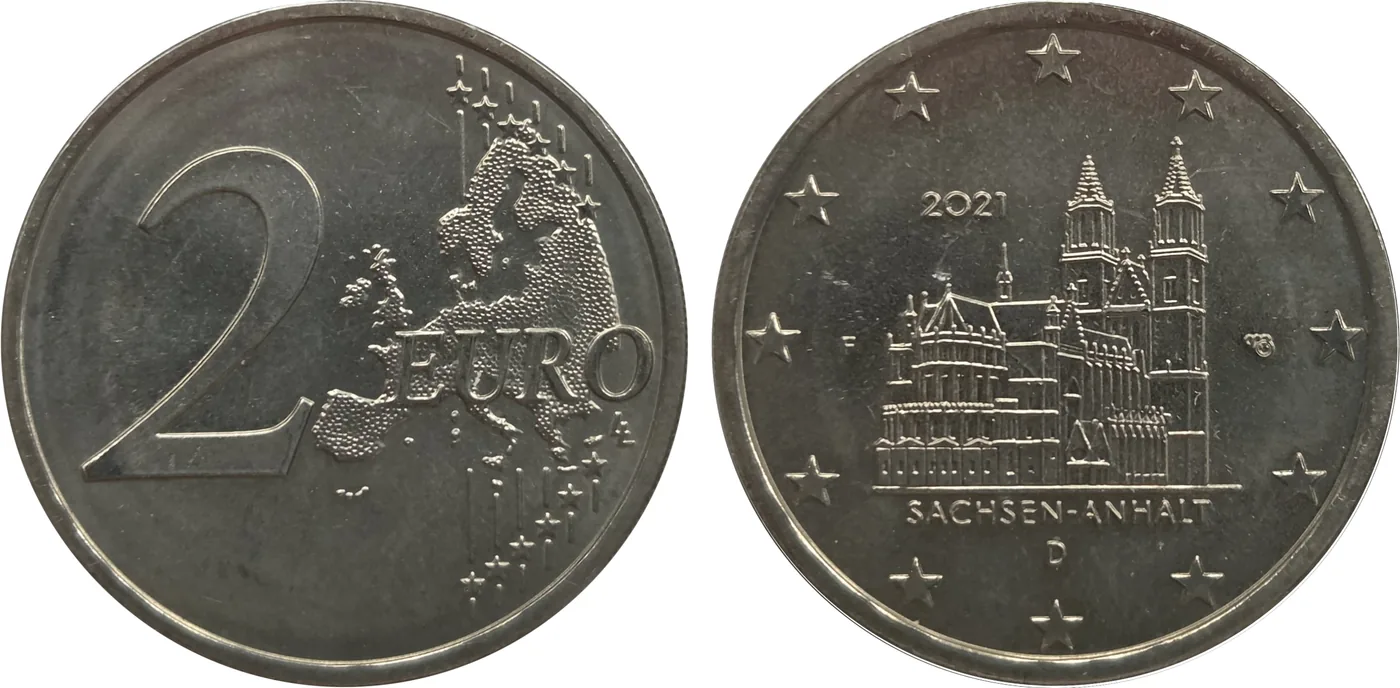
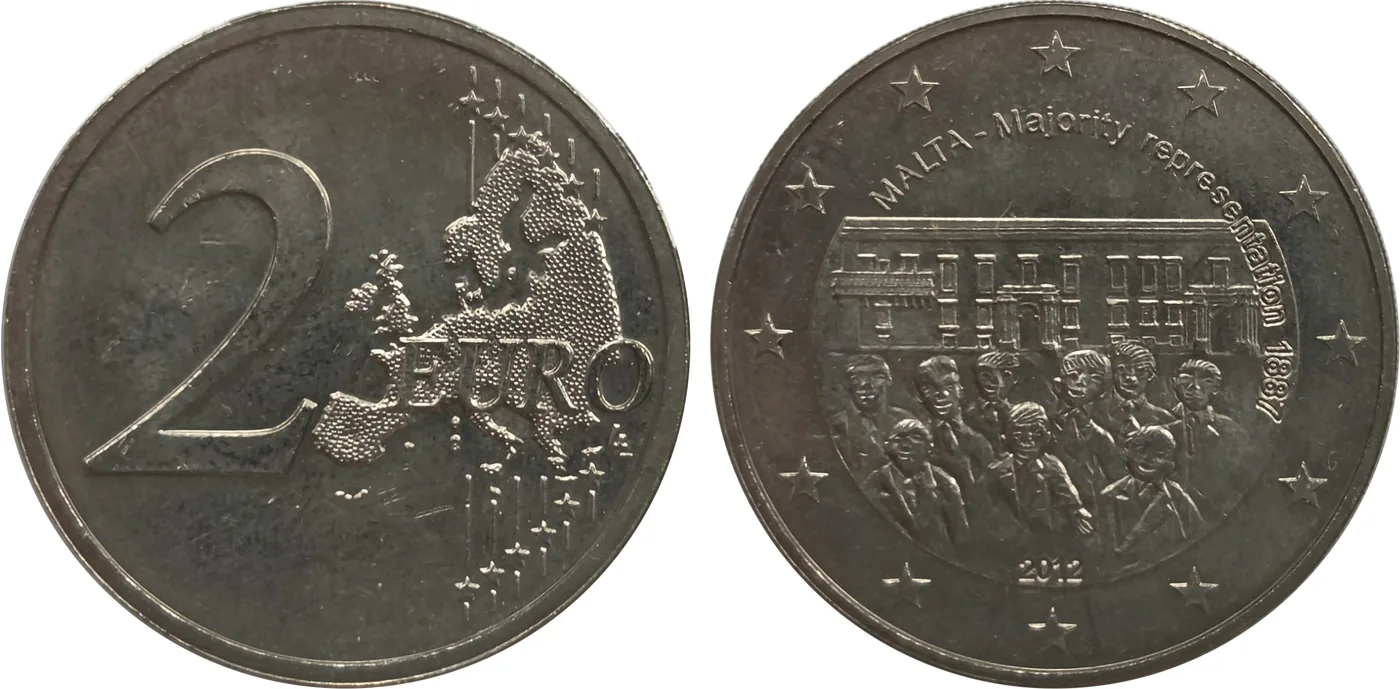
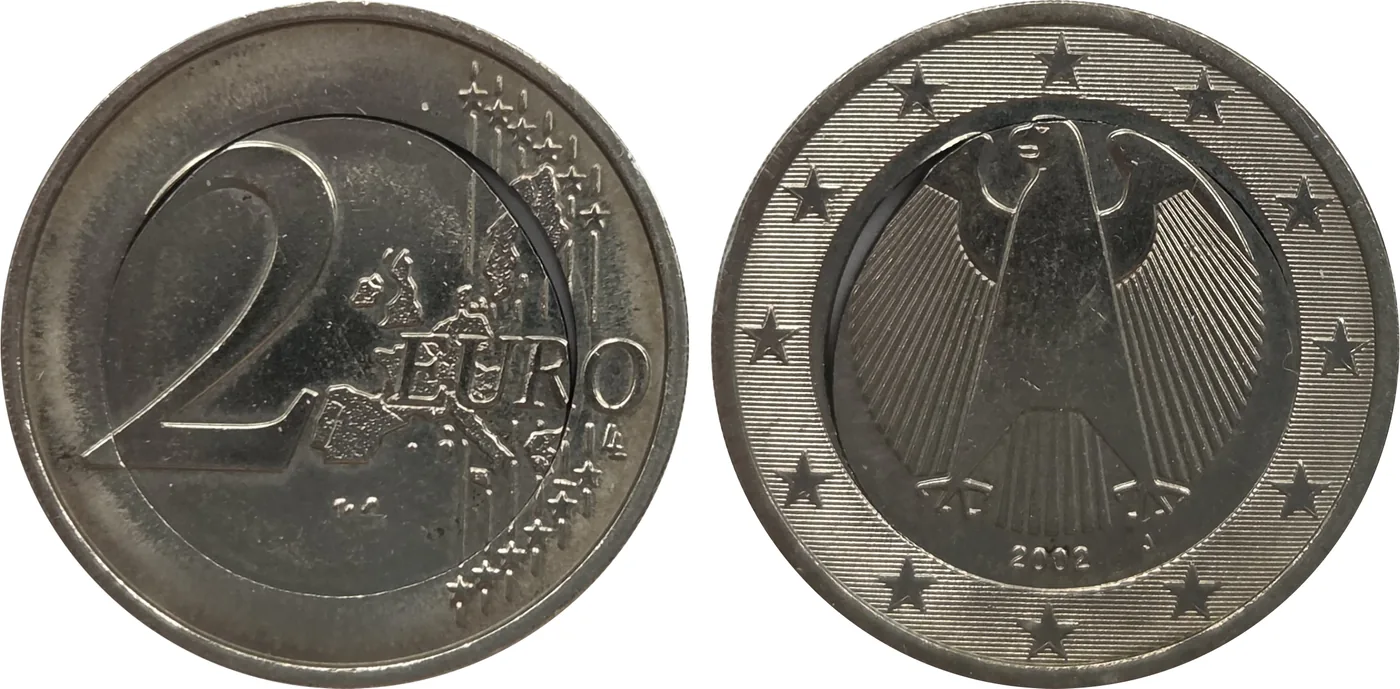
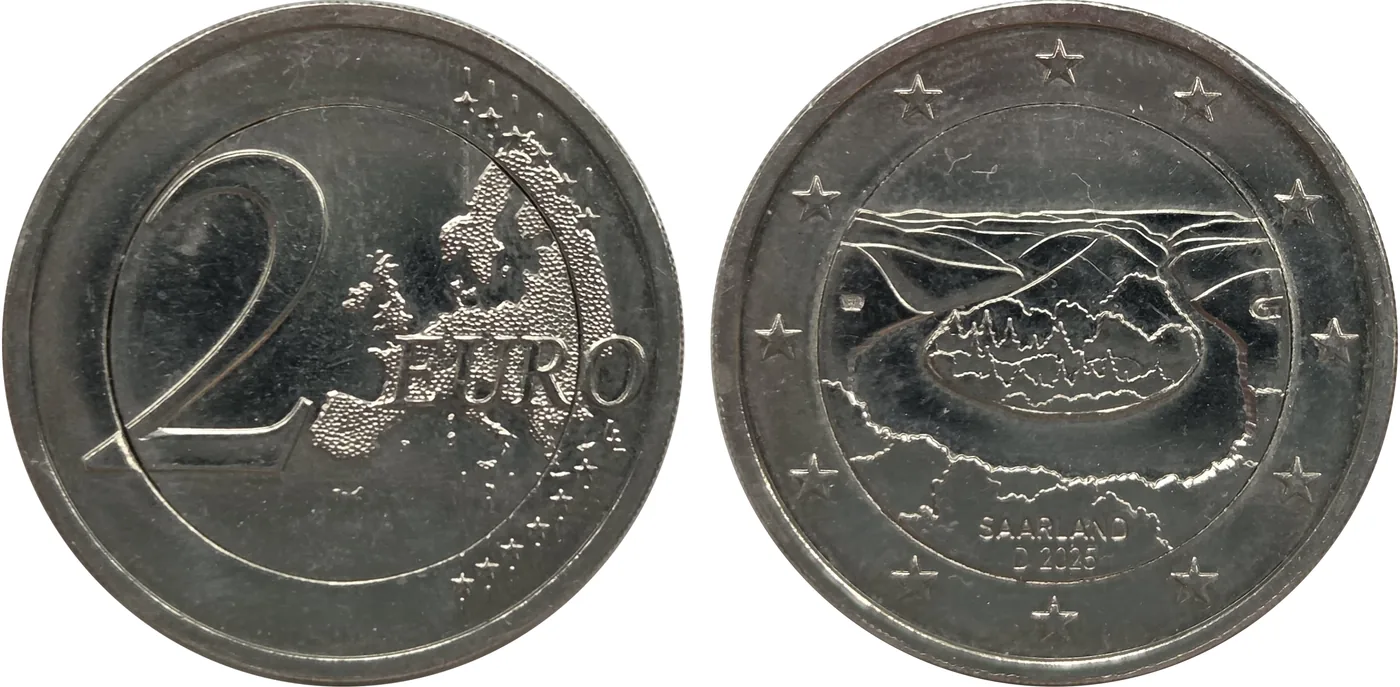
If, after the edge-milling process, the copper-nickel blank does not go through the punching process, it is not pierced and remains as a single, complete piece known as a single-metal planchet. In rare cases, these unpunched single-metal blanks, made from the silver-coloured copper-nickel material of the outer ring, end up in the feed hopper of the 2 euro coin presses. Since this planchet has the same diameter and thickness as a regular 2 euro coin, it is struck without any issues. The result is a coin that is physically struck completely correctly, with a sharp design and a clean edge, but which is entirely silver-coloured throughout. Because the dies are often subject to slight wear at the transition area between ring and core due to constant use, a fine, characteristic die line (the so-called “phantom seam”) frequently appears at the position of the missing join on the single-metal strike.
Fried Egg Error
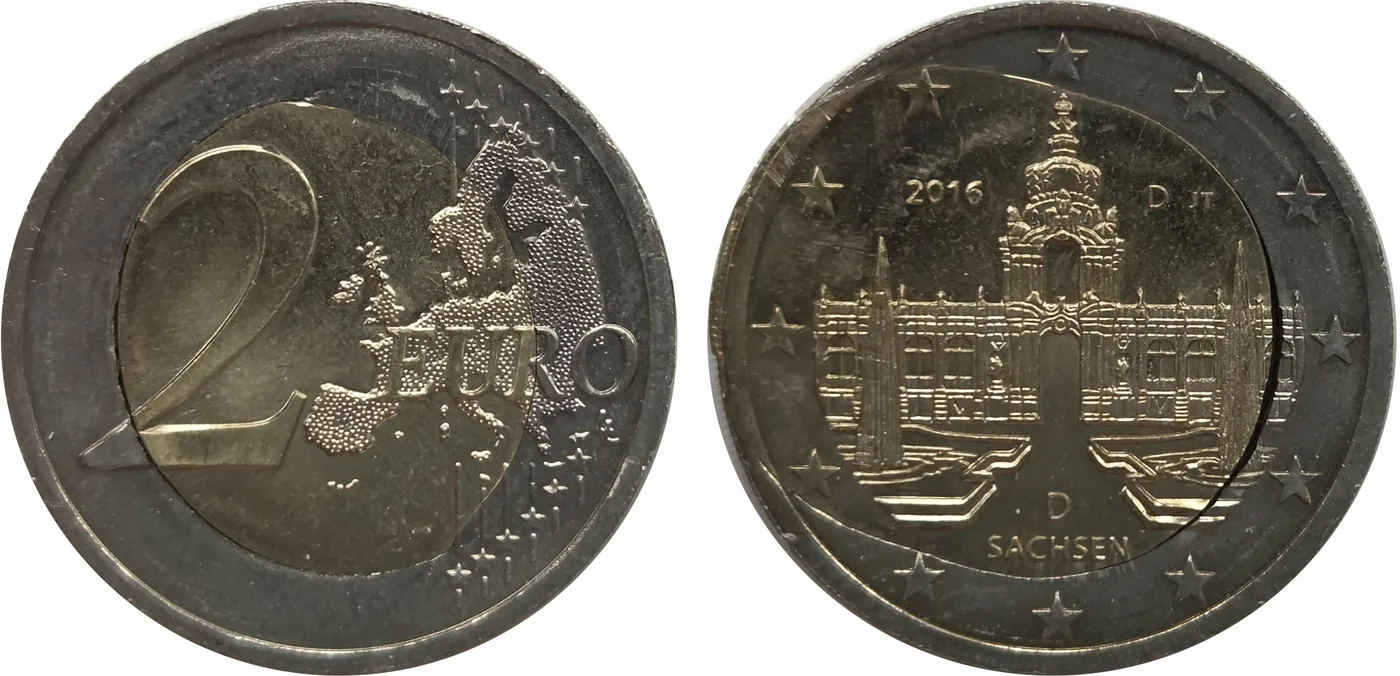
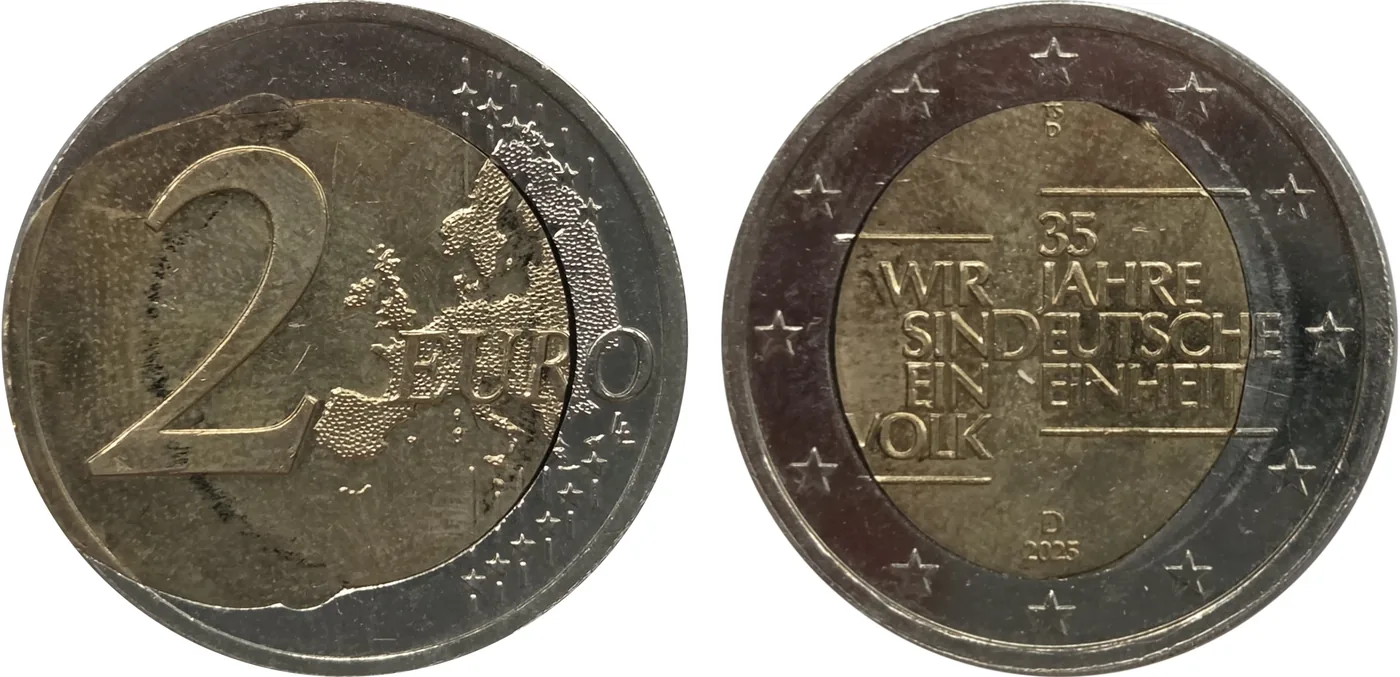
The so-called “fried egg error” is among the most conspicuous mint errors found on bimetallic coins, resulting from a fault during the automated assembly of the two planchet parts (ring and core) prior to the actual striking. The minting presses for bimetallic coins are fed in parallel via separate magazines for the rings and for the cores. A feeding mechanism places the ring into what is known as the collar (the outer boundary) and positions the core exactly centred within the ring. Only through the immense striking pressure are ring and core joined together during the strike itself. If, however, minimal timing or mechanical asynchronies occur within this complex feeding cycle, the core shifts or is inserted asymmetrically into the ring. The two planchet parts then lie partially on top of one another instead of fitting together.
Under the enormous pressure of the die, roughly 100 tonnes, the material of the core is then quite literally squeezed out over the inner boundaries of the ring during striking. The core metal flows into the ring area and spreads out irregularly across the surface. Visually, the result resembles a fried egg, as the golden-yellow material of the core protrudes asymmetrically into the silver-coloured rim.
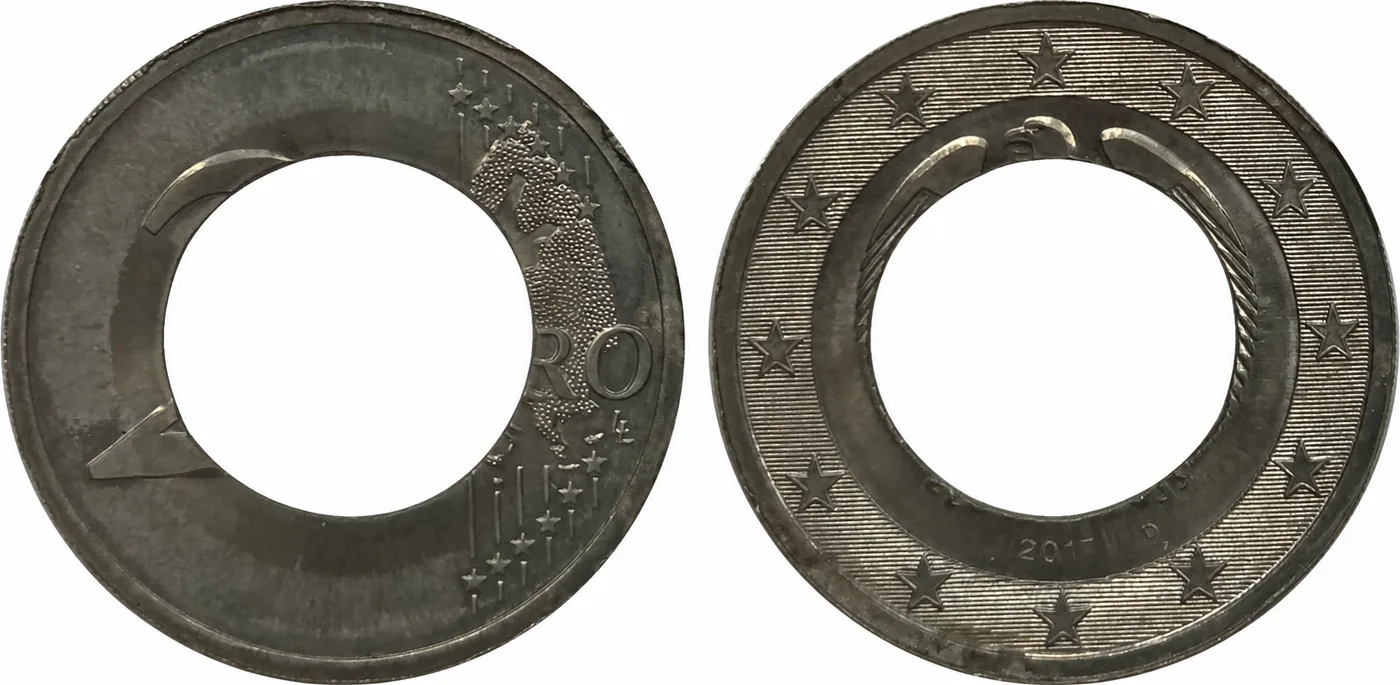
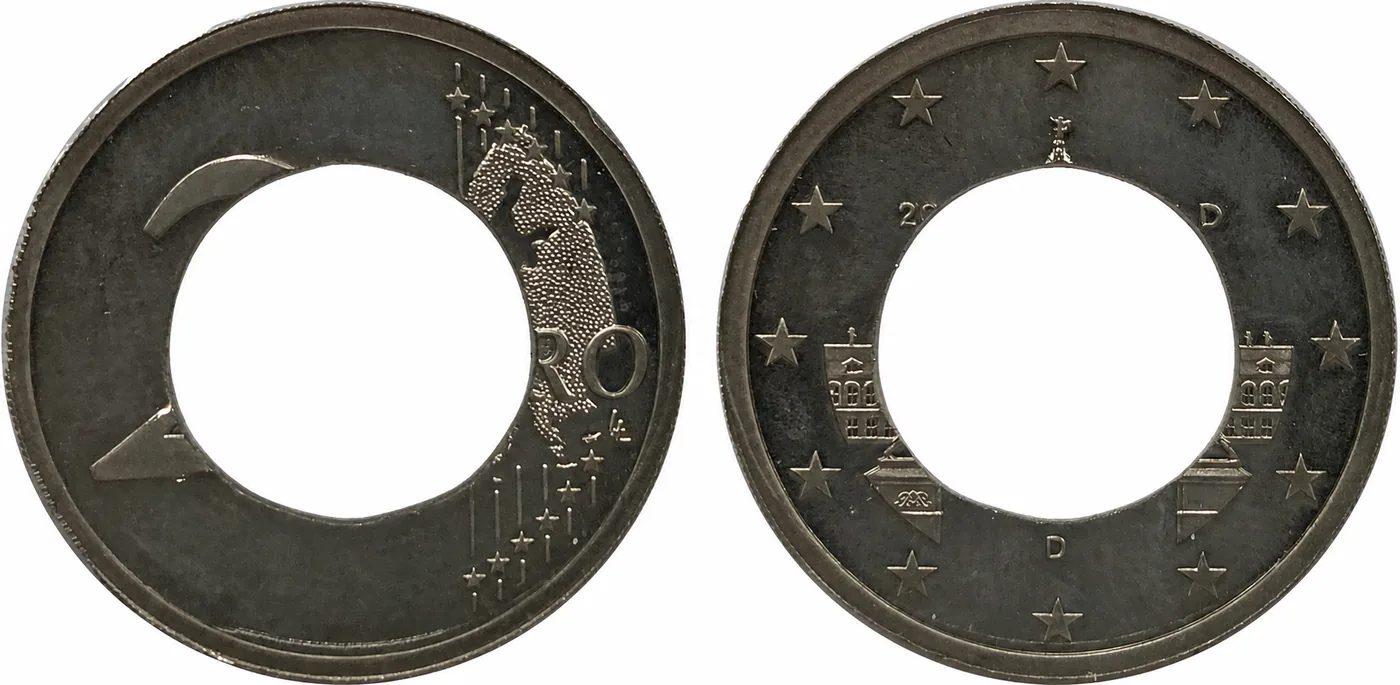
Struck Outer Ring (Without Core)
Before the actual striking of a bimetallic coin, two different planchets must first be produced for the ring and the core. For 2 euro coins, a blank made from a copper-nickel alloy is manufactured, which is subsequently punched with a hole, along with a separate blank made from the three-layer material nickel-brass-nickel-nickel-brass for the core. Only during the actual striking process are the outer ring and core firmly joined together by the immense striking pressure of around 100 tonnes. To this end, the minting presses are fed in parallel via separate transport channels with the two planchet parts.
If the mechanical feed of the core is blocked, becomes jammed in the magazine, or the feeding step is erroneously skipped, only the outer ring reaches the minting press. Since the counter-pressure from the centre is then missing during striking, the ring material deforms extremely inward under the load of the dies. As a result, details of the coin design that would normally appear at the centre on the core are instead struck onto the ring material that has flowed inward. The centre of the finished coin ultimately shows an irregular, open hole that is noticeably smaller than the original diameter of a regular core.
For technological reasons, this striking mark can only occur when the mint feeds the blanks for ring and core separately. If ready-assembled, loose 2 euro planchets were used instead – as is primarily the case in the production of coins in the collector qualities “proof” and “mirror finish”, and, in some eurozone countries, also for regular circulation coin production – this particular error would be ruled out.
Struck Core (Without Outer Ring)
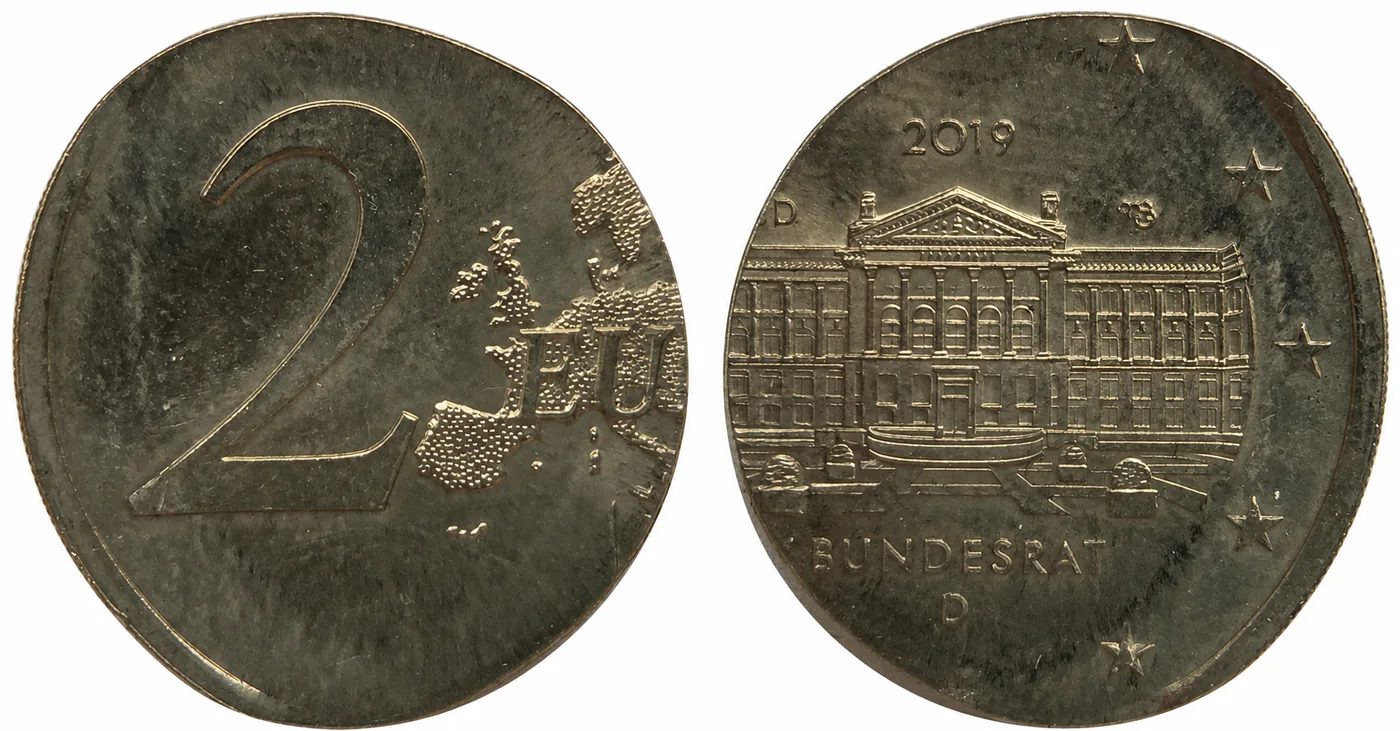
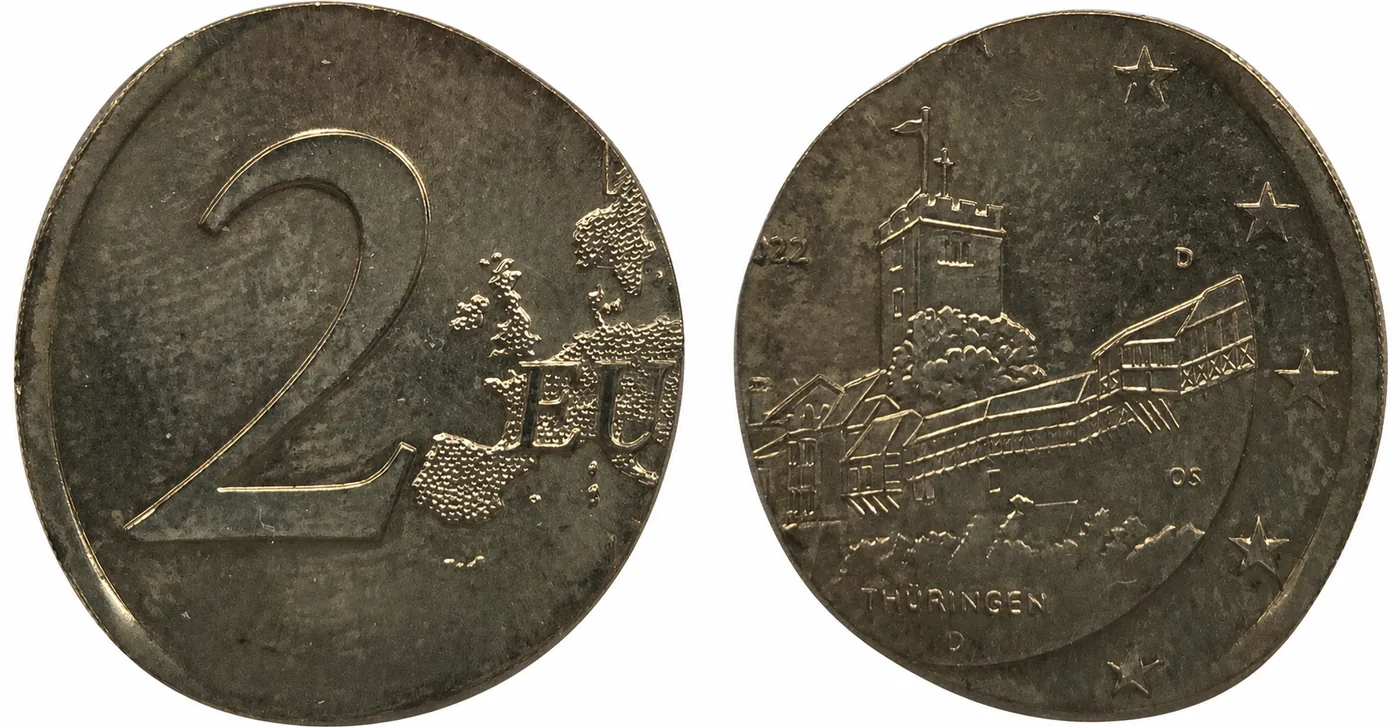
The direct counterpart to the struck outer ring (without core) is the struck core (without outer ring). It arises when the fault in the mechanical feeding occurs in reverse: the outer ring becomes blocked in the transport channel or jams, so that only the golden-yellow core reaches the minting press.
Since the outer boundary provided by the ring is missing during the striking process, the three-layer material behaves completely differently under the enormous striking pressure. Without the ring, the core’s metal flows outward unimpeded during striking. The result is a mis-strike that is flatter and noticeably larger in diameter than a regular, unstruck core. In addition, these pieces completely lack the typical reeding as well as the edge lettering, since the core usually makes little or no contact with the outer boundary of the coining collar.
For collectors, this physical peculiarity provides an important criterion for authentication: since a core that has merely been mechanically pushed out of a finished 2-euro coin afterward can never display this enlarged diameter and flat structure, genuine mis-strikes of this kind can be identified relatively easily.
2 Euro Coin with a Foreign Planchet as the Core
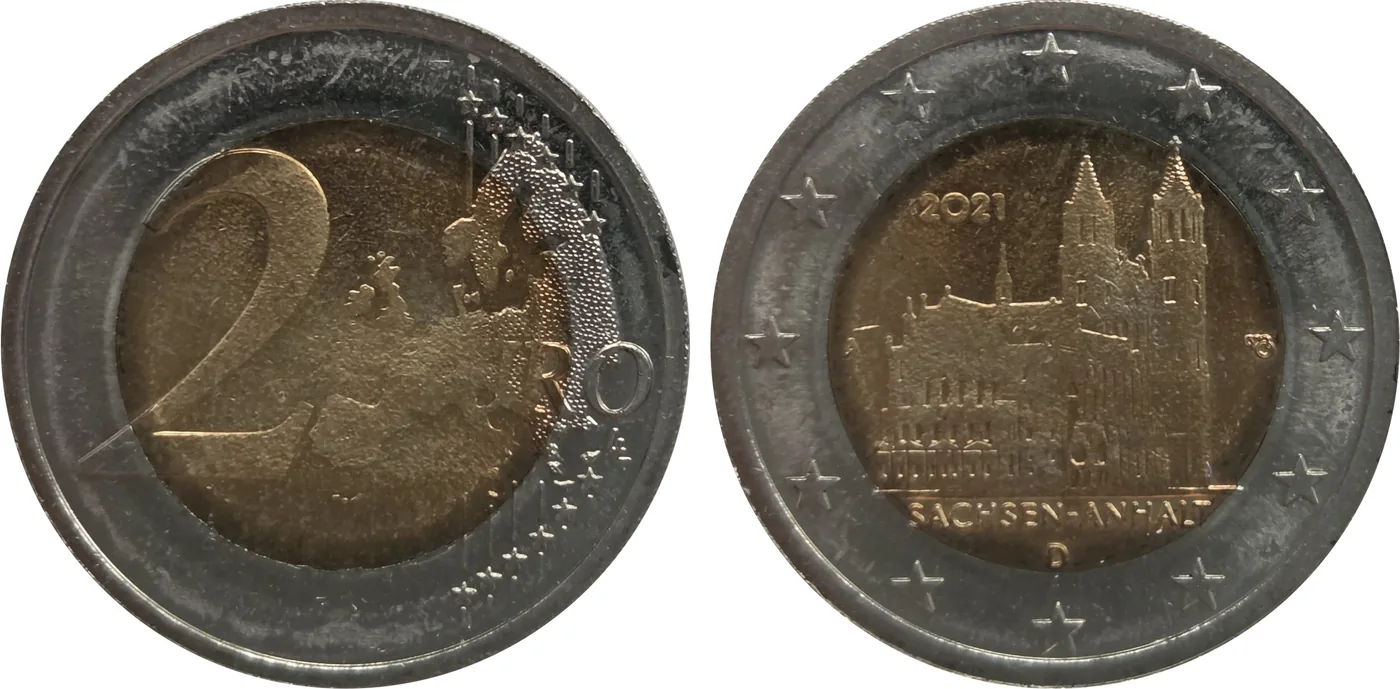
In this mis-strike, the bimetal components get mixed up before the striking process. Since mints produce various denominations and currencies side by side in a confined space, it can happen in rare cases that a foreign planchet – for example, the core of a 1-euro coin or even a planchet intended for a 2-cent piece – ends up in the container and thus in the feeder magazine for 2-euro cores.
If this foreign planchet has smaller or identical dimensions, the feed mechanism mistakenly treats it as a regular core and feeds it into the coining press. Since the outer diameter of the ring and the machine’s dies remain unchanged, the subsequent striking process proceeds without any blockage. Under the enormous striking pressure, the wrong core is joined together with the outer ring. However, since the dimensions of a foreign planchet almost never match those of a 2-euro core exactly, characteristic features result. If the foreign planchet is too small (as with a 1-euro core), the material does not spread far enough under the dies to close the gap to the outer ring completely and flush. A characteristic, often irregular small gap remains between the two metal components, which in turn results in an atypical overall weight for the coin. Because of the insufficient material flow, the bond between the two planchet parts is often weak. The design in the centre also frequently appears incomplete or weakly struck, since the thickness and hardness of the foreign planchet are not matched to the dies.
For collectors, these pieces are absolute rarities due to their extremely striking appearance and the flawed combination of materials and colours. Since foreign planchets almost always have a deviating thickness, the exact weight – which differs markedly from the standard 8.5 grams of a regular 2-euro coin – provides the most reliable criterion for authentication.
Split Core
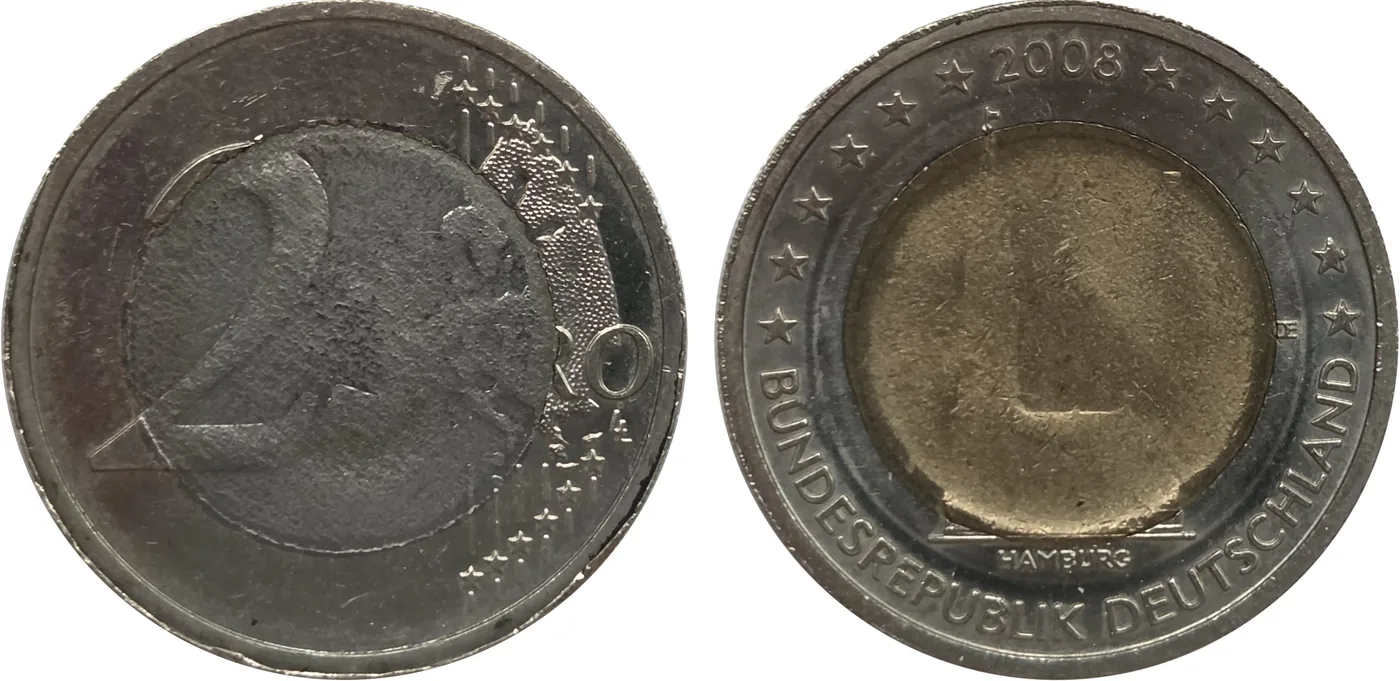
The core of a 2-euro coin consists of the three-layer material nickel brass–nickel–nickel brass (Cu75Zn20Ni5 / Ni12 / Cu75Zn20Ni5). Because of this material composition, the two outer layers are not magnetisable, while the inner nickel layer possesses ferromagnetic properties. During production of the planchet material, these three metal layers are rolled together into a single sheet, from which the blanks for the 2-euro core are subsequently punched. In rare exceptional cases, however, the layers fail to bond properly during this punching process and separate from one another. As a result, the finished planchet is noticeably lighter and, depending on which layer is missing, may also lose its magnetisability.
Because a layer of material is missing, the planchet turns out considerably thinner than specified, which causes uneven pressure during the subsequent striking process: the outer ring is subjected to significantly more striking pressure than the core. Since the ring and core are only permanently bonded together through this enormous striking pressure, the lack of pressure on the core results in an extremely weak, often barely recognisable design. In addition, because there is less resistance, the material of the silver-coloured ring flows more strongly inward, leaving the golden-yellow core minimally smaller than on a regularly struck 2-euro coin.
Clipped Planchet
A clipped planchet has its origin right at the very beginning of the production chain, before the coin is actually struck. The coin metal is first cast and rolled into a long, continuous metal strip (known as the “coil”). The coin blanks are punched out of this strip by a punching machine at an enormous speed of up to 6,000 pieces per minute. If the metal strip is fed irregularly, becomes skewed, or runs through the punching machine too quickly, the newly punched holes overlap with areas that have already been punched out, or extend beyond the outer edge of the metal strip.
The resulting planchet has an incomplete, faulty geometry: it lacks a characteristic crescent-shaped section (where punched holes overlap) or a straight section (where the strip edge is exceeded) at its outer edge. If such a faulty planchet is nevertheless fed into the coining press and struck, the missing section remains clearly visible. Because the mechanical counter-pressure of the collar is absent at the defective spot, the struck design distorts slightly towards the faulty edge, as the metal under the dies shifts in the direction of the gap. On 2-euro coins, clipped planchets can occur on both the ring material and the core, since the planchets for the outer ring and inner core are made from different materials and are accordingly punched separately.
Mule Error (Hybrid Strike)
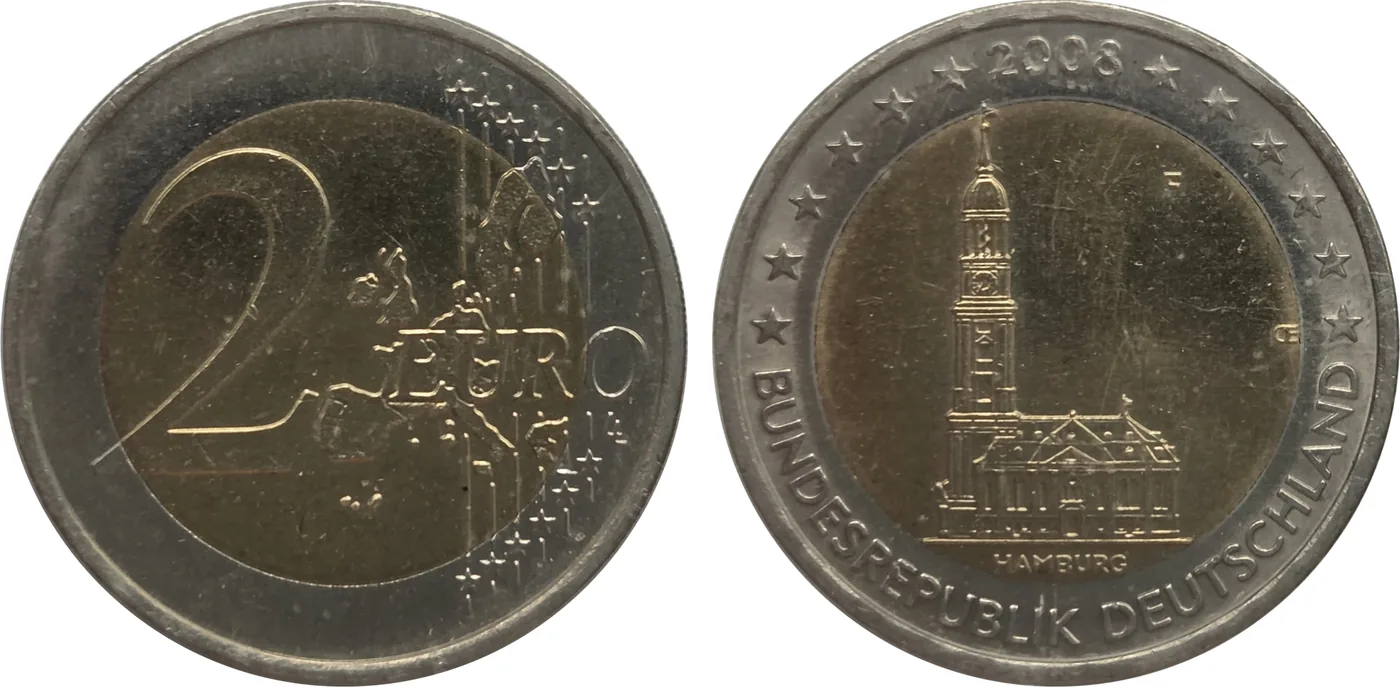
A mule error (hybrid strike) occurs at the mint when two coin dies that are not officially meant to be paired are accidentally combined. Coining presses are fitted with an upper and a lower die, which normally carry the national obverse (e.g. the federal eagle on German 2 euro coins) and the common European reverse (the common side bearing the “2 euro” denomination). If maintenance staff mistakenly install an outdated die, or one intended for a different year, during a die change, a mismatched pairing results.
A well-known example is the Germany 2 euro 2008 “Hamburg” coin with mint mark F. For part of the mintage, the Stuttgart mint mistakenly used the old die for the European common side (showing the old EU borders prior to enlargement) instead of the new die that had been legally required since 2008 (showing the updated map of Europe without country borders). Such mule errors are technically struck to perfection and are barely noticeable in everyday use, yet they are highly sought after by collectors. Far more conspicuous are extreme mismatches, where the die of a completely different denomination is accidentally used, so that the error strike is immediately obvious to the viewer.
Trial Pieces and First Strikes (Germany 2 Euro “Rotating Stars”)
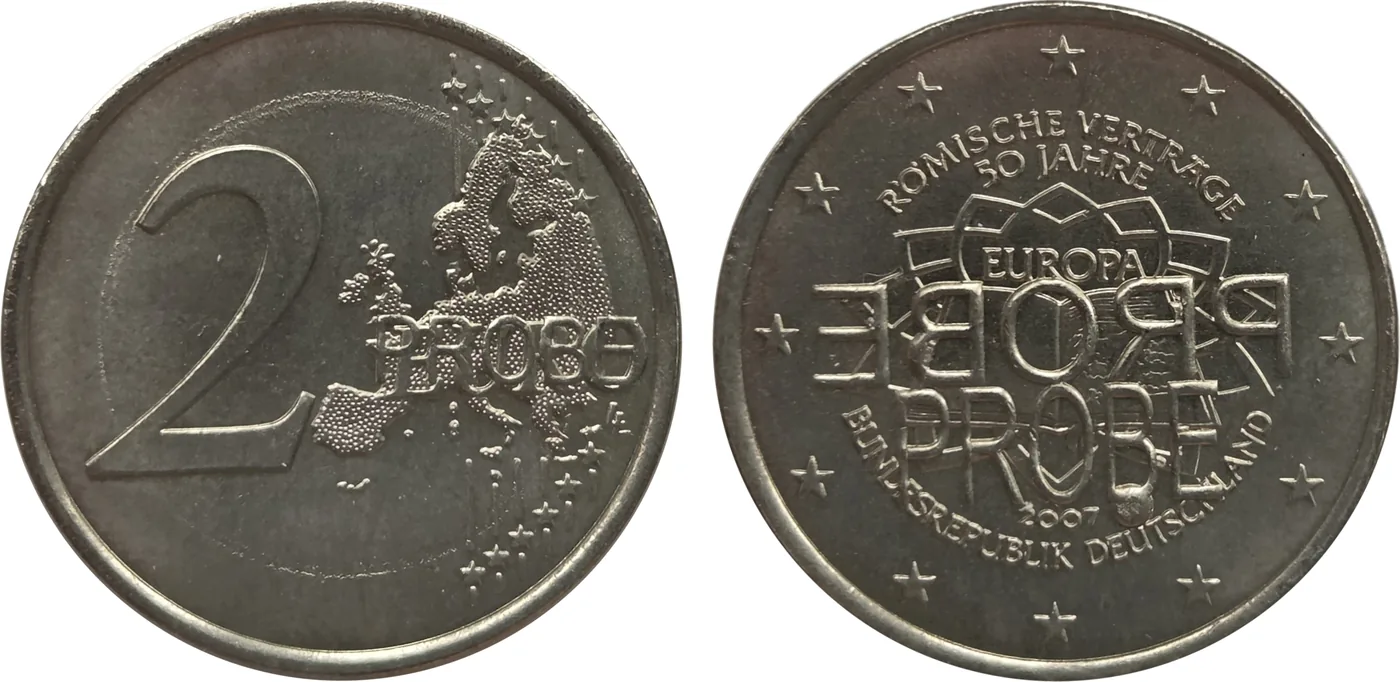
Before a new coin officially goes into mass production, the mints always produce test and trial strikes beforehand to check tools and materials. Although these pieces are subject to strict security requirements and should never leave the mint, in extremely rare individual cases such trial pieces and first strikes have nevertheless surfaced in circulation.
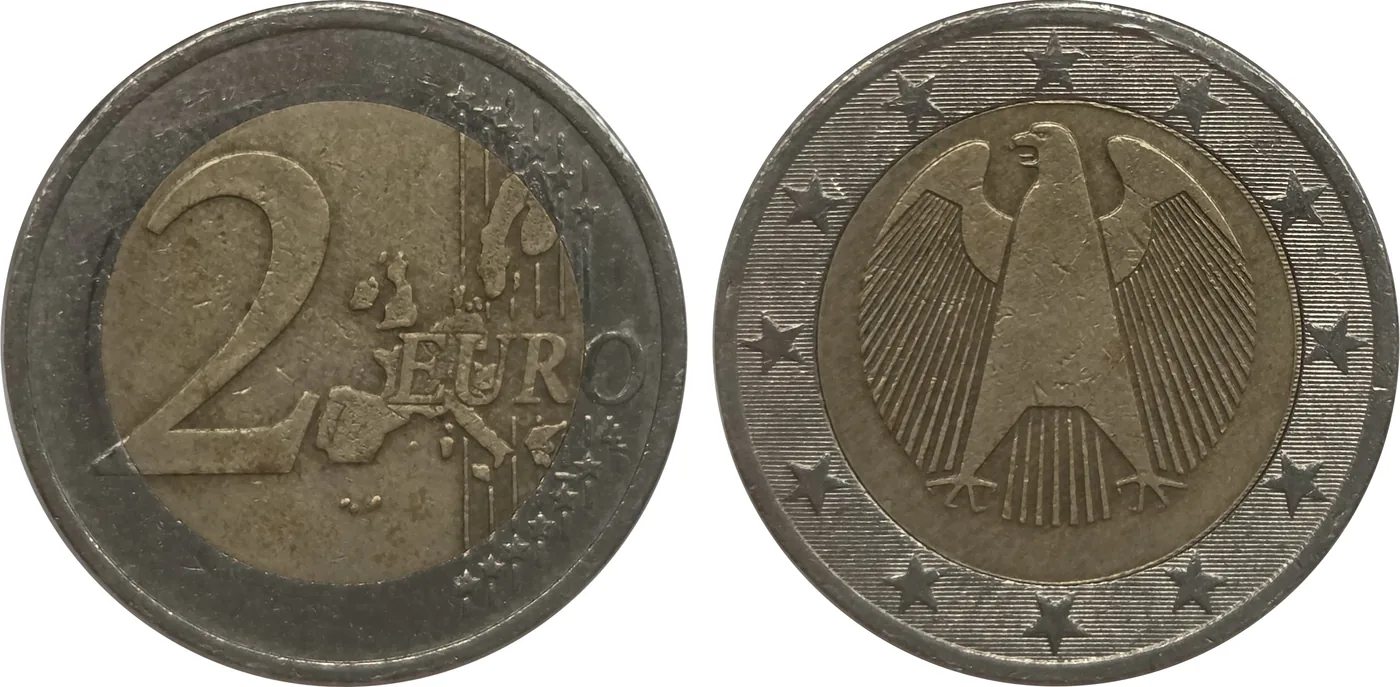
The pieces known as the “rotating stars” occupy an absolutely unique position among euro rarities. Contrary to widespread belief, these are not classic error strikes, since the design engraved on the dies is reproduced with complete technical accuracy on the struck coins. The cause lies instead in the design phase before the official start of striking German euro coins in August 1998: the master dies of all five German mints were mistakenly produced with the European stars arranged radially, their points radiating outward from the centre like sun rays. Relative to the round edge of the coin, the orientation of the stars therefore appeared to rotate when viewed. Only after the first series had already been produced did the European Commission notice that this contradicted the official design guidelines, which require all star points to face uniformly upward. Production was halted immediately, but an unknown number of already-struck pieces escaped destruction and entered circulation.
Among the 2 euro coins with “rotating stars”, the surviving examples can be precisely classified into different groups based on their characteristics:
- Early trial pieces: These extremely rare pieces bear neither a mint mark nor a date. Since the standard euro edge-milling tools were not yet ready for use at this early testing stage, the edge tool from the old 5 Deutsche Mark coin was used instead. As the diameter of the 5 DM coin, at 29 mm, was considerably larger than that of a 2 euro coin (25.75 mm), a characteristic, irregular overlap occurred in the impressed edge lettering “EINIGKEIT UND RECHT UND FREIHEIT”.
- Advanced trial pieces: These examples also lack a strike year and mint mark on the design side. However, the correct, new edge tool for the 2 euro coins was already in use here, so the edge lettering reads flawlessly and without any text overlap.
- The first strike: These pieces show the regular coin design, including the respective mint letter (A, D, F, G, J) and the year of issue. The only difference from the later, normal circulation coins is the incorrect, star-shaped orientation of the twelve European stars on the national obverse.
Owing to their rarity and historical significance, these historically important pieces regularly achieve top prices in the four-figure range at auctions and represent the ultimate dream for many euro coin collectors.
Important Note: Minting Error vs. Manipulation
Given the sometimes high market values of genuine minting errors, fraudsters regularly attempt to alter ordinary 2 euro coins after the fact through chemical, thermal, or mechanical means – for instance by forcibly knocking out the core and then swapping it. The most important foundation for detecting manipulation is a thorough understanding of the actual production process: anyone who understands how a coin is made can immediately spot physically impossible features on altered pieces. When in doubt, a genuine minting error can be confirmed through objective measurements and testing procedures: alongside a purely visual examination, a precise magnetic test of the components and an exact weight determination are among the decisive criteria for distinguishing true rarities from later manipulation beyond any doubt.