Croatian Cities – Pula
 ©Image credit: Numismatische Sammlung der Deutschen Bundesbank + Add to collection In collection ★ Wanted
 At a glance
| Country | Croatia |
|---|---|
| Year | 2025 |
| Issue date | 24 October 2025 |
| Coin type | Commemorative coin |
| Mintage | 200.000 (5.000 / 5.000) |
| Catalogue number | HR-25 G2 |
| Designer | Duje Botteri |
| Rarity | €€€€€ what does this mean? |
| Edge lettering | 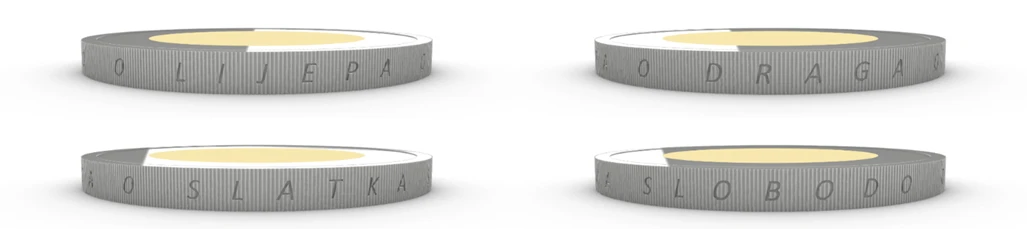 |
| Market value (approx.) | 30 € · guide price, uncirculated Unlock · for members |
Coin description
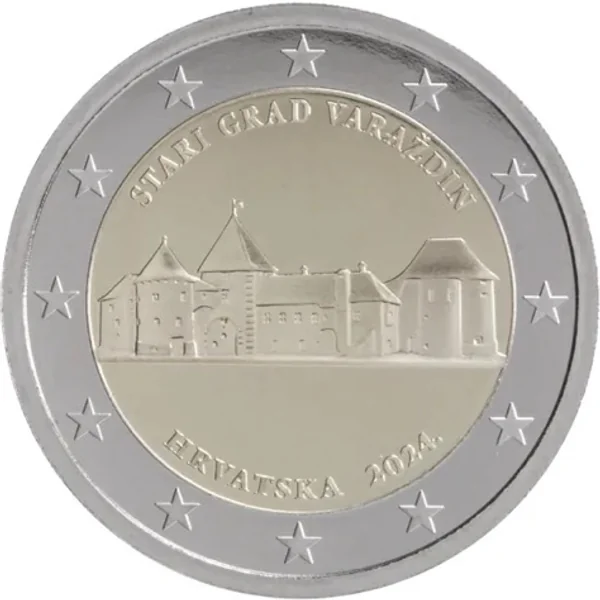
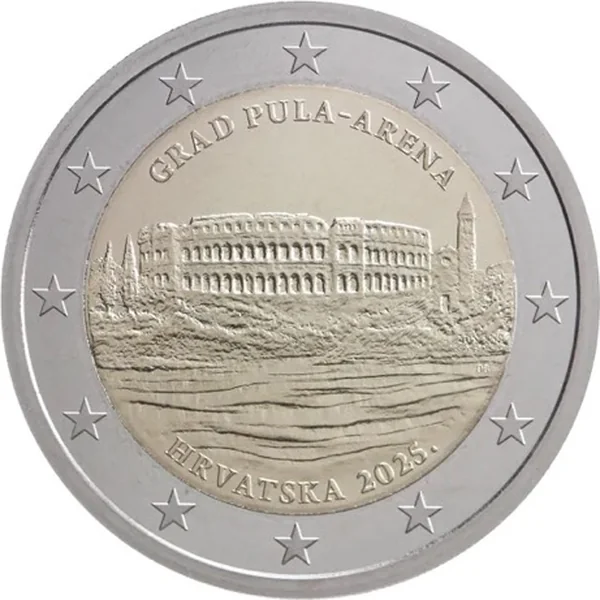
The Arena of Pula — the amphitheatre, one of the most significant ancient monuments in the Republic of Croatia. The Adriatic Sea is symbolically depicted below the main motif, underscoring Croatia's Mediterranean character. To the right of the design the Church of St Anthony, built in the 1930s, which forms part of the city's panorama. Along the inner rim: the commemoration inscription "GRAD PULA – ARENA" at the top and "HRVATSKA 2025." at the bottom.
Further information on the topic
Pula is one of the oldest cities on the Croatian Adriatic coast, with more than two thousand years of continuous settlement. As the former Roman colony of Colonia Iulia Pola, the Empire left behind an unusually complete ensemble of ancient buildings in Pula: a triumphal arch, temples, a theatre, and above all the amphitheatre, which ranks among the six largest of its kind in the entire Mediterranean. The Pula Arena was built between the 1st century BC and the 1st century AD and once held around 20,000 spectators. The fact that its outer walls have survived almost intact sets it apart from many other ancient amphitheatres in Europe and makes it the most impressive architectural testament to Roman building technique in present-day Croatia.
Since the Middle Ages, Pula has been the object of dynastic and imperial rivalries — Venice, the Habsburgs, and finally the shifting rulers of the 20th century all left their mark on the city. Despite all these upheavals, the Arena has never entirely lost its function as a central gathering place: today it hosts the Pula Film Festival, one of the oldest film festivals in the world, as well as concerts and events with European reach. The city itself, with around 55,000 inhabitants today, is the administrative seat of Istria County and stands as a symbol of the peninsula's Mediterranean, multilingual character. With its 2025 commemorative coin from the Croatian Cities series, Croatia honours Pula as the historic heart of Istria and a living site of ancient heritage.
Official issues of the coin
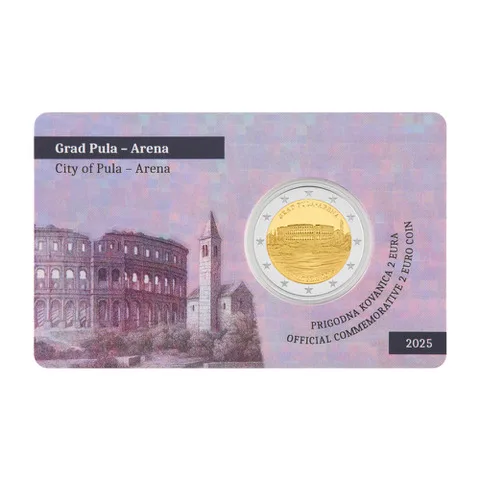 ©Image credit: Hrvatska kovnica novca
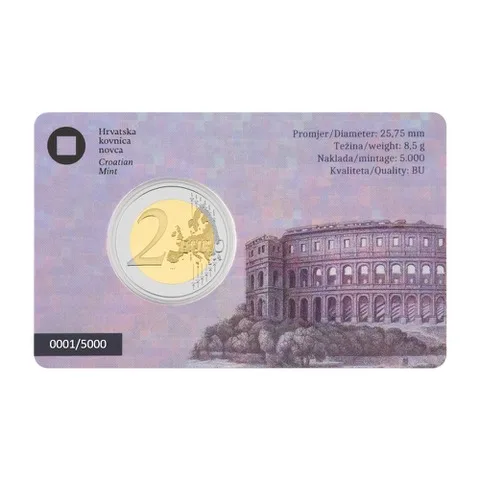 ©Image credit: Hrvatska kovnica novca
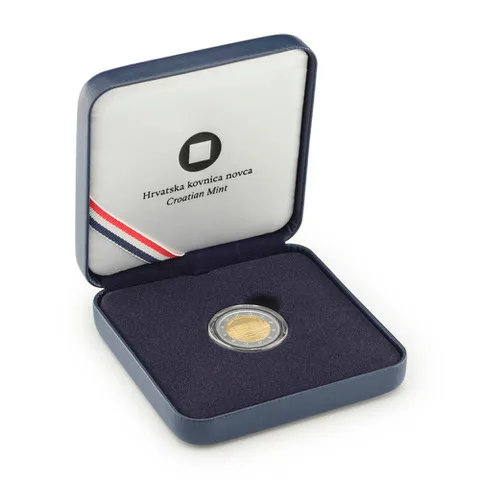 ©Image credit: Hrvatska kovnica novca
Technical data
| Face value | 2 euro |
|---|---|
| Material | Bimetallic – outer ring: cupronickel; centre: three layers (nickel-brass / nickel / nickel-brass) |
| Weight | 8.5 g |
| Diameter | 25.75 mm |
| Thickness | 2.20 mm |
More 2-euro coins from Croatia
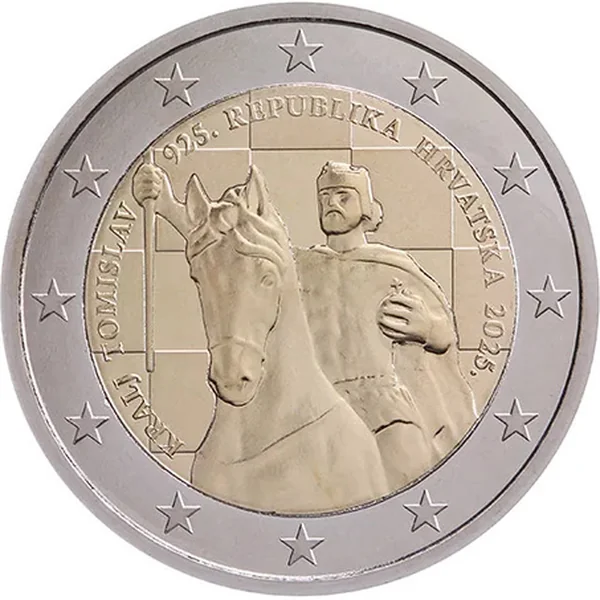
1,100 Years of the Kingdom of Croatia and the Coronation of King Tomislav
Commemorative coin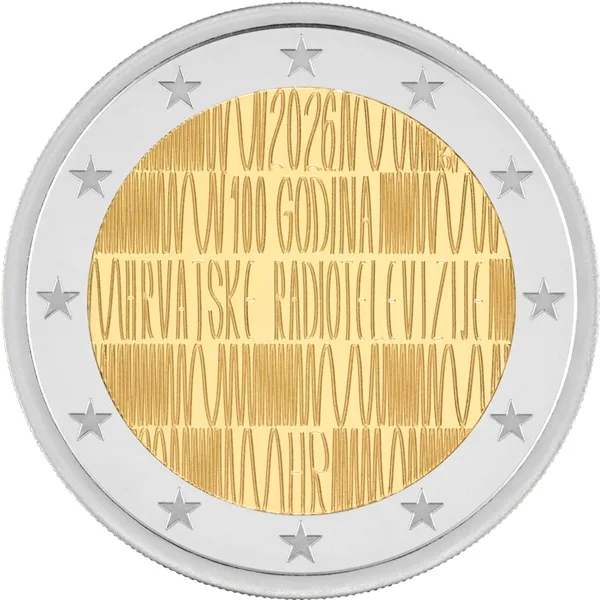
100 Years of Croatian Radio-Television
Commemorative coin
500th Anniversary of the Death of Marko Marulić
Commemorative coin
Croatian Cities – Vukovar
Commemorative coin