100th Anniversary of the Union of Thrace with Greece
 + Add to collection In collection ★ Wanted
 At a glance
| Country | Greece |
|---|---|
| Year | 2020 |
| Issue date | 16 July 2020 |
| Coin type | Commemorative coin |
| Mintage | 750.000 (5.000 / 2.000) |
| Catalogue number | GR-20 G2 |
| Designer | Georgios Stamatopoulos |
| Rarity | €€€€€ what does this mean? |
| Edge lettering |  |
| Market value (approx.) | 4 € · guide price, uncirculated Unlock · for members |
Coin description
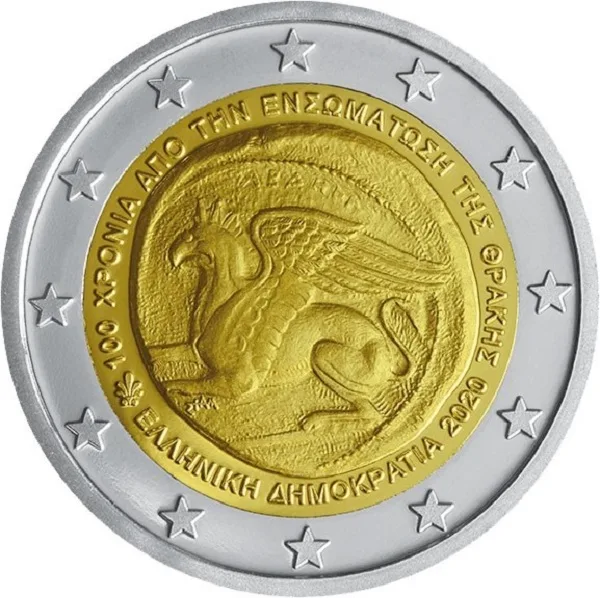
A drachma coin bearing a griffin rearing to the left. Around the inner edge of the coin, the commemorative occasion runs along the top and the issuing state's name in Greek along the bottom; the palmette of the Greek mint appears at lower left and the year 2020 at lower right.
Further information on the topic
Thrace was, for centuries, one of the most contested territories in the eastern Mediterranean. The region, stretching between the Aegean, the Black Sea and the Balkans, changed hands under Ottoman rule, went through the Balkan Wars of the early 20th century, and, after the First World War, stood at the centre of Greek-Turkish disputes. The reorganisation of the region took place under the Treaty of Sèvres (1920) and was finally settled by the Treaty of Lausanne (1923). Western Thrace, with the core area around Alexandroupoli, Komotini and Xanthi, fell to Greece, while Eastern Thrace and Constantinople remained with Turkey. The union of Thrace with the Greek state in 1920 ended a period of political instability and represented, for Greece, the last major territorial expansion within the framework of the so-called Megali Idea - the national project of uniting all Greek-speaking regions under a single state.
Today, Thrace is one of the northernmost regions of Greece, holding strategic and cultural significance due to its location on the border with Turkey and Bulgaria. Its population comprises a Greek majority alongside a Muslim minority, which holds one of the oldest treaty-recognised minority rights in Europe. Archaeologically, the region is extraordinarily rich: Thracian royal tombs from the 4th and 3rd centuries BC, as well as finds from Greek and Roman antiquity, shape its character. The griffin, a mythical creature from Thracian and Greek iconography, links the region's ancient heritage to its present-day status as part of Greece. On the occasion of the 100th anniversary of the union of Thrace with Greece, the Greek state issued a 2-euro commemorative coin in 2020, honouring this historic turning point.
Official issues of the coin
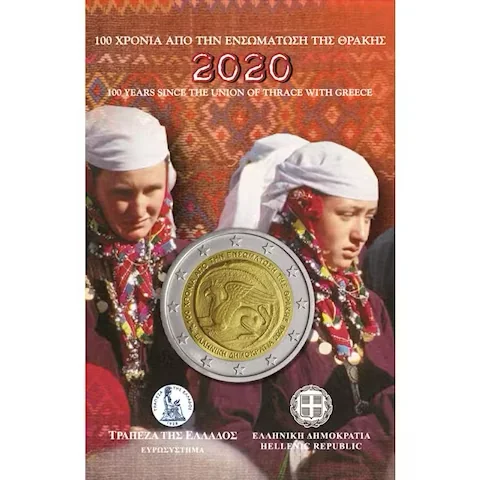 ©Image credit: Νομισματοκοπείο - IETA
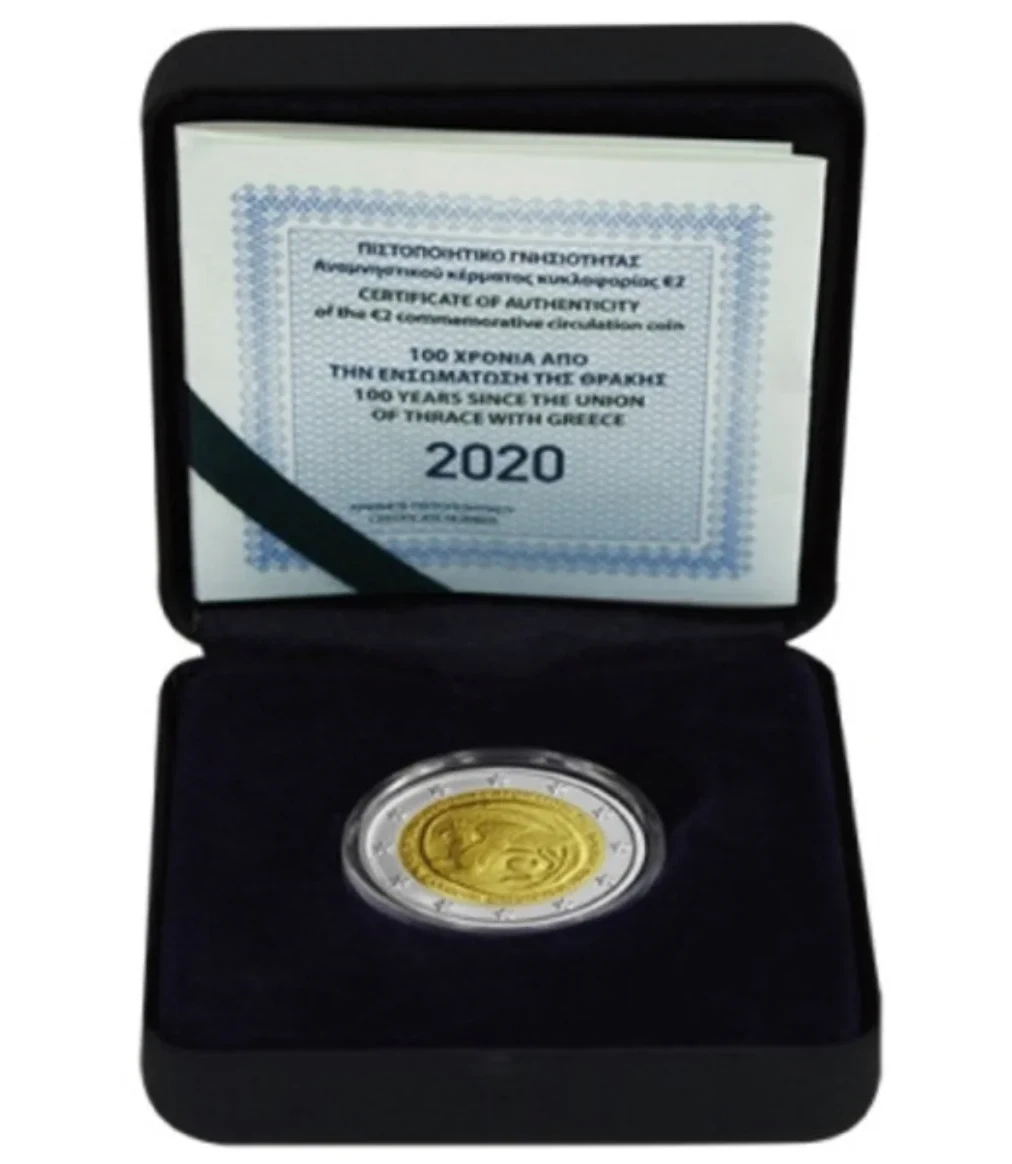 ©Image credit: Νομισματοκοπείο - IETA
Technical data
| Face value | 2 euro |
|---|---|
| Material | Bimetallic – outer ring: cupronickel; centre: three layers (nickel-brass / nickel / nickel-brass) |
| Weight | 8.5 g |
| Diameter | 25.75 mm |
| Thickness | 2.20 mm |
More 2-euro coins from Greece
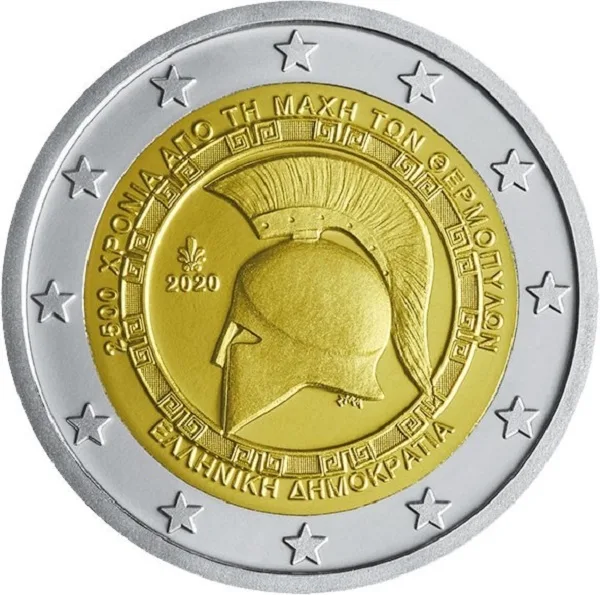
2,500 Years of the Battle of Thermopylae
Commemorative coin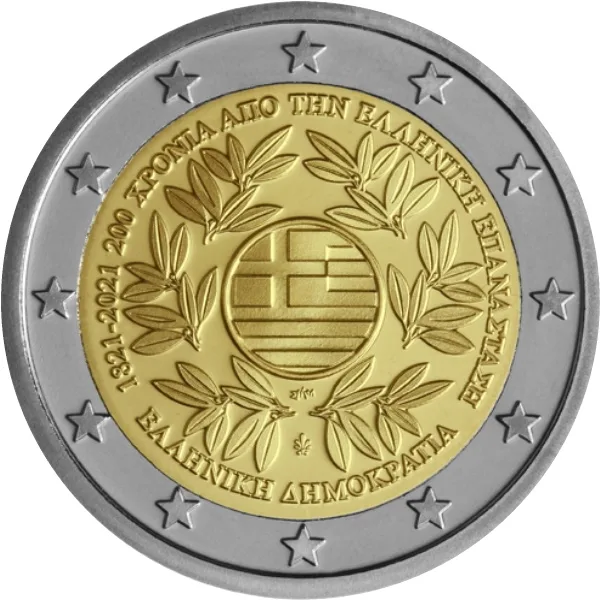
200 Years of the Greek Revolution
Commemorative coin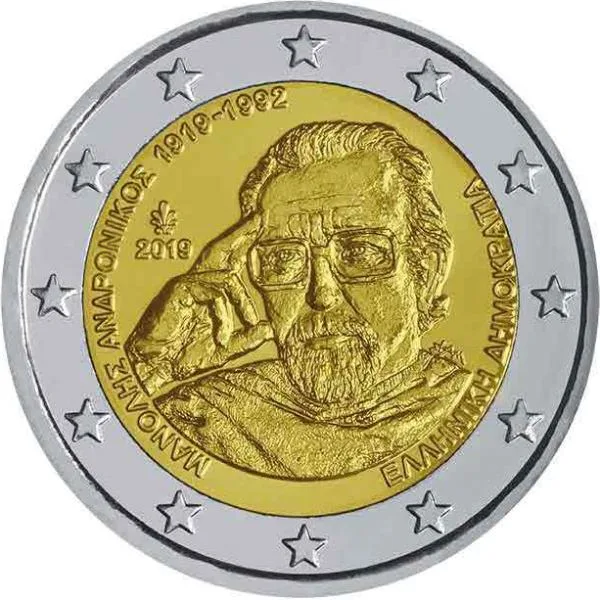
100th Birthday of Manolis Andronikos
Commemorative coin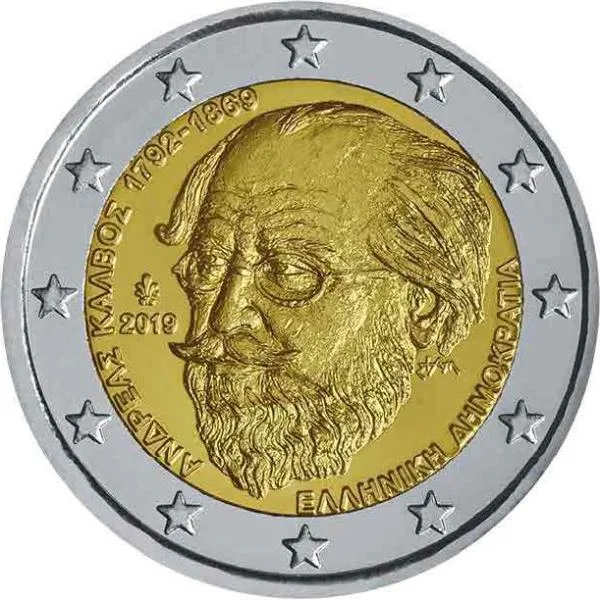
150th Anniversary of the Death of Andreas Kalvos
Commemorative coin