30 Years of the European Flag
 + Add to collection In collection ★ Wanted
 At a glance
| Country | Latvia |
|---|---|
| Year | 2015 |
| Issue date | 3 November 2015 |
| Coin type | Commemorative coin |
| Mintage | 1.010.000 (10.000 / – ) |
| Catalogue number | LV-15 G2 |
| Designer | Georgios Stamatopoulos |
| Rarity | €€€€€ what does this mean? |
| Edge lettering |  |
| Market value (approx.) | 4 € · guide price, uncirculated Unlock · for members |
Coin description
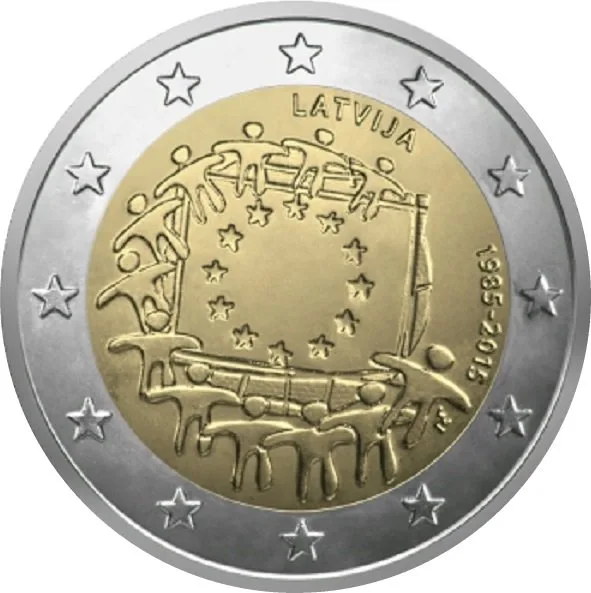
The EU flag as a symbol bringing peoples and cultures together around shared values and ideals in building a better future. Twelve stars take on human form, welcoming the birth of a new Europe. Along the upper right of the coin ring, the issuing state "LATVIJA" and the dates "1985–2015" are engraved. The mintmark sits to the right between the flag and the dates. The designer's initials (Georgios Stamatopoulos) appear at lower right.
Note on the coin
Fourth joint issue of the European Union. All 19 euro-area states issued a coin with the same design on varying dates. The coins differ only in the inscription, which appears in each country's national language.
Further information on the topic
Few symbols have accompanied the European unification process as visibly as the flag with its twelve gold stars on a blue background. Originally designed in 1955 by the Council of Europe as a non-partisan symbol of the continent, it was officially adopted by the European Community in 1985 — at a moment when integration was gaining new momentum: the common single market was taking shape, membership was growing, and the need for a shared public identity was gaining political weight. The twelve stars do not represent a number of members but stand for completeness and unity — a motif deeply rooted in European cultural history.
Latvia is among those countries for which the European project was no foregone conclusion but a hard-won decision. After decades under Soviet rule, the country regained its independence in 1991 and consistently oriented its course toward the West: Latvia joined the European Union in 2004 and the eurozone in 2014. In this context, the European flag is no abstract administrative symbol but an expression of a political reorientation that carries historic significance for much of Latvian society. To mark the 30th anniversary of the flag's adoption, Latvia issued a European joint coin in 2015 together with all other euro states, honouring this step in the continent's process of self-affirmation.
Technical data
| Face value | 2 euro |
|---|---|
| Material | Bimetallic – outer ring: cupronickel; centre: three layers (nickel-brass / nickel / nickel-brass) |
| Weight | 8.5 g |
| Diameter | 25.75 mm |
| Thickness | 2.20 mm |
More 2-euro coins from Latvia
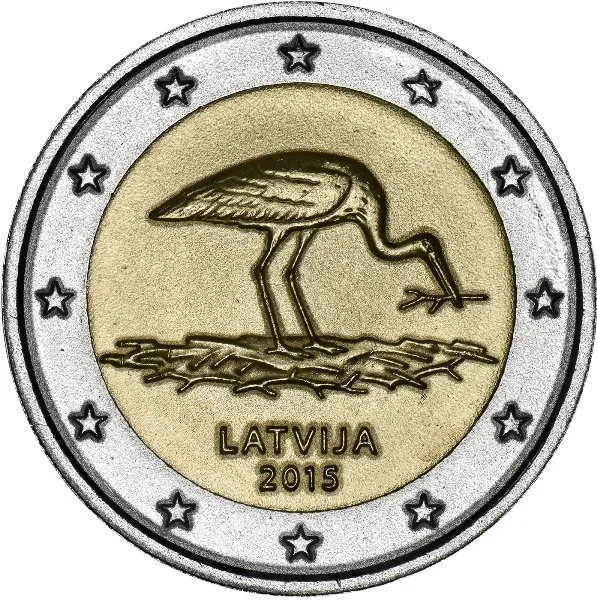
10 Years of the Black Stork Conservation Programme in Latvia
Commemorative coin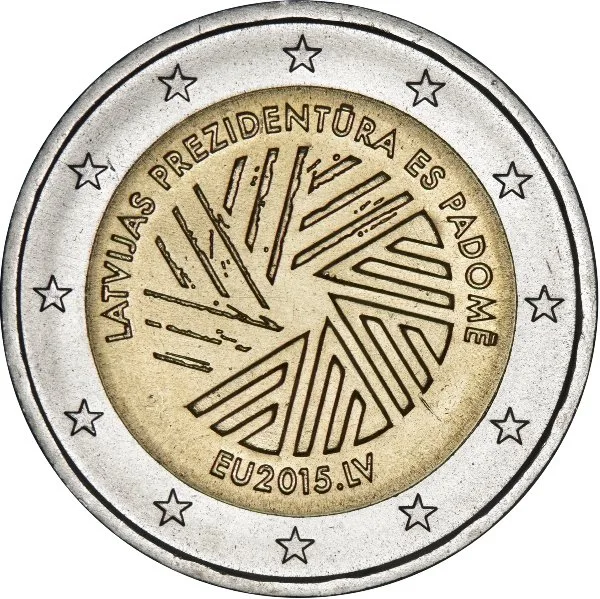
EU Council Presidency Latvia 2015
Commemorative coin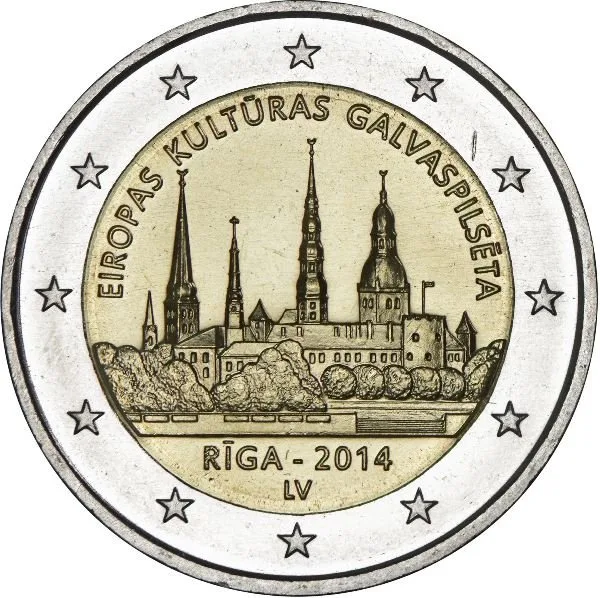
Riga – European Capital of Culture 2014
Commemorative coin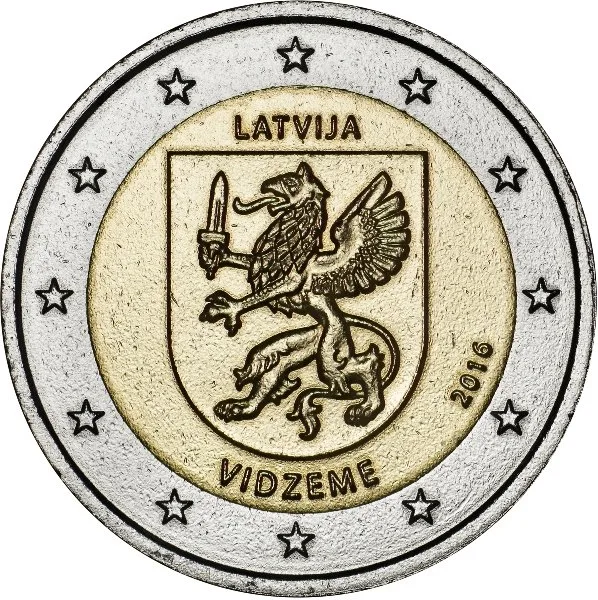
Regions of Latvia – Vidzeme
Commemorative coin