30 Years of the European Flag
 + Add to collection In collection ★ Wanted
 At a glance
| Country | Greece |
|---|---|
| Year | 2015 |
| Issue date | 23 December 2015 |
| Coin type | Commemorative coin |
| Mintage | 750.000 (7.500 / 1.500) |
| Catalogue number | GR-15 G1 |
| Designer | Georgios Stamatopoulos |
| Rarity | €€€€€ what does this mean? |
| Edge lettering |  |
| Market value (approx.) | 4 € · guide price, uncirculated Unlock · for members |
Coin description
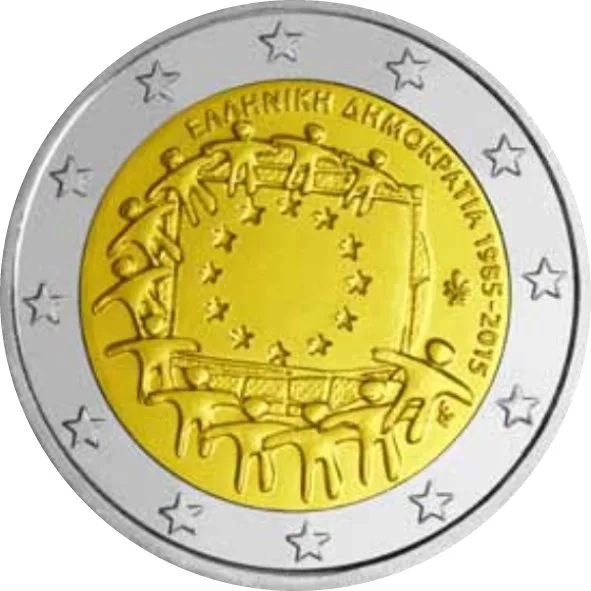
The EU flag as a symbol bringing peoples and cultures together around shared values and ideals in building a better future. Twelve stars take on human form, welcoming the birth of a new Europe. Along the upper right of the coin ring, the issuing state "HELLENIC REPUBLIC" in Greek and the dates "1985–2015" are engraved. The mintmark sits between the flag and the dates. The initials of coin designer Georgios Stamatopoulos appear at lower right.
Note on the coin
Fourth joint issue of the European Union. All 19 euro-area states issued a coin with the same design on varying dates. The coins differ only in the inscription, which appears in each country's national language.
Further information on the topic
The European flag, with its twelve gold stars on a blue background, was designed by the Council of Europe in 1955 and officially adopted in 1986 by the then European Parliament as a shared symbol of European integration. The number twelve does not stand for a specific number of members but is traditionally regarded as the number of perfection and unity. Greece, which joined the European Community in 1981 as its tenth member, helped shape this symbolism from the outset — for Greece, a united Europe is bound up not least with its return to parliamentary democracy after the military dictatorship of 1967 to 1974.
Thirty years after the flag's official adoption, the 2015 Europe-wide joint issue commemorated this founding moment of European identity politics. Today the flag is the most recognisable visual symbol of the European Union, standing in more than twenty countries for freedom of movement, shared legal norms, and the political ambition of lasting peace among formerly hostile states. For Greece, then in the midst of a severe sovereign debt crisis in 2015, the anniversary also served as a moment of self-affirmation: membership in the eurozone and the European project was under considerable political and economic pressure at the time — which made the issuing of this coin by the Hellenic Republic that year a deliberate statement of commitment.
Official issues of the coin
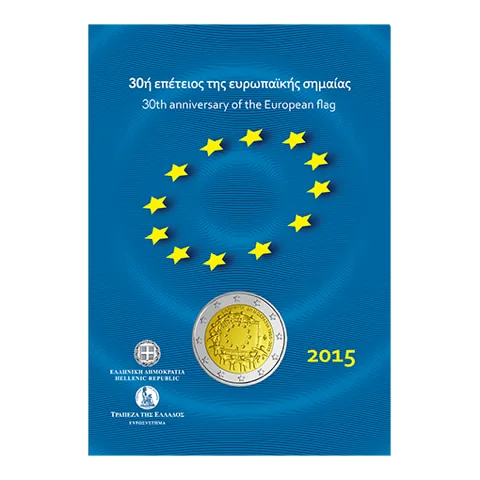 ©Image credit: Νομισματοκοπείο - IETA
Technical data
| Face value | 2 euro |
|---|---|
| Material | Bimetallic – outer ring: cupronickel; centre: three layers (nickel-brass / nickel / nickel-brass) |
| Weight | 8.5 g |
| Diameter | 25.75 mm |
| Thickness | 2.20 mm |
More 2-euro coins from Greece
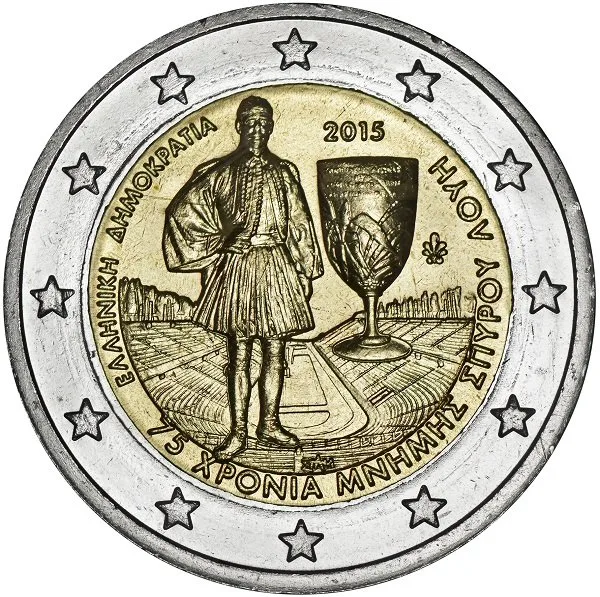
75th Anniversary of the Death of Spyridon Louis
Commemorative coin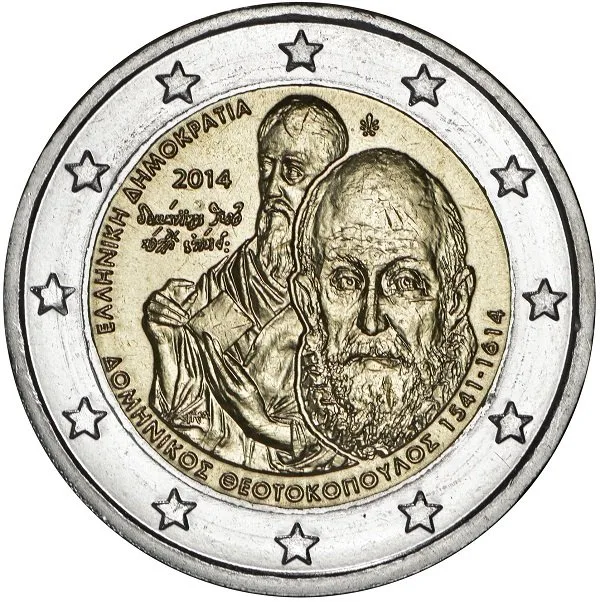
400th Anniversary of the Death of Domínikos Theotokópoulos
Commemorative coin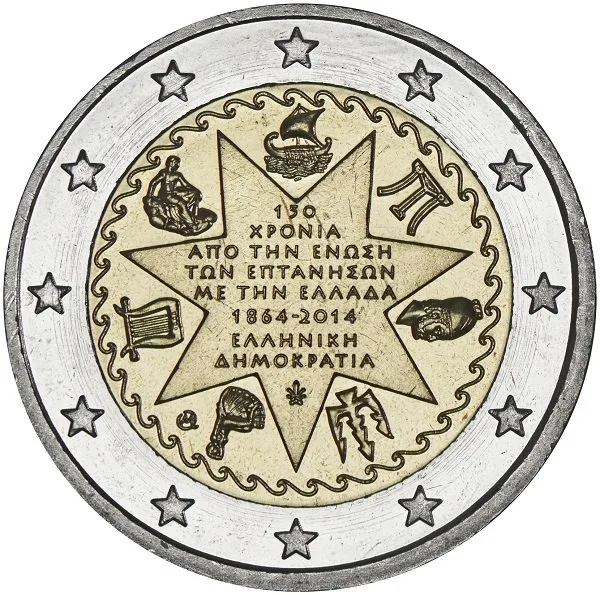
150th Anniversary of the Union with the Ionian Islands
Commemorative coin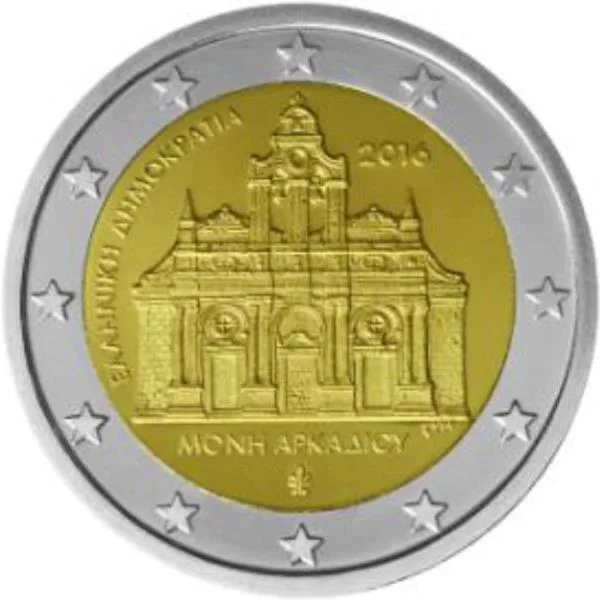
150th Anniversary of the Burning of Arkadi Monastery
Commemorative coin