Croatian Cities – Varaždin
 ©Image credit: Numismatische Sammlung der Deutschen Bundesbank + Add to collection In collection ★ Wanted
 At a glance
| Country | Croatia |
|---|---|
| Year | 2024 |
| Issue date | 2 July 2024 |
| Coin type | Commemorative coin |
| Mintage | 200.000 (195.000 / 5.000) |
| Catalogue number | HR-24 G1 |
| Designer | Stjepan Divković |
| Rarity | €€€€€ what does this mean? |
| Edge lettering |  |
| Market value (approx.) | 11 € · guide price, uncirculated Unlock · for members |
Coin description
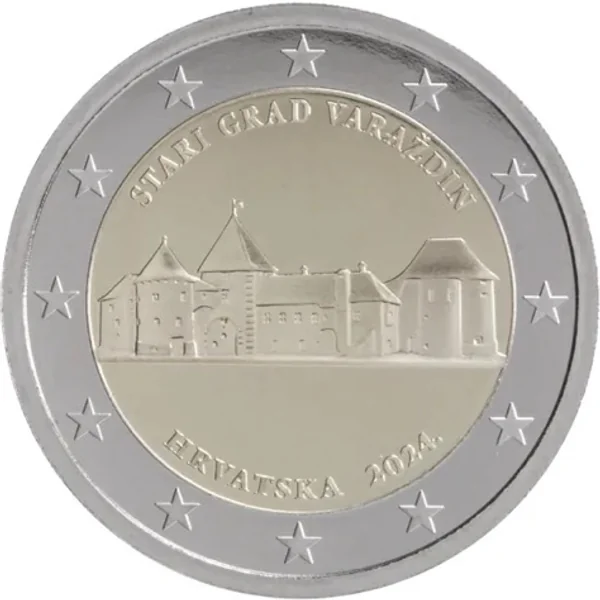
The fortress of Varaždin (12th–16th centuries). Varaždin is first mentioned in 1181; after the Mongol invasion of 1242 it was developed into a royal fortress and thereafter known as Stari Grad. Today the fortress complex is the most significant and captivating structure in Varaždin and holds the status of a monument of the highest category within Croatia's architectural heritage. Along the upper inner rim: the commemoration inscription "STARI GRAD VARAŽDIN"; along the lower edge: the issuing country "HRVATSKA" and the year of issue "2024".
Further information on the topic
Varaždin occupies a special place in Croatian history: the city in the north of the country, near the Slovenian border, was for centuries a political and cultural centre that decisively shaped the region's development. Its first documented mention dates to 1181, though its strategic importance was fully realised only after the Mongol invasion of 1242. King Béla IV had the site developed into a royal fortress, thereafter known as Stari Grad — literally, the old town, and at once a bulwark and centre of power. In the 16th and early 17th centuries, Varaždin served as the seat of the Croatian Sabor and was at times the de facto capital of Croatia, before a devastating city fire in 1776 ended that role.
The Stari Grad fortress is today the most significant surviving building in Varaždin and one of the best-preserved medieval fortifications in all of Croatia. Its construction history spans the 12th to the 16th century and reflects the transition from Romanesque castle to Renaissance fortification — an architectural chronicle of shifting threats, from Hungarian claims to the throne to the pressure of Ottoman expansion. Today Stari Grad houses the Varaždin City Museum, home to one of the most extensive collections of urban history in Croatia. With the 2024 2-euro commemorative coin from the "Croatian Cities" series, Croatia brings this testament to northern Croatian urban history to the attention of a European public.
Official issues of the coin
 ©Image credit: Hrvatska kovnica novca
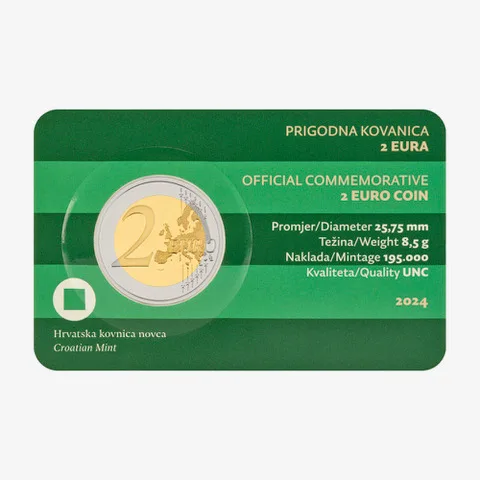 ©Image credit: Hrvatska kovnica novca
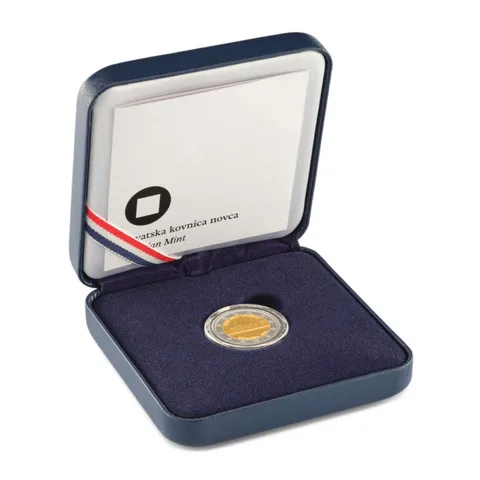 ©Image credit: Hrvatska kovnica novca
Technical data
| Face value | 2 euro |
|---|---|
| Material | Bimetallic – outer ring: cupronickel; centre: three layers (nickel-brass / nickel / nickel-brass) |
| Weight | 8.5 g |
| Diameter | 25.75 mm |
| Thickness | 2.20 mm |
More 2-euro coins from Croatia
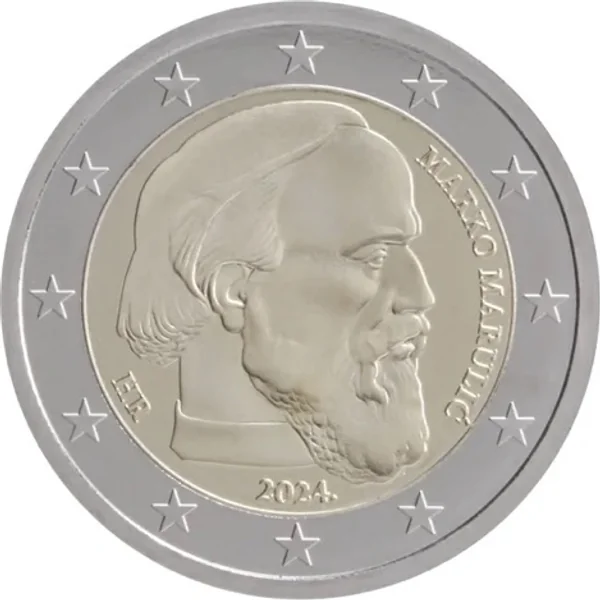
500th Anniversary of the Death of Marko Marulić
Commemorative coin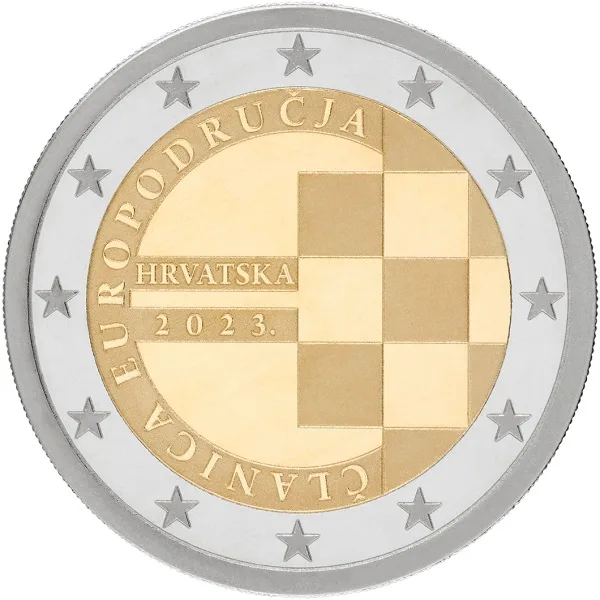
Introduction of the euro in Croatia
Commemorative coin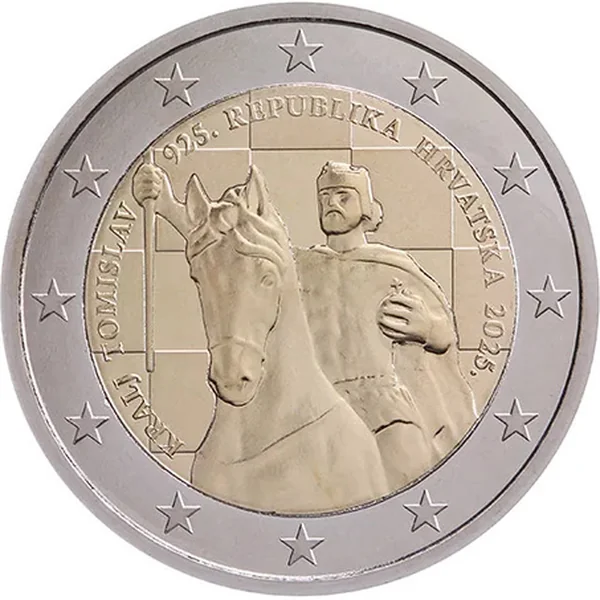
1,100 Years of the Kingdom of Croatia and the Coronation of King Tomislav
Commemorative coin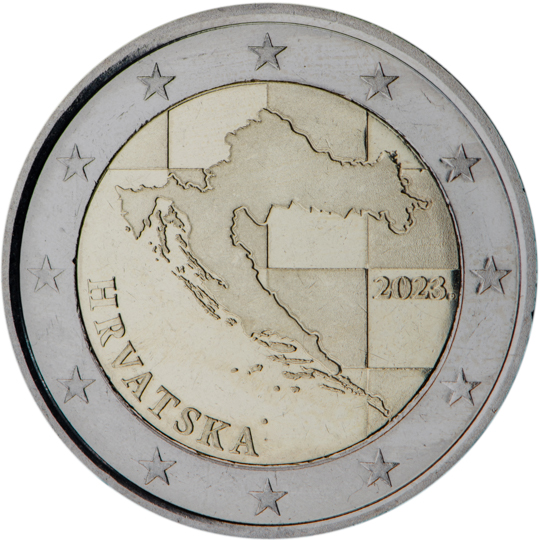
Country outline
Circulation coin