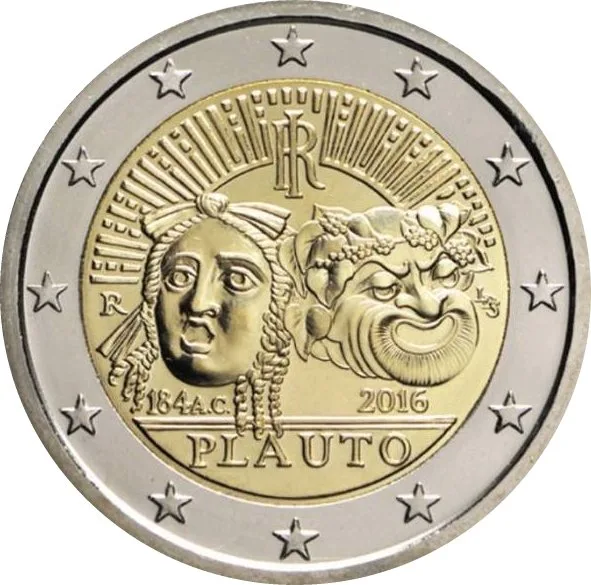
2,200th Anniversary of the Death of Titus Maccius Plautus
 + Add to collection In collection ★ Wanted
 At a glance
| Country | Italy |
|---|---|
| Year | 2016 |
| Issue date | 16 May 2016 |
| Coin type | Commemorative coin |
| Mintage | 1.500.000 (23.000 / 10.000) |
| Catalogue number | IT-16 G2 |
| Designer | Luciana de Simoni |
| Rarity | €€€€€ what does this mean? |
| Edge lettering |  |
| Market value (approx.) | 3,5 € · guide price, uncirculated Unlock · for members |
Coin description
Theatre masks from a 2nd-century BC mosaic (Rome, Capitoline Museums), representing two characters from New Comedy — the young woman and the slave. Above them, a ghostly outline of a Roman theatre and the Italian Republic abbreviation "RI". To the left, the mintmark "R"; to the right, designer Luciana De Simoni's initials "LDS". The lower portion of the design bears the dates "184 a.C." and "2016" along with the inscription "PLAUTO".
Further information on the topic
Titus Maccius Plautus was the most prolific and most widely performed comic playwright of Roman antiquity — an author whose plays shaped the Latin stage so profoundly that they remained in the repertoire for centuries after his death in 184 BC. Plautus is thought to have come from Sarsina in Umbria and made his way to Rome, where he began a career as a playwright that was extraordinary for its time: no other Latin poet has survived with so many extant works. Of the plays attributed to him, 20 are considered authentic, including classics such as "Miles Gloriosus", "Menaechmi" and "Pseudolus". His comedies build on Greek New Comedy but translate its material into a lively, vernacular Latin — full of wordplay, coarse jokes and sharply drawn stock characters such as the cunning slave or the boastful soldier.
Plautus influenced European theatrical literature far beyond antiquity. Shakespeare drew on the "Menaechmi" for "The Comedy of Errors", and Molière and many other Baroque playwrights drew on his work. In Italy, Plautus belongs to the canon of school and academic curricula, and his plays are still performed today — often in ancient theatres closer in spirit to his own time than any modern stage. That Italy honoured the 2,200th anniversary of Plautus's death with a commemorative coin in 2016 reflects the enduring cultural relevance of an author whose comedies keep the society of 3rd- and 2nd-century BC Rome vividly alive.
Technical data
| Face value | 2 euro |
|---|---|
| Material | Bimetallic – outer ring: cupronickel; centre: three layers (nickel-brass / nickel / nickel-brass) |
| Weight | 8.5 g |
| Diameter | 25.75 mm |
| Thickness | 2.20 mm |
More 2-euro coins from Italy
550th Anniversary of the Death of Donatello
Commemorative coin
750th Birthday of Dante Alighieri
Commemorative coin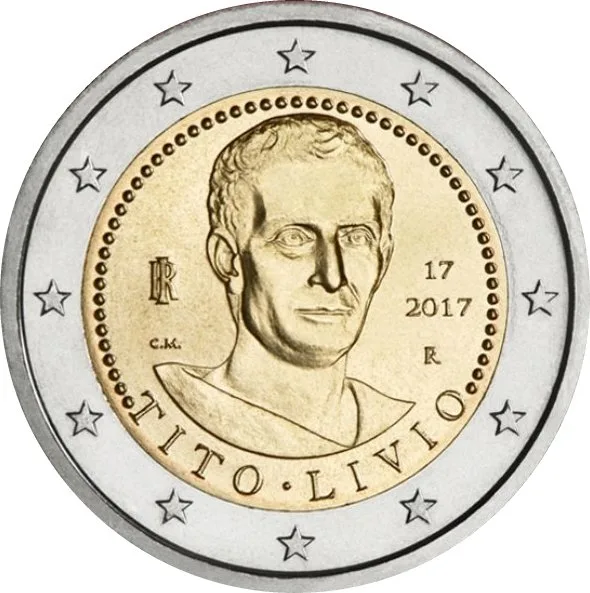
2,000th Anniversary of the Death of Titus Livius
Commemorative coin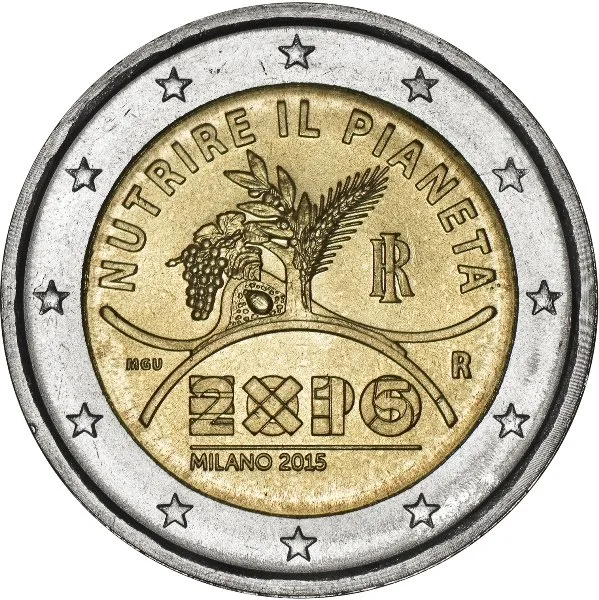
Expo 2015 in Milan
Commemorative coin