Lithuanian Folk Songs – Sutartinės
 + Add to collection In collection ★ Wanted
 At a glance
| Country | Lithuania |
|---|---|
| Year | 2019 |
| Issue date | 10 July 2019 |
| Coin type | Commemorative coin |
| Mintage | 500.000 (5.000 / – ) |
| Catalogue number | LT-19 G1 |
| Designer | Liudas Parulskis |
| Rarity | €€€€€ what does this mean? |
| Edge lettering |  |
| Market value (approx.) | 4 € · guide price, uncirculated Unlock · for members |
Coin description
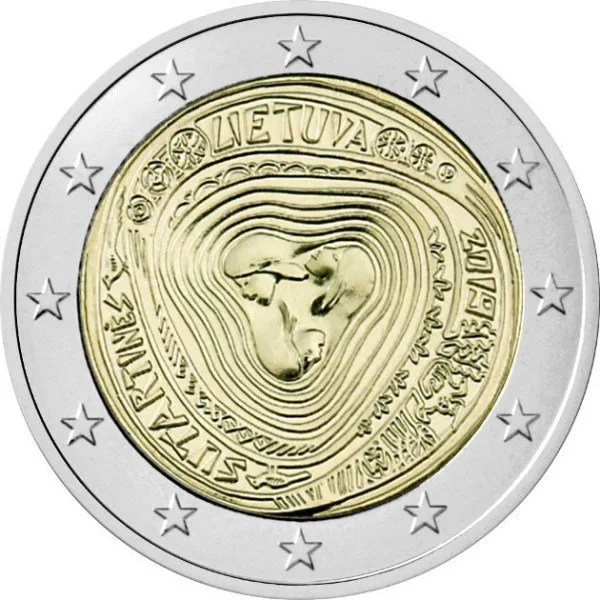
A stylised composition centred on three singing women whose long hair flows in fine lines towards the edge of the coin, incorporating traditional Lithuanian ornamental motifs. Above: the issuing state "LIETUVA" and the designer Liudas Parulskis's initials; to the right: the year "2019", and below that the Lithuanian heraldic knight Vytis and the mintmark. To the left: the theme inscription "SUTARTINĖS" between two birds.
Further information on the topic
In the northeast of Europe, where Baltic oral tradition largely remained unwritten for centuries, the Sutartinės have survived as one of the oldest and most distinctive forms of polyphonic folk singing. These polyphonic songs, whose name derives from the Lithuanian word for "agreement" or "concord", are characterised by strict canonical structures: two or more voices sing the same melody offset from one another, producing characteristic dissonances that sound unusual to Western European ears but are perceived as entirely harmonious within Lithuanian culture. The Sutartinės were sung predominantly by women — during fieldwork, family celebrations and seasonal rituals — and are thus closely tied to the rural everyday life of northern Lithuania, particularly the Aukštaitija region.
UNESCO added the Sutartinės to the Representative List of the Intangible Cultural Heritage of Humanity in 2010, honouring their unique place within European musical tradition. Their survival is not a given: periods of Sovietisation and migration away from rural areas have weakened the living oral tradition, which is why ethnomusicologists and cultural institutions in Lithuania have been systematically collecting recordings and creating notations for decades. Lithuania's dedication of its own commemorative coin to this heritage in 2019 expresses state recognition for a singing practice that shapes the country's collective memory like almost no other art form.
Technical data
| Face value | 2 euro |
|---|---|
| Material | Bimetallic – outer ring: cupronickel; centre: three layers (nickel-brass / nickel / nickel-brass) |
| Weight | 8.5 g |
| Diameter | 25.75 mm |
| Thickness | 2.20 mm |
More 2-euro coins from Lithuania
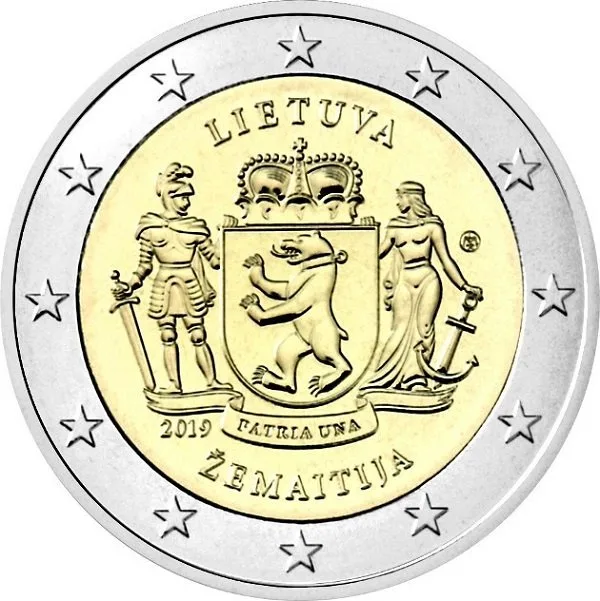
Lithuanian Ethnographic Regions – Žemaitija
Commemorative coin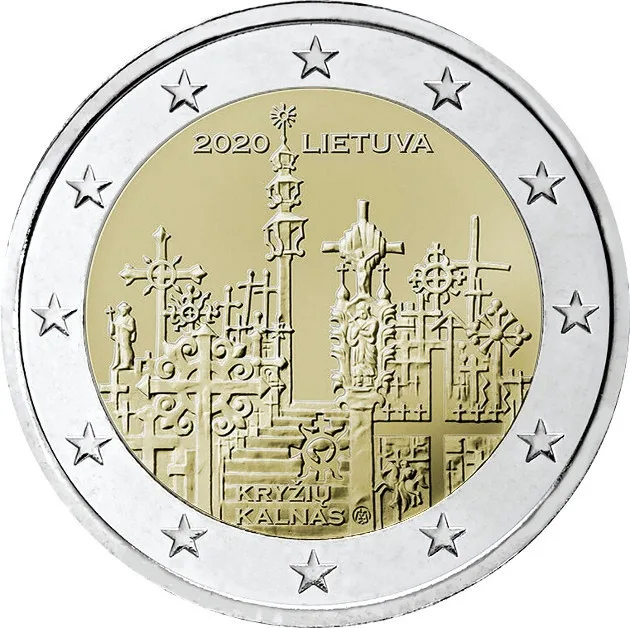
Hill of Crosses
Commemorative coin
Baltic Joint Issue – 100 Years of Independence
Commemorative coin
Lithuanian Song and Dance Festival
Commemorative coin