
Lithuanian Cities – Kaunas
 + Add to collection In collection ★ Wanted
 At a glance
| Country | Lithuania |
|---|---|
| Year | 2026 |
| Issue date | 1 October 2026 |
| Coin type | Commemorative coin |
| Mintage | 500.000 (5.000 / – ) |
| Catalogue number | LT-26 G2 |
| Designer | Tomas Dragūnas |
| Rarity | €€€€€ what does this mean? |
| Edge lettering |  |
| Market value (approx.) | 5 € · guide price, uncirculated Unlock · for members |
Coin description
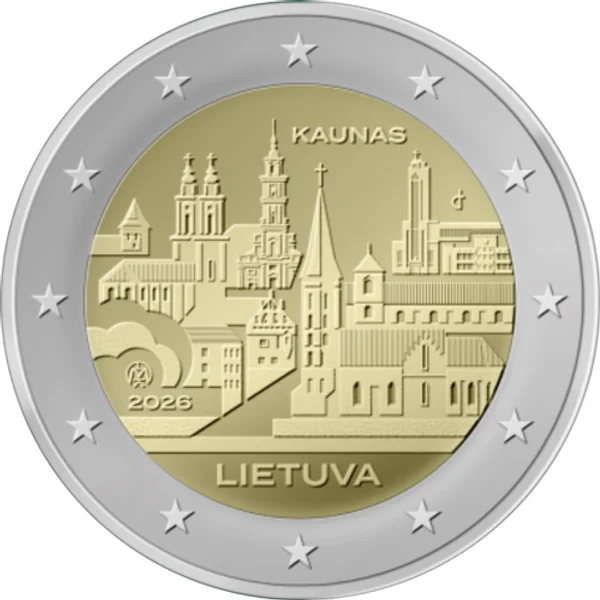
The design shows an impressive, stylised panorama of the city of Kaunas. On the right, in the foreground, rises the striking Church of the Assumption of the Blessed Virgin Mary (also known as Vytautas the Great Church), with the Cathedral Basilica of Saints Peter and Paul directly behind it. In the centre, the historic House of Perkūnas can be seen, while on the left, in the background, the towers of the Jesuit Church of St Francis Xavier rise up. The historic Kaunas Castle is also visible in the upper left of the design. As a deliberate counterpoint to these historic buildings, the upper right of the design features symbols of modernity from the city’s time as the country’s temporary capital: the Main Post Office and the Basilica of the Resurrection. The suggestion of organic natural forms in the lower left area creates a lively contrast to the strict urban shapes. The design is completed by the occasion of issue “KAUNAS” at the top edge, the issuing country “LIETUVA” at the bottom, the mintmark of the Lithuanian mint, the year “2026”, and the initials of the coin designer Tomas Dragūnas. As usual, the outer ring of the coin bears the twelve stars of the European flag.
Further information on the topic
Kaunas is far more to Lithuania than its second-largest city. Between the world wars, from 1920 to 1939, it served as the provisional capital after Vilnius fell under Polish control — a period in which Kaunas rose to become the effective metropolis of the independent Lithuanian state. During this time a dense fabric of administrative buildings, schools, banks, and cultural institutions took shape, giving the city its distinctive character to this day. The historic city centre combines medieval fabric from the Jagiellonian era with the grand bourgeois architecture of interwar modernism, which in 2015 was added to the UNESCO World Heritage tentative list as the most significant intact ensemble of Central European modernism.
Kaunas's old town, situated at the confluence of the Neris and the Nemunas, preserves evidence of a history reaching back to the 14th century. Gothic sacred buildings, including the Cathedral Basilica of St Peter and St Paul and the Jesuit Church, stand alongside secular civic buildings such as the House of Perkūnas, a late-Gothic structure from the 15th century named after a legend about the ancient Lithuanian god of thunder. As European Capital of Culture in 2022, Kaunas gained greater international recognition — an occasion that underscored the city's reawakened confidence as a cultural centre of Lithuania. The Lithuanian 2-euro commemorative coin of 2026 honours Kaunas, a city whose importance for the country's national identity can hardly be overstated.
Official issues of the coin
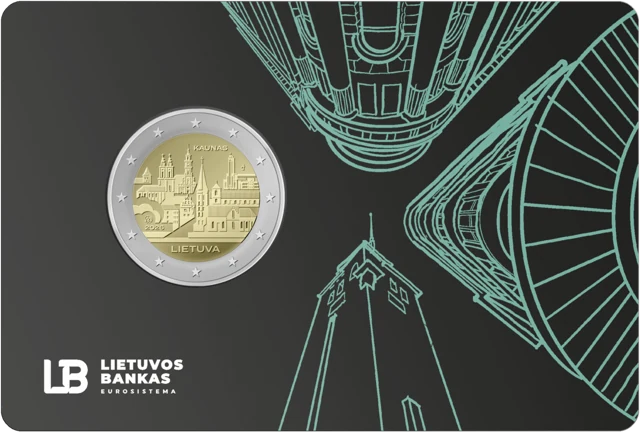 ©Image credit: Lietuvos Bankas
Technical data
| Face value | 2 euro |
|---|---|
| Material | Bimetallic – outer ring: cupronickel; centre: three layers (nickel-brass / nickel / nickel-brass) |
| Weight | 8.5 g |
| Diameter | 25.75 mm |
| Thickness | 2.20 mm |
More 2-euro coins from Lithuania
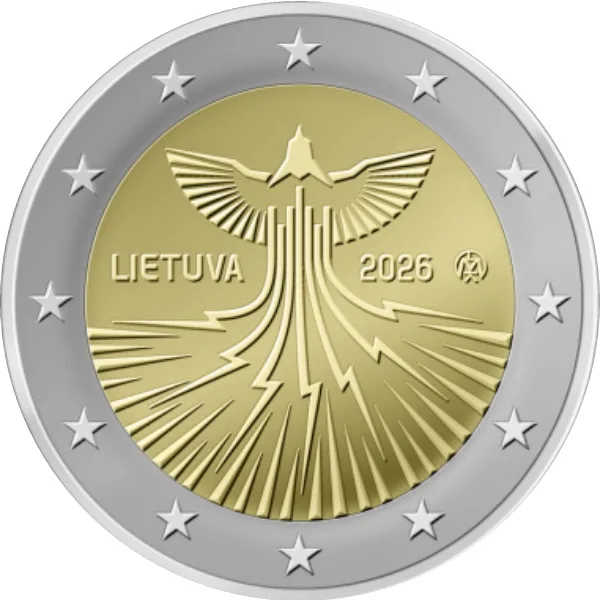
Lithuania's Energy Independence
Commemorative coin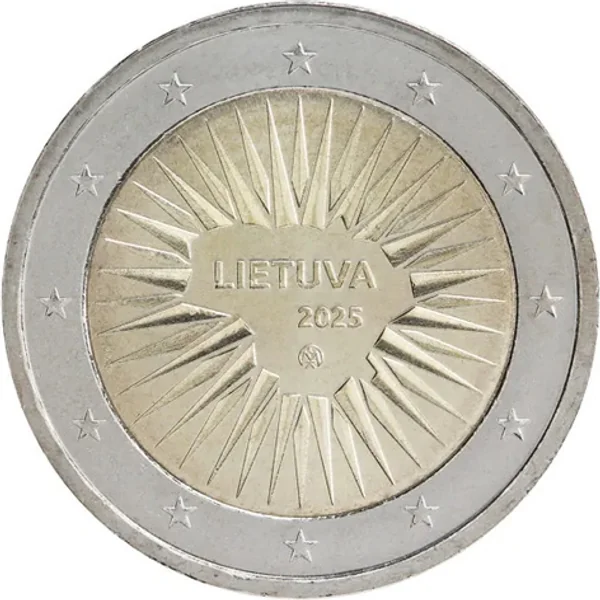
For the Defence
Commemorative coin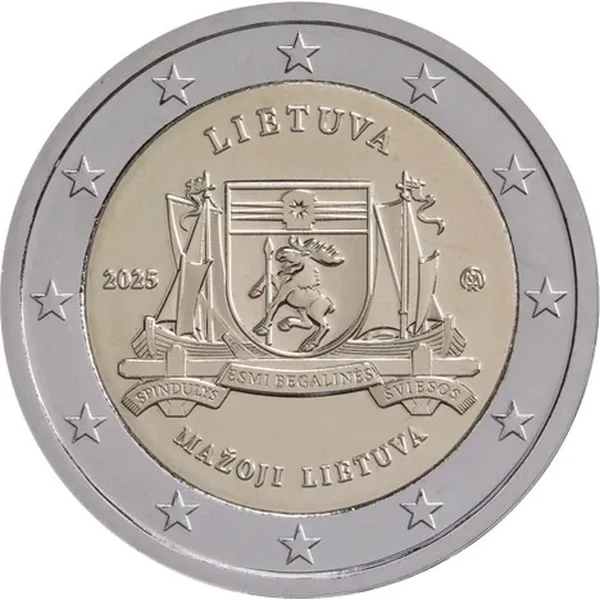
Lithuanian Ethnographic Regions – Mažoji Lietuva
Commemorative coin
Lithuanian Cities – Klaipėda
Commemorative coin