600 Years of the Discovery of Madeira
 + Add to collection In collection ★ Wanted
 At a glance
| Country | Portugal |
|---|---|
| Year | 2019 |
| Issue date | 6 June 2019 |
| Coin type | Commemorative coin |
| Mintage | 520.000 (10.000 / 10.000) |
| Catalogue number | PT-19 G2 |
| Designer | Júlio Pomar |
| Rarity | €€€€€ what does this mean? |
| Edge lettering |  |
| Market value (approx.) | 3,5 € · guide price, uncirculated Unlock · for members |
Coin description
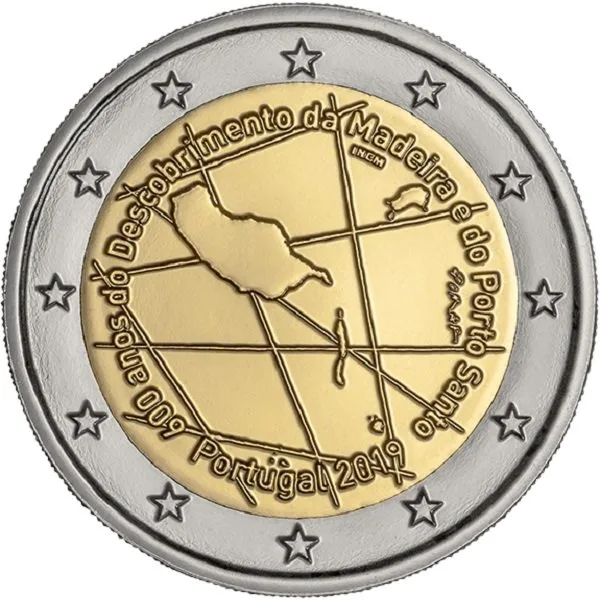
An outline of the Madeiran archipelago — comprising Madeira, Porto Santo and the Desertas — set against the meridians and parallels of a portolan chart. The semicircular inscription "600 anos do Descobrimento da Madeira e do Porto Santo" curves above, with the country name "Portugal" and the year "2019" below.
Further information on the topic
In the early 15th century, Portugal set out systematically into the uncharted waters of the Atlantic. Between 1418 and 1420, Portuguese navigators under João Gonçalves Zarco and Tristão Vaz Teixeira came upon an island group they named Madeira — after the dense forest that covered its mountain slopes. The discovery of Madeira and the neighbouring island of Porto Santo was no accident but part of a deliberate expansion policy of the Portuguese crown under Prince Henry the Navigator, who coordinated the exploration of the West African coast and the open Atlantic from Sagres. Madeira belongs geographically to Macaronesia and lies around 1,000 kilometres southwest of mainland Portugal; besides the main island and Porto Santo, the archipelago also includes the uninhabited Desertas and Selvagens.
Rapid settlement from the 1420s onward made Madeira an early testing ground for Portuguese colonial economics: sugarcane, introduced from the Mediterranean, transformed the island within a few decades into one of Europe's most important sugar producers, laying the economic foundations for later expansions to West Africa and Brazil. Madeira remains today an autonomous region of Portugal and part of the European Union, known for its namesake wine, mild climate, and a biodiversity unique in the Atlantic — vividly demonstrated by the Laurisilva laurel forest, a UNESCO World Natural Heritage site since 1999. Portugal honoured the 600th anniversary of this consequential discovery in 2019 with its own commemorative coin.
Technical data
| Face value | 2 euro |
|---|---|
| Material | Bimetallic – outer ring: cupronickel; centre: three layers (nickel-brass / nickel / nickel-brass) |
| Weight | 8.5 g |
| Diameter | 25.75 mm |
| Thickness | 2.20 mm |
More 2-euro coins from Portugal
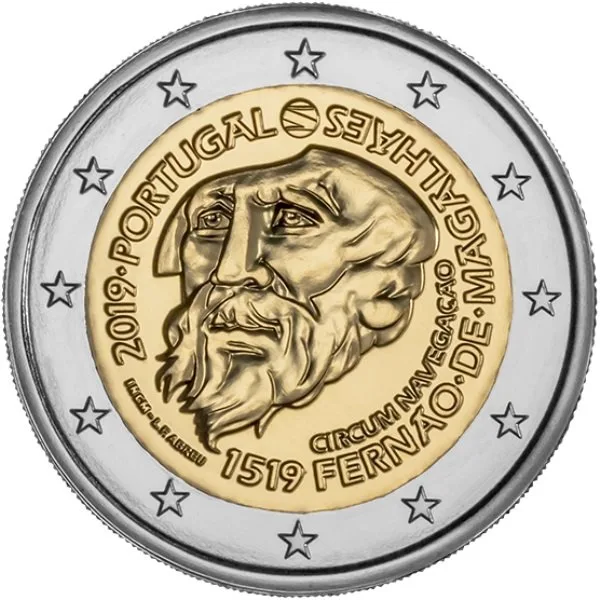
500 Years of Ferdinand Magellan's Circumnavigation
Commemorative coin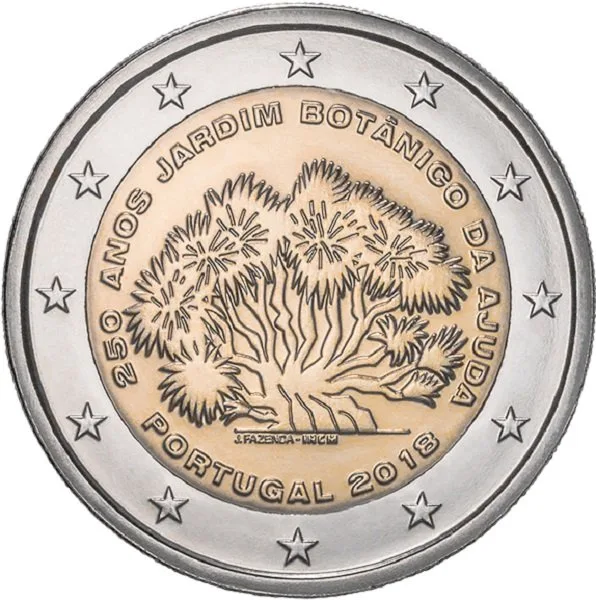
250 Years of the Ajuda Botanical Garden in Lisbon
Commemorative coin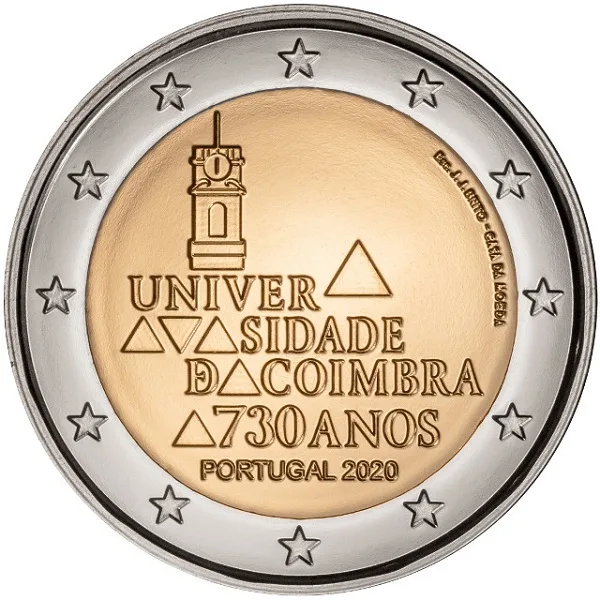
730 Years of the University of Coimbra
Commemorative coin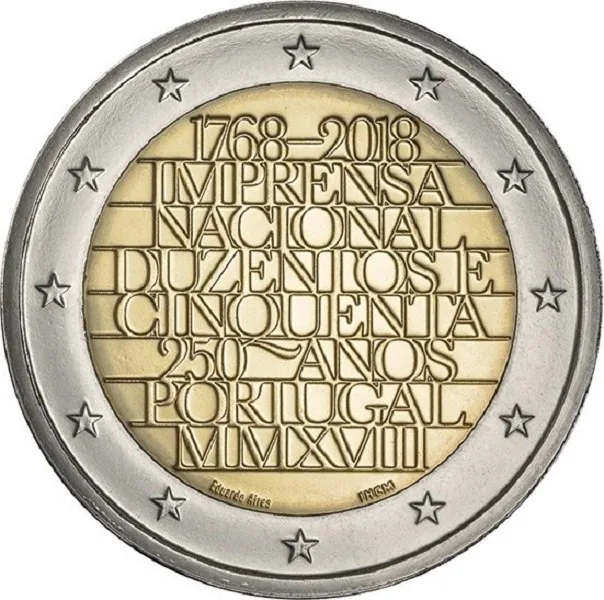
250 Years of the National Printing Office
Commemorative coin