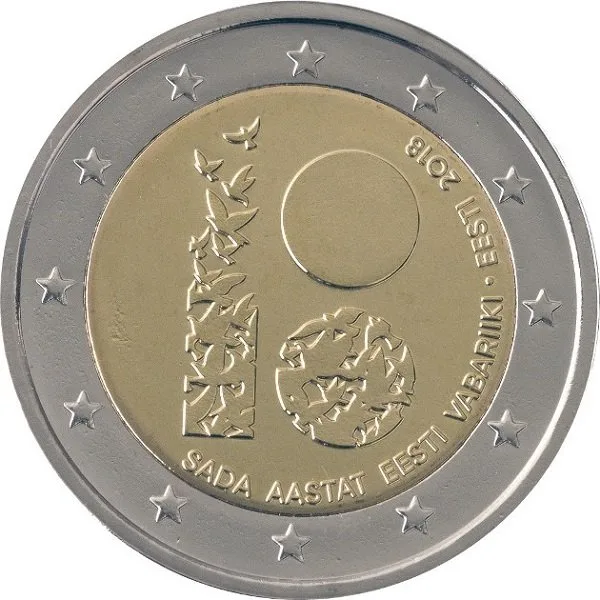
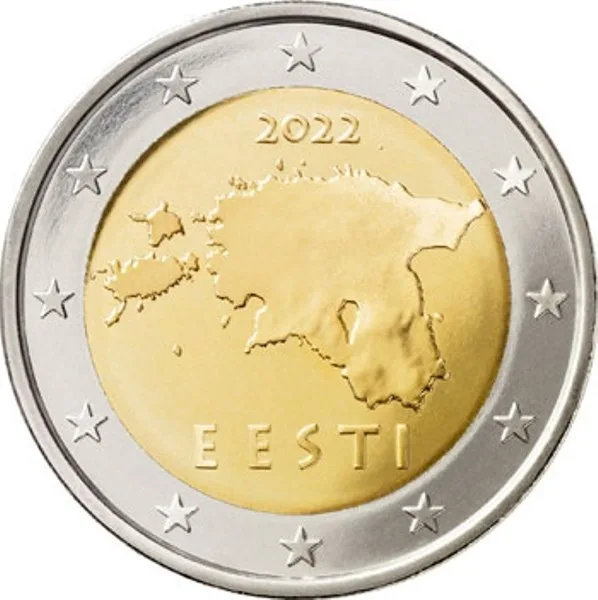
Map Outline of Estonia
 + Add to collection In collection ★ Wanted
 At a glance
| Country | Estonia |
|---|---|
| Year | 2011 |
| Coin type | Circulation coin |
| Mintage | varies by year & mint – see table below ↓ |
| Catalogue number | EE-11 K1 |
| Designer | Lembit Lõhmus |
| Rarity | €€€€€ what does this mean? |
| Edge lettering |  |
Coin description
The outline of the Estonian map reveals the country's distinctive landscape features — a deeply indented coastline with numerous offshore islands, characteristic of this Baltic state.
Note on the coin
Estonia had originally planned to adopt the euro in 2007, but was unable to meet the entry criteria due to elevated inflation. In June 2004, a design competition for Estonia's future euro coins was announced. Around 134 proposals were submitted to the central bank by the deadline of 19 October at 5 p.m. An expert panel then shortlisted the ten best entries. From 4 to 11 December 2004, all Estonians were invited to choose between these ten designs by telephone vote. The result was announced on 15 December, with the winner receiving 27.46 per cent of all votes. The contract for minting the coins — in which five European mints competed — was won by Rahapaja Oy of Finland, primarily on grounds of price, as confirmed by Andrus Alber, head of the euro department at the Bank of Estonia. First trial strikes were produced in June 2006. For this reason, the earliest designs by the artist Lembit Lõhmus still bear the year 2007.
More about the motif
Estonia's plain map outline deliberately forgoes rulers or historical emblems, instead expressing the country's geographic identity. With more than 2,000 islands and countless bays, Estonia's coastline is among the most indented in Europe and has long shaped the Baltic state's maritime culture. The design was chosen by public vote from ten finalists in a nationwide competition in 2004 and was created by artist Lembit Lõhmus.
Mintages by year & mint
| Year | Mintage |
|---|---|
| 2011 | 11.053.500 (50.000 / 3.500) |
| 2016 | 520.000 (20.000 / –) |
| 2018 | 500.000 (5.000 / –) |
| 2022 | 7.500 (7.500 / –) |
| 2023 | 1.000.000 (12.000 / –) |
Technical data
| Face value | 2 euro |
|---|---|
| Material | Bimetallic – outer ring: cupronickel; centre: three layers (nickel-brass / nickel / nickel-brass) |
| Weight | 8.5 g |
| Diameter | 25.75 mm |
| Thickness | 2.20 mm |