50th Anniversary of the Death of Padre Pio
 + Add to collection In collection ★ Wanted
 At a glance
| Country | Vatican City |
|---|---|
| Year | 2018 |
| Issue date | 4 October 2018 |
| Coin type | Commemorative coin |
| Mintage | 94.000 (84.000 / 10.000) |
| Catalogue number | VA-18 G2 |
| Designer | Patrizio Daniele, Valerio de Seta |
| Rarity | €€€€€ what does this mean? |
| Edge lettering |  |
| Market value (approx.) | 25 € · guide price, uncirculated Unlock · for members |
Coin description
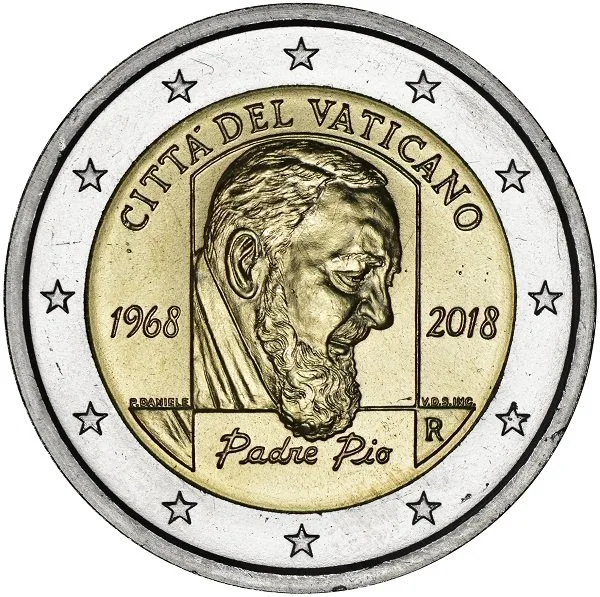
A three-quarter portrait of Padre Pio facing right; the inscription 'PADRE PIO', the state name 'CITTÀ DEL VATICANO', the years '1968' and '2018', the name of designer Patrizio Daniele, the initials of engraver Valerio de Seta, and the mintmark 'R'.
Further information on the topic
Francesco Forgione was born on 25 May 1887 in Pietrelcina in southern Italy, growing up in a deeply religious farming family in the Campania region. As a young man he joined the Capuchin order and took the name Pio. From 1916 until his death on 23 September 1968, he lived and worked almost without interruption at the monastery of San Giovanni Rotondo in the province of Foggia, which has since developed into one of the most visited pilgrimage sites in the Catholic world. Padre Pio became known above all for his stigmata — wounds on his hands, feet and side — which he said he had carried since 1918 and which were the subject of controversy among Church authorities and medical experts for decades. He was also regarded as an extraordinary confessor, sought out daily by thousands of people.
The Holy See beatified Padre Pio in 1999 under John Paul II and canonised him in 2002. The Vatican, as the issuing authority for this 2018 2-euro commemorative coin — not merely a formal body but the custodian of ecclesiastical memory — marks the 50th anniversary of his death. Padre Pio's influence extends far beyond the Apulia region: the hospital he co-founded, Casa Sollievo della Sofferenza in San Giovanni Rotondo, is today one of the largest clinics in Italy. His name is closely tied, both in German-speaking countries and internationally, to the concepts of stigmatisation, mysticism and popular piety in the 20th century — a phenomenon that continues to occupy religious studies today.
Technical data
| Face value | 2 euro |
|---|---|
| Material | Bimetallic – outer ring: cupronickel; centre: three layers (nickel-brass / nickel / nickel-brass) |
| Weight | 8.5 g |
| Diameter | 25.75 mm |
| Thickness | 2.20 mm |
More 2-euro coins from Vatican City
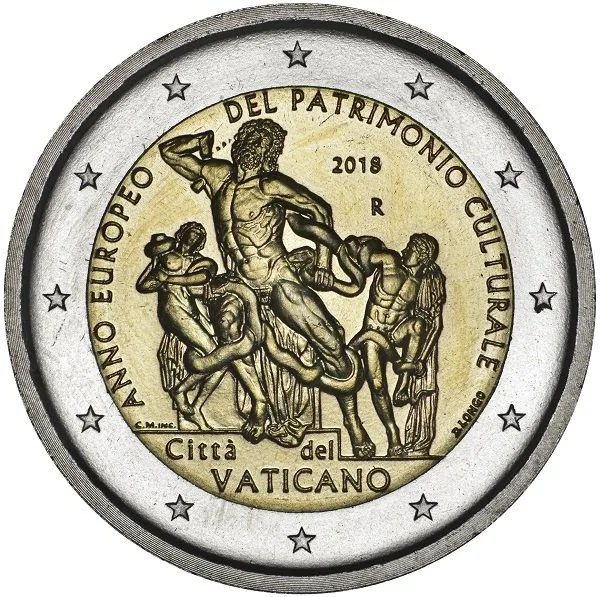
European Year of Cultural Heritage
Commemorative coin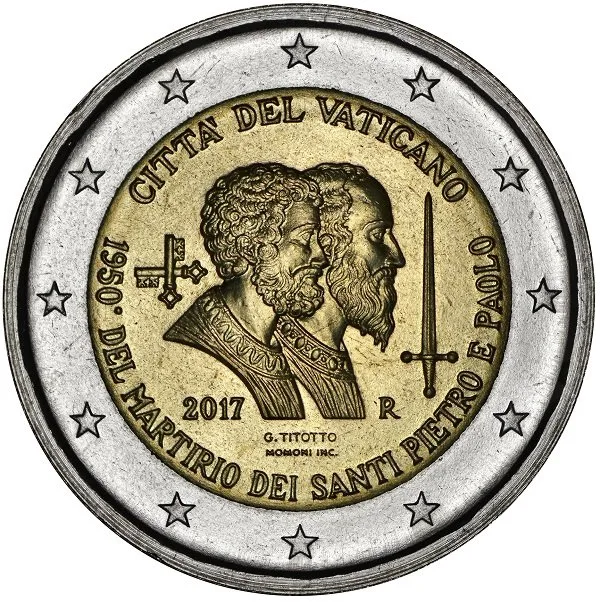
1,950th Anniversary of the Martyrdom of Saints Peter and Paul
Commemorative coin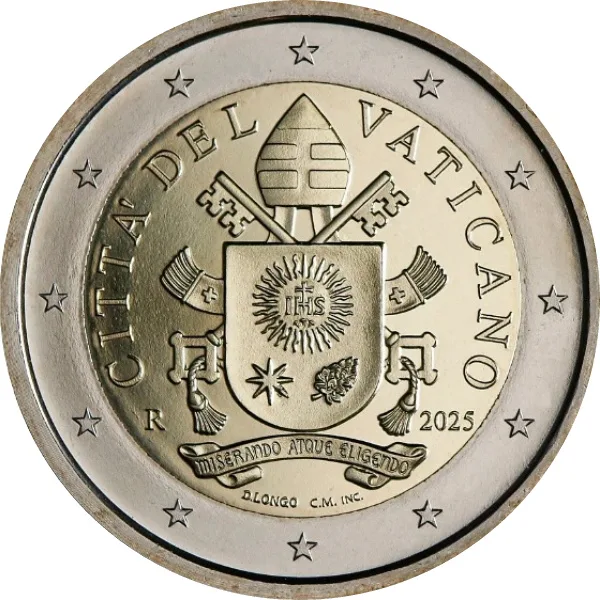
Arms of Pope Francis (2017 - 2025)
Circulation coin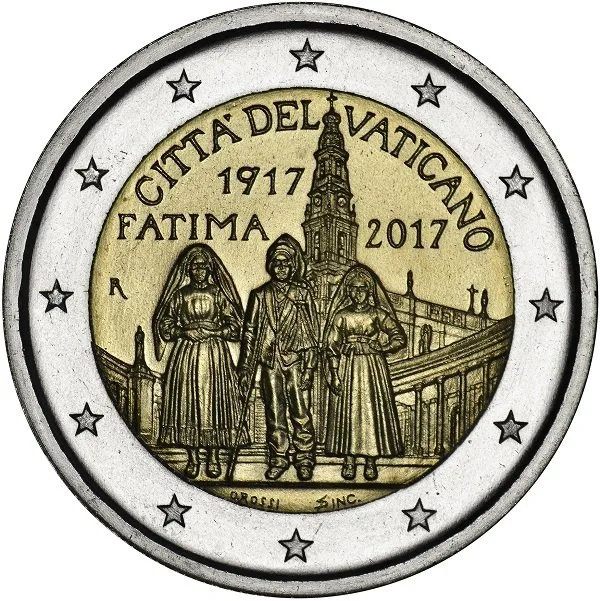
100 Years of the Apparitions of Fatima
Commemorative coin