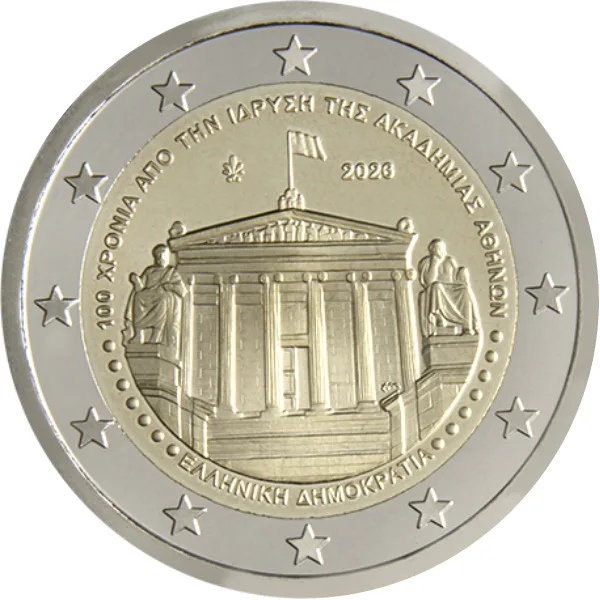
100 Years of the Founding of the Academy of Athens
 + Add to collection In collection ★ Wanted
 At a glance
| Country | Greece |
|---|---|
| Year | 2026 |
| Issue date | 15 June 2026 |
| Coin type | Commemorative coin |
| Mintage | 750.000 (6.000 / 3.500) |
| Catalogue number | GR-26 G1 |
| Designer | Georgios Stamatopoulos |
| Rarity | €€€€€ what does this mean? |
| Edge lettering |  |
| Market value (approx.) | 4 € · guide price, uncirculated Unlock · for members |
Coin description
The historic main building of the Academy, part of the Athens Trilogy. Along the upper edge of the design runs the commemorative inscription "100 XRONIA APO THN IDPYΣH THΣ AKAΔHMIAΣ AθHNΩN", with the palmette of the Greek mint and the year 2026 to either side of the Greek flag on the building's façade. The issuing state "ΕΛΛΗΝΙΚΗ ΔΗΜΟΚΡΑΤΙΑ" appears along the lower edge.
Further information on the topic
In 1926, the Academy of Athens was officially founded as Greece's highest scientific institution — nearly a century after the rebirth of the Greek state, and driven by the wish to reconnect with the philosophical tradition of Athens. It took up residence in one of the most remarkable neoclassical buildings in the Greek capital: the Academy building, designed by the Danish architect Theophil Hansen in the second half of the 19th century, which together with the National Library and the National Library forms the so-called Athenian Trilogy. The institution is organised into four classes — humanities, exact and natural sciences, fine arts, and moral and political sciences — bringing together Greece's leading researchers under one roof.
Since its founding, the Academy of Athens has decisively shaped the country's scientific development: it funds research projects, awards prizes and scholarships, maintains international cooperation with sister academies worldwide, and publishes numerous works. It plays a particularly central role in preserving the Greek language and researching Hellenic history and culture. In a country shaped like few others by its ancient heritage, the Academy has taken on the task of building bridges between classical tradition and modern science. To mark the 100th anniversary of its founding, Greece honours this institution in 2026 with a 2-euro commemorative coin.
Official issues of the coin
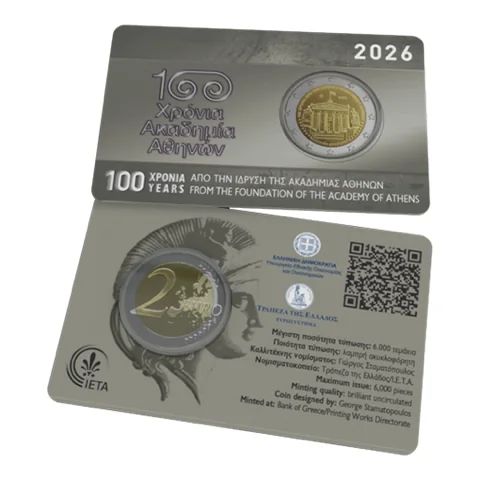 ©Image credit: Νομισματοκοπείο - IETA
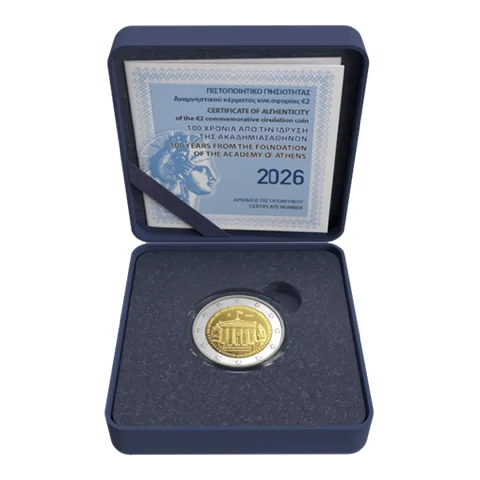 ©Image credit: Νομισματοκοπείο - IETA
Technical data
| Face value | 2 euro |
|---|---|
| Material | Bimetallic – outer ring: cupronickel; centre: three layers (nickel-brass / nickel / nickel-brass) |
| Weight | 8.5 g |
| Diameter | 25.75 mm |
| Thickness | 2.20 mm |
More 2-euro coins from Greece
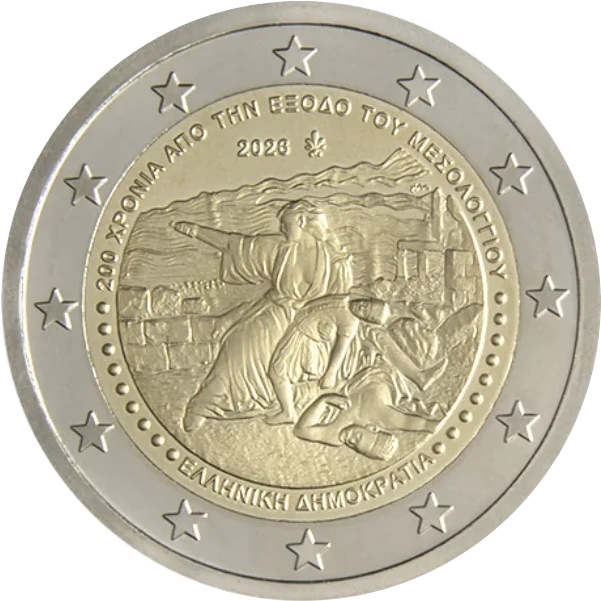
200 Years of the Exodus of Messolonghi
Commemorative coin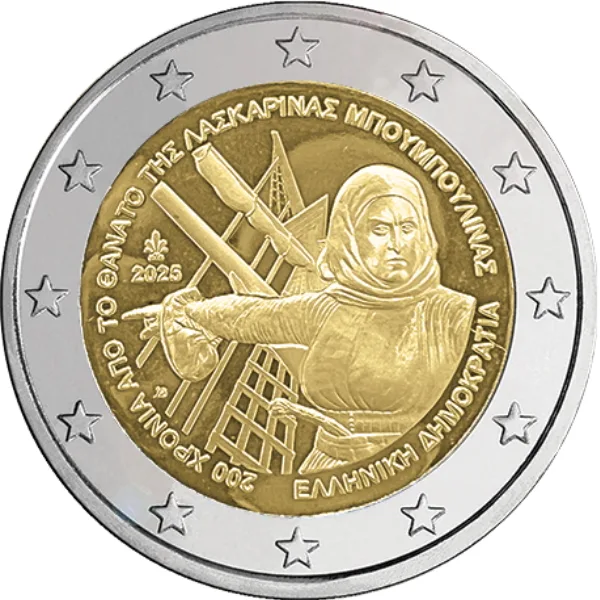
200th Anniversary of the Death of Laskarina Bouboulina
Commemorative coin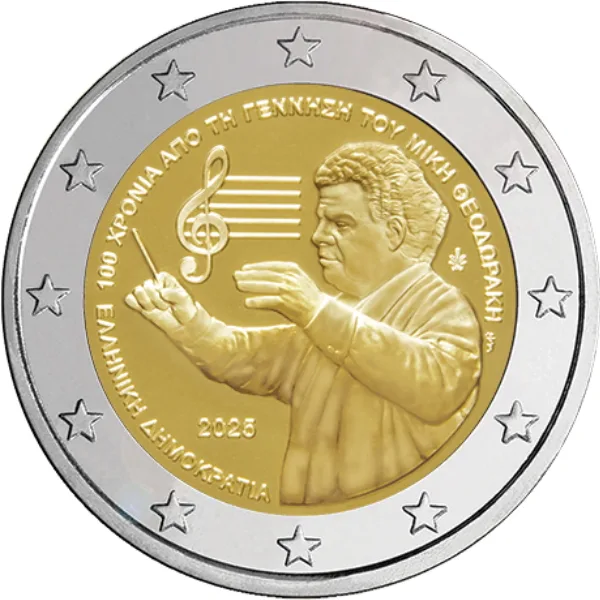
100th Birthday of Mikis Theodorakis
Commemorative coin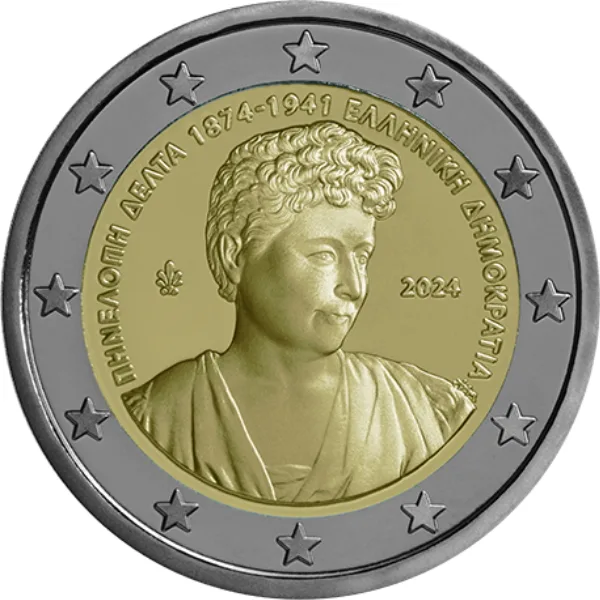
150th Birthday of Penelope Delta
Commemorative coin