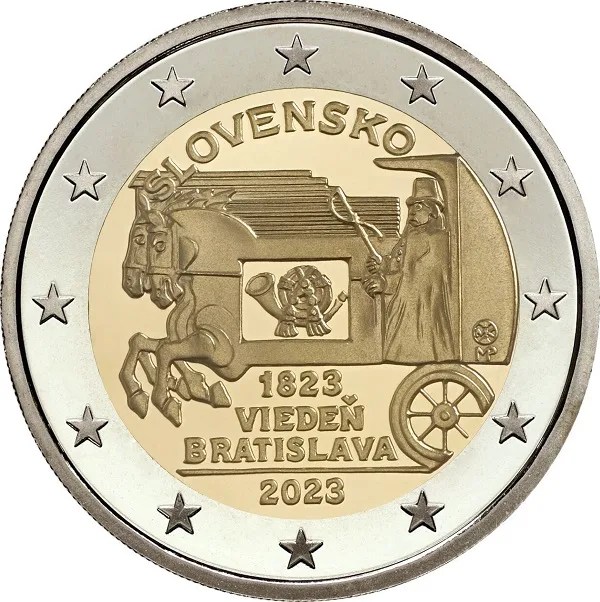
200 Years of the Horse Express Post Route Vienna – Bratislava
 + Add to collection In collection ★ Wanted
 At a glance
| Country | Slovakia |
|---|---|
| Year | 2023 |
| Issue date | 11 October 2023 |
| Coin type | Commemorative coin |
| Mintage | 1.000.000 (4.000 / 5.000) |
| Catalogue number | SK-23 G2 |
| Designer | Mária Poldaufová |
| Rarity | €€€€€ what does this mean? |
| Edge lettering |  |
| Market value (approx.) | 3,5 € · guide price, uncirculated Unlock · for members |
Coin description
A horse-drawn mail coach depicted at full gallop, with the emblem of the horse express service at the centre. Along the upper edge, the issuing state 'SLOVENSKO'; below the design, the year '1823' and the commemorative inscription 'VIEDEŇ – BRATISLAVA'.
Further information on the topic
For Slovakia, the postal connection between Vienna and Bratislava carries a special historical dimension: until 1918, Bratislava, then known as Pressburg, was the coronation city of the Kingdom of Hungary and a central hub in the Habsburg administrative and communications network. When regular horse-drawn express mail began operating on the Vienna–Bratislava route in 1823, it established one of the first regulated express postal connections in Central Europe. The so-called express coach or courier made it possible to transport news, documents and goods considerably faster than with the postal services previously in use. The roughly 60 kilometres between the two cities could be covered in a few hours thanks to a well-organised system of horse changes — a considerable advance for its time.
The Vienna–Bratislava route reflects the close economic and political ties between the two cities in the early 19th century. At the time, Bratislava served as a significant trading centre on the Danube, and the improved postal link to the imperial city of Vienna strengthened both trade relations and administrative exchange. In the Habsburg monarchy, the postal system was regarded as strategically vital state infrastructure — fast lines of communication were essential for government, military and economy alike. In 2023, Slovakia marked the 200th anniversary of the launch of this express mail service with its 2-euro commemorative coin, honouring a piece of shared Central European transport history.
Official issues of the coin
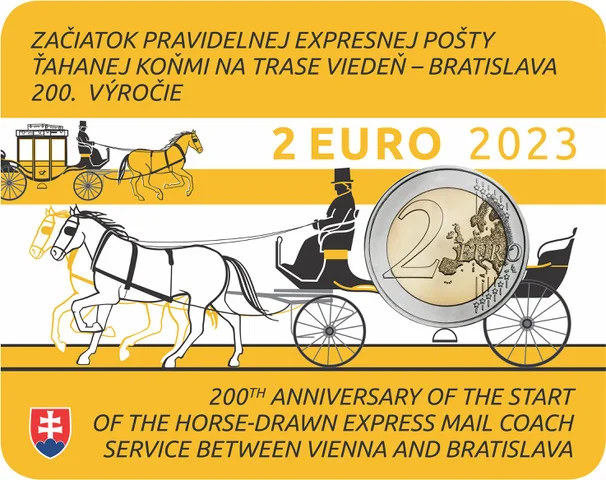 ©Image credit: Mincovňa Kremnica
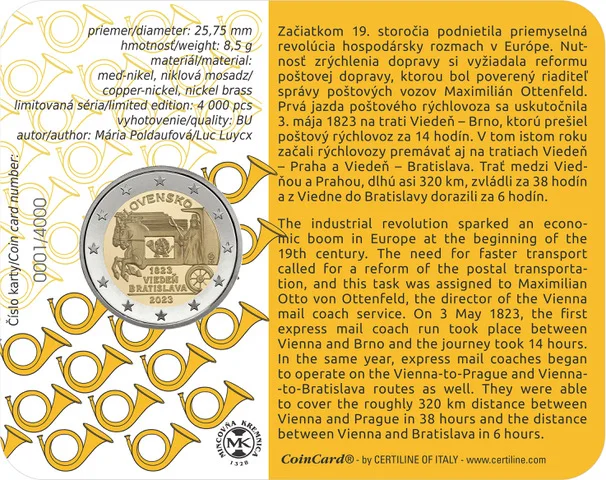 ©Image credit: Mincovňa Kremnica
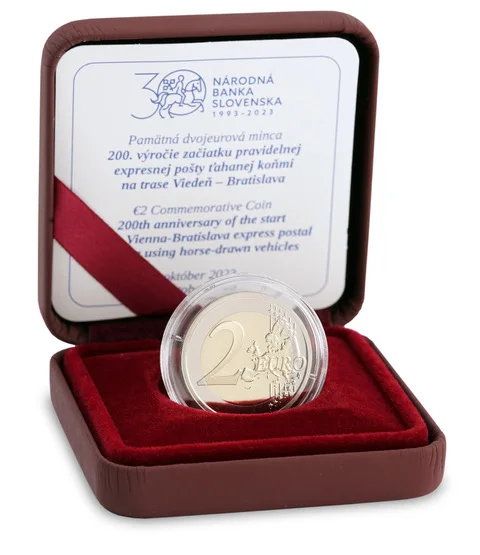 ©Image credit: Mincovňa Kremnica
Technical data
| Face value | 2 euro |
|---|---|
| Material | Bimetallic – outer ring: cupronickel; centre: three layers (nickel-brass / nickel / nickel-brass) |
| Weight | 8.5 g |
| Diameter | 25.75 mm |
| Thickness | 2.20 mm |
More 2-euro coins from Slovakia
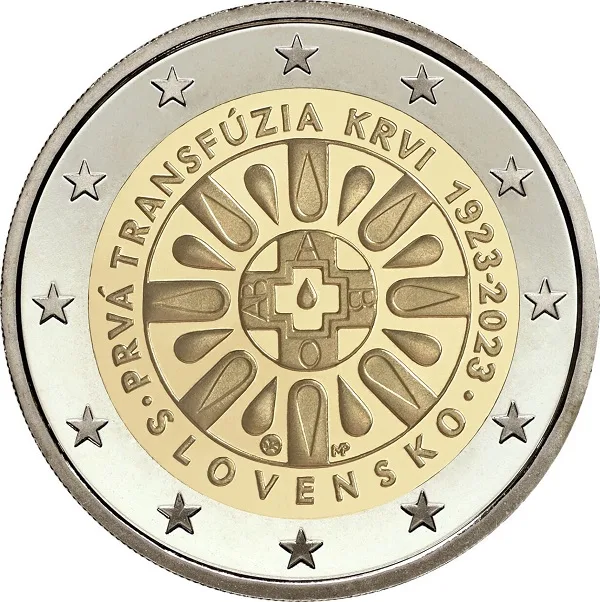
100 Years of the First Blood Transfusion
Commemorative coin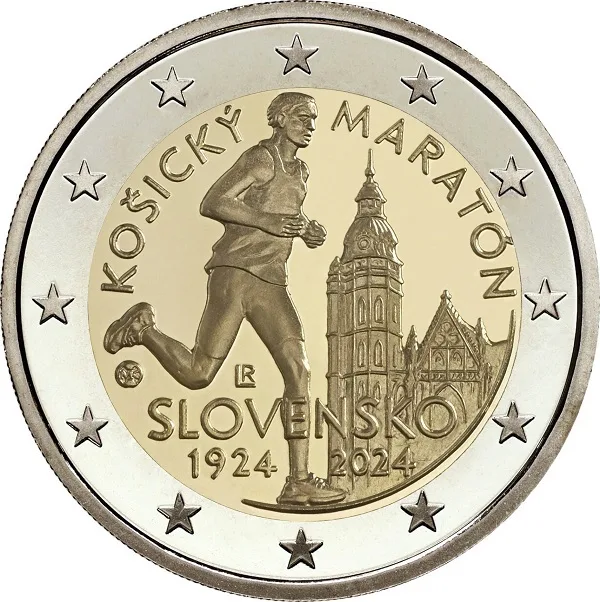
100 Years of the International Marathon in Košice
Commemorative coin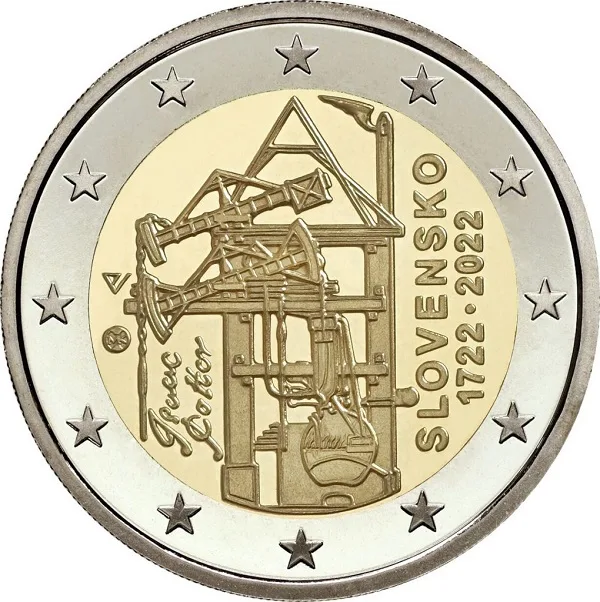
300 Years Since the Construction of the First Atmospheric Steam Engine
Commemorative coin
35 Years of the Erasmus Programme
Commemorative coin