Transhumance – Intangible Cultural Heritage
 + Add to collection In collection ★ Wanted
 At a glance
| Country | Andorra |
|---|---|
| Year | 2026 |
| Issue date | November 2026 |
| Coin type | Commemorative coin |
| Mintage | 60,000 |
| Catalogue number | AD-26 G2 |
| Rarity | €€€€€ what does this mean? |
| Edge lettering |  |
Coin description
Transhumance – Intangible Cultural Heritage
Further information on the topic
Transhumance is a form of pastoralism in which herders move their livestock with the seasons between valley and high mountain pastures, or over longer distances. In Andorra, livestock farming and agriculture were the main economic activity for centuries. In summer, sheep, cattle and horses were taken up to the high pastures of the Pyrenees, while in winter many herds moved down to the milder plains of France and Spain.
This practice has shaped the Principality's landscape to this day: dry-stone walls, droving routes, shepherds' huts and the typical bordes – traditional barns and stables built of natural stone – bear witness to the long history of pastoral farming. Customs such as the blessing of the animals before they are driven up to the summer pastures are part of it too. Grazing also helps to keep mountain meadows open, protect biodiversity and reduce the risk of forest fires.
At the end of 2023, transhumance was inscribed on UNESCO's Representative List of the Intangible Cultural Heritage of Humanity as part of a joint nomination by several European countries, including Andorra. With its 2026 2-euro commemorative coin, Andorra puts the spotlight on this living heritage, which continues to shape the identity of the country and its mountain communities.
Technical data
| Face value | 2 euro |
|---|---|
| Material | Bimetallic – outer ring: cupronickel; centre: three layers (nickel-brass / nickel / nickel-brass) |
| Weight | 8.5 g |
| Diameter | 25.75 mm |
| Thickness | 2.20 mm |
More 2-euro coins from Andorra
50th Anniversary of the New Sanctuary of Meritxell
Commemorative coin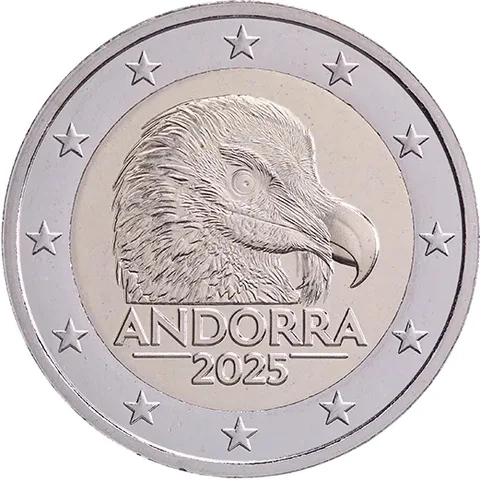
Bearded Vulture
Commemorative coin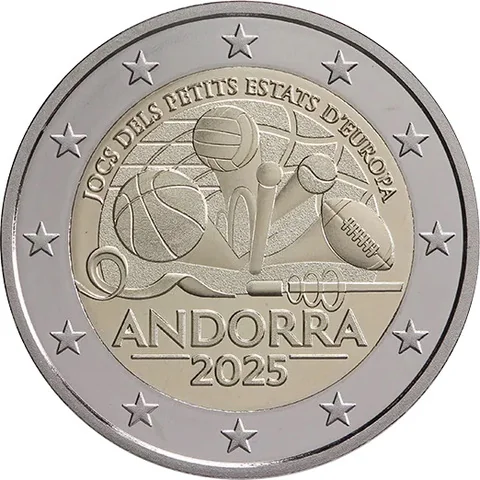
Games of the Small States of Europe
Commemorative coin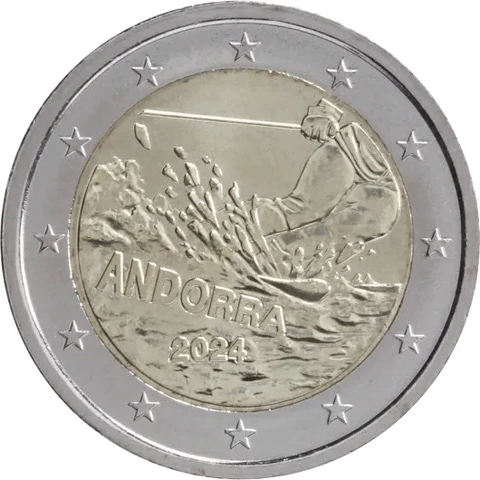
100 Years of Skiing in Andorra
Commemorative coin