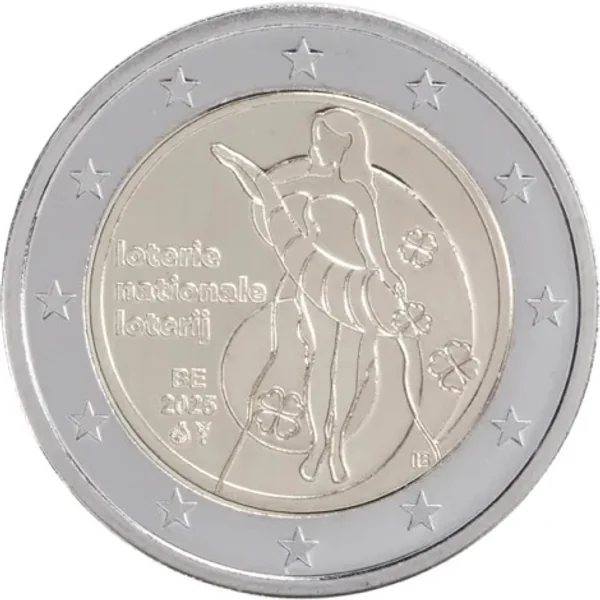
90 Years of the National Lottery
 ©Image credit: Numismatische Sammlung der Deutschen Bundesbank + Add to collection In collection ★ Wanted
 At a glance
| Country | Belgium |
|---|---|
| Year | 2025 |
| Issue date | 23 January 2025 |
| Coin type | Commemorative coin |
| Mintage | 1.154.000 (150.000 / 4.000) |
| Catalogue number | BE-25 G1 |
| Designer | Iris Bruijns |
| Rarity | €€€€€ what does this mean? |
| Edge lettering |  |
| Market value (approx.) | 13 € · guide price, uncirculated Unlock · for members |
Coin description
The National Lottery's logo — Lady Fortuna with a cornucopia and four-leaf clovers. Along the left edge, the occasion 'loterie nationale loterij', with the country code 'BE' and the year '2025' below. The mintmarks of the Koninklijke Nederlandse Munt and the current Belgian mint master Giovanni Van de Velde, together with the initials 'IB' of designer Iris Bruijns, complete the design.
Further information on the topic
The Belgian National Lottery is among the oldest state lotteries in Europe. It was founded in 1934 by royal decree, initially with the aim of securing state revenue while channeling proceeds toward social purposes. From the very beginning, Fortuna, the Roman goddess of chance and luck, was the lottery's defining symbol — the depiction of the lady with the cornucopia became a fixed emblem and has accompanied the Belgian lottery ever since. Over the decades, the National Lottery developed into Belgium's central, state-controlled gaming authority, operating under the bilingual name Loterie Nationale – Nationale Loterij to serve both the French- and Dutch-speaking populations of the country. It is organized as a public institution and is overseen by the Ministry of the Economy.
Today, the Nationale Loterij is one of the few lottery operators worldwide to have remained entirely state-owned, never having undergone privatization. A significant portion of its revenue funds Belgian sport, culture, and nonprofit projects — a model that has remained true to its founding purpose. In 2025, Belgium marks the 90th anniversary of this institution with the issue of a 2-euro commemorative coin, recalling the long history of one of the country's best-known national institutions.
Technical data
| Face value | 2 euro |
|---|---|
| Material | Bimetallic – outer ring: cupronickel; centre: three layers (nickel-brass / nickel / nickel-brass) |
| Weight | 8.5 g |
| Diameter | 25.75 mm |
| Thickness | 2.20 mm |
More 2-euro coins from Belgium
Spa-Francorchamps Racing Circuit
Commemorative coin
EU Council Presidency Belgium 2024
Commemorative coin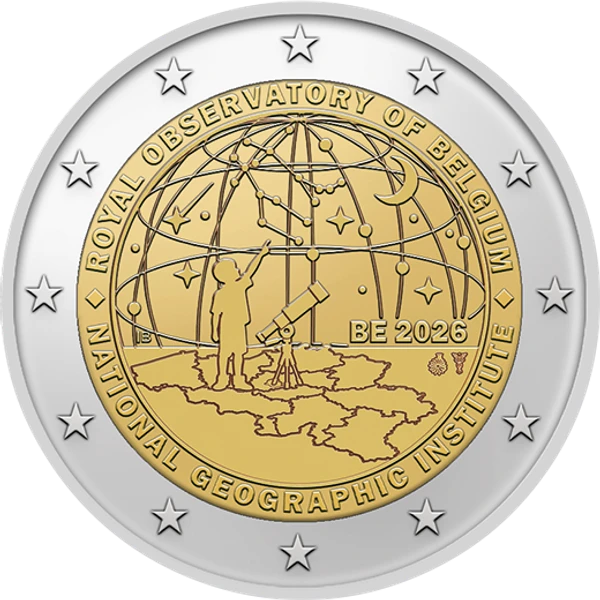
200 Years of the Royal Observatory of Belgium and 50 Years of the National Geographic Institute
Commemorative coin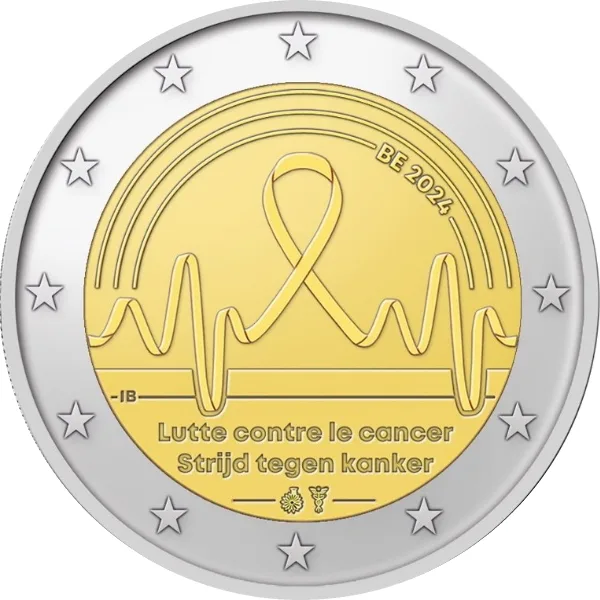
The Fight Against Cancer
Commemorative coin