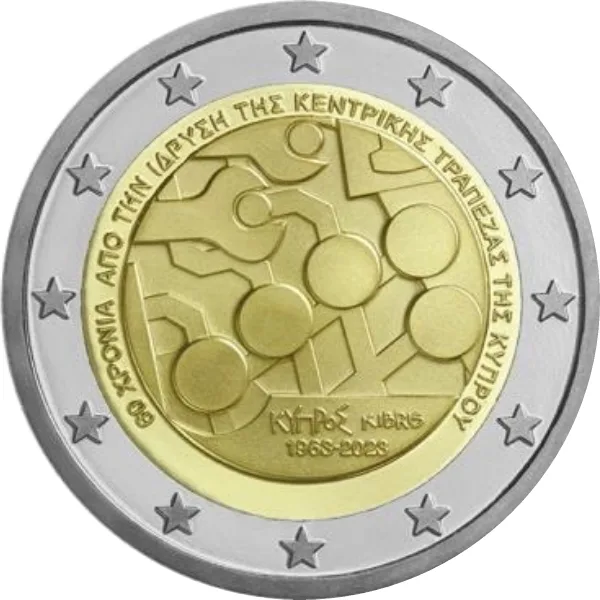
60 Years of the Founding of the Central Bank of Cyprus
 + Add to collection In collection ★ Wanted
 At a glance
| Country | Cyprus |
|---|---|
| Year | 2023 |
| Issue date | 2 October 2023 |
| Coin type | Commemorative coin |
| Mintage | 412.000 (9.000 / 3.000) |
| Catalogue number | CY-23 G1 |
| Designer | Georgios Stamatopoulos |
| Rarity | €€€€€ what does this mean? |
| Edge lettering |  |
| Market value (approx.) | 4 € · guide price, uncirculated Unlock · for members |
Coin description
Tools on a microchip, symbolising the economic stability of the modern industrial era as safeguarded by the Central Bank of Cyprus, which marks the 60th anniversary of its founding. The issuing state 'ΚΥΠΡΟΣ – CYPRUS', the years '1963 – 2023', and the commemorative inscription '60 ΧΡΟΝΙΑ ΑΠΟ ΤΗΝ ΙΔΡΥΣΗ ΚΕΝΤΡΙΚΗΣ ΤΡΑΠΕΖΑΣ ΤΗΣ ΚΥΠΡΟΥ' are arranged around the outer edge of the design.
Further information on the topic
When Cyprus founded its central bank in 1963, the Republic was barely three years old. The country had gained independence from Britain in 1960 and faced the task of building an independent monetary and financial system. From the outset, the Central Bank of Cyprus took on the classic core functions: issuing the Cypriot pound, managing currency reserves, and supervising the banking sector. In a country shaped in the following decades by the 1974 division conflict and profound economic upheaval, the central bank played a stabilising role that went far beyond the merely technical.
With Cyprus's accession to the European Union in 2004 and the introduction of the euro as legal tender on 1 January 2008, the central bank's remit changed fundamentally. It became part of the Eurosystem and has since worked in tandem with the European Central Bank — responsible, among other things, for monetary policy, financial stability, and banking supervision at the national level. The financial crisis of 2012/13, which hit Cyprus particularly hard and required an international bailout, showed just how important a functioning central banking system is in times of crisis. In 2023 the Central Bank of Cyprus marks its 60th anniversary — six decades in which the institution evolved from a young post-colonial body into an integrated part of the European monetary architecture.
Technical data
| Face value | 2 euro |
|---|---|
| Material | Bimetallic – outer ring: cupronickel; centre: three layers (nickel-brass / nickel / nickel-brass) |
| Weight | 8.5 g |
| Diameter | 25.75 mm |
| Thickness | 2.20 mm |
More 2-euro coins from Cyprus
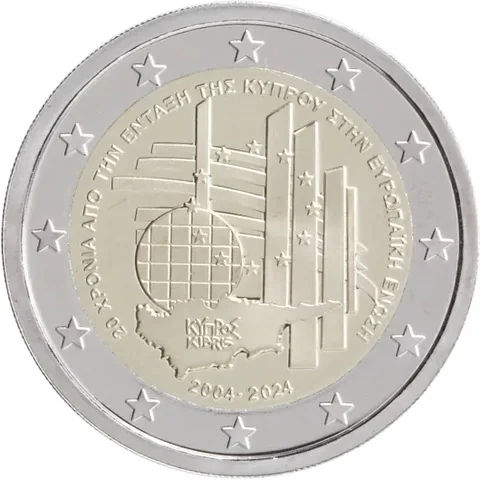
20 Years of Cyprus's EU Accession
Commemorative coin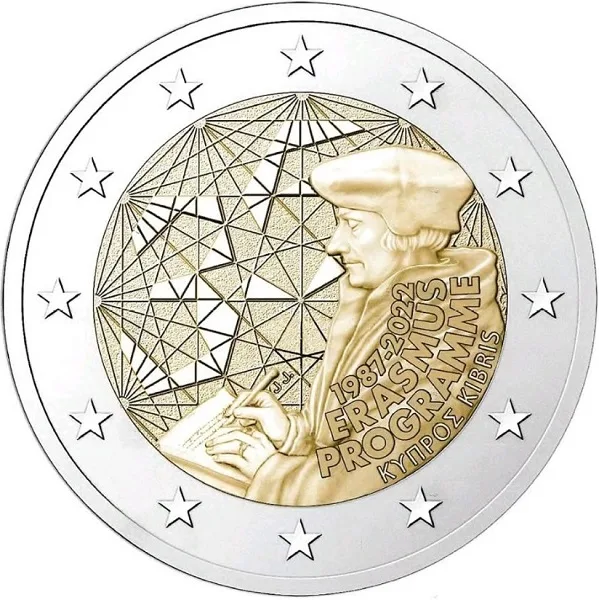
35 Years of the Erasmus Programme
Commemorative coin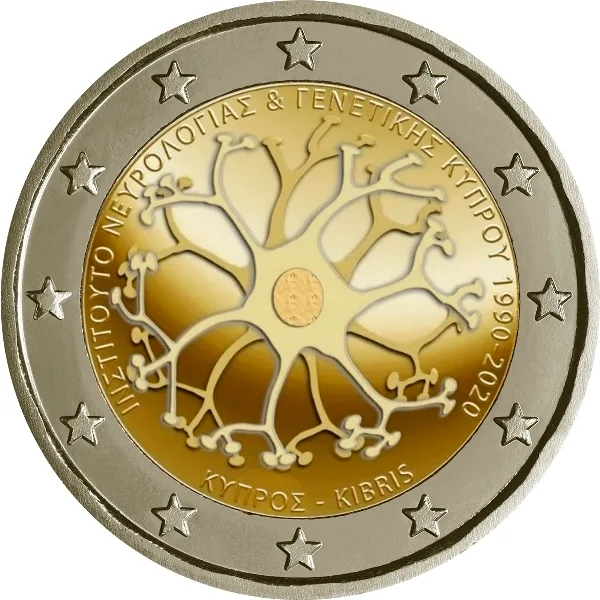
30 Years of the Cyprus Institute of Neurology and Genetics
Commemorative coin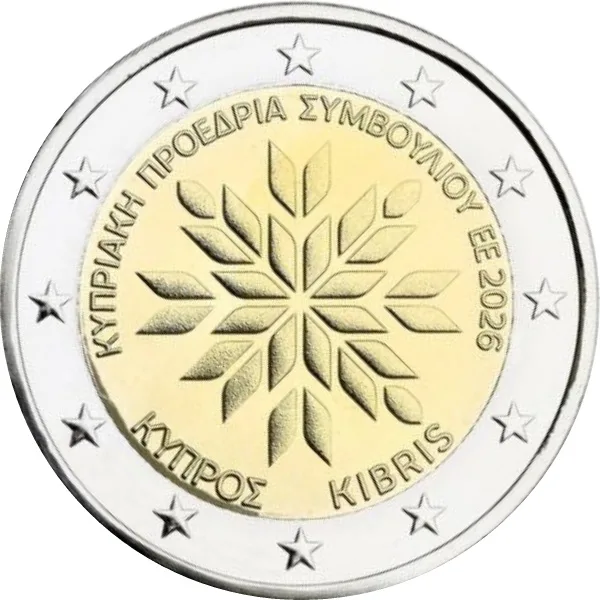
EU Council Presidency Cyprus 2026
Commemorative coin