
Europe as a continent – the common side from 2007
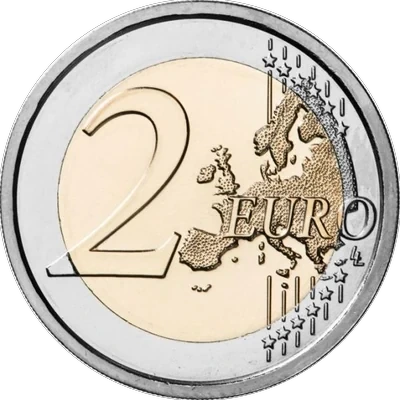
Profile
| In use | 2007 – present |
|---|---|
| Designer | Luc Luycx (LL) |
| Reason | EU enlargement from 2004 (the old 15-state map no longer fit) |
| Face value | 2 euro |
| Weight | 8.5 g |
| Diameter | 25.75 mm |
| Thickness | 2.2 mm |
| Material | Outer ring copper-nickel · three-layer centre (nickel brass–nickel–nickel brass) |
| Edge | Finely milled, with incuse lettering that varies from country to country |
Background
In 2007 the common side of the euro coins was redesigned. Instead of the fifteen EU member states shown until then, the new design depicts all of Europe as a geographical continent – without internal borders. The reason was the EU enlargement from 2004: the old map could no longer sensibly represent the new member states. As with the first version, the designer is the Belgian engraver Luc Luycx (signature "LL").
The common side bears the numeral "2", the word "EURO" and the twelve stars of the European flag. It is identical for all 2-euro coins; only the national obverse and the edge lettering differ from country to country.
Countries that switched first, in 2007
The switch was staggered: these countries began in 2007, the remaining euro countries followed in 2008 – by then all new coins carried the new map. Portugal's 2-euro commemoratives already showed the new map of Europe in 2007, while the Portuguese circulation coins initially still carried the old design.