200th Birthday of Ľudovít Štúr
 + Add to collection In collection ★ Wanted
 At a glance
| Country | Slovakia |
|---|---|
| Year | 2015 |
| Issue date | 23 October 2015 |
| Coin type | Commemorative coin |
| Mintage | 1.000.000 (9.500 / – ) |
| Catalogue number | SK-15 G2 |
| Designer | Ivan Řehák |
| Rarity | €€€€€ what does this mean? |
| Edge lettering |  |
| Market value (approx.) | 3,5 € · guide price, uncirculated Unlock · for members |
Coin description
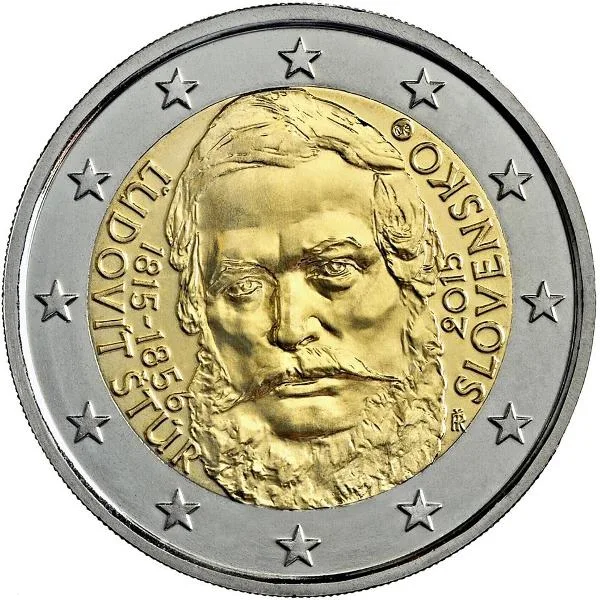
A portrait of Ľudovít Štúr; the inscription 'ĽUDOVÍT ŠTÚR' and his birth and death years '1815–1856'; the issuing state 'SLOVENSKO', the year '2015', the initials of designer Ivan Řehák, and the mintmark.
Further information on the topic
As the first codifier of the modern Slovak written language, Ľudovít Štúr laid the foundation for an independent Slovak literary and cultural language in 1843. Until then, Slovak intellectuals had written predominantly in Czech or Latin; Štúr developed a standardized orthography and grammar based on the central Slovak dialect, which he set out systematically in his 1846 work "Náuka reči slovenskej." This linguistic-policy decision was not purely a matter of linguistics but also a national statement: language as the foundation of a people striving for recognition within the Kingdom of Hungary. Štúr was born in 1815 in Uhrovec, in what is now western Slovakia, and worked as a teacher, publicist, and deputy in the Hungarian Diet, where he championed the rights of the Slovak population.
Štúr's political engagement went far beyond the language question. During the revolution of 1848/49, he organized the Slovak uprising against Hungarian rule together with Jozef Miloslav Hurban and Michal Miloslav Hodža, demanding recognition of the Slovaks as an independent nation within the Habsburg monarchy. His writings, including the 1851 work "Slavdom and the World of the Future," reflected a pan-Slavist outlook with which he invoked the cultural cohesion of the Slavic peoples. Štúr died in 1856 in Modra under unclear circumstances — probably from the effects of a hunting accident. Slovakia honored him in 2015 with a 2-euro commemorative coin marking his 200th birthday; his work remains a reference point for Slovak national consciousness to this day.
Technical data
| Face value | 2 euro |
|---|---|
| Material | Bimetallic – outer ring: cupronickel; centre: three layers (nickel-brass / nickel / nickel-brass) |
| Weight | 8.5 g |
| Diameter | 25.75 mm |
| Thickness | 2.20 mm |
More 2-euro coins from Slovakia
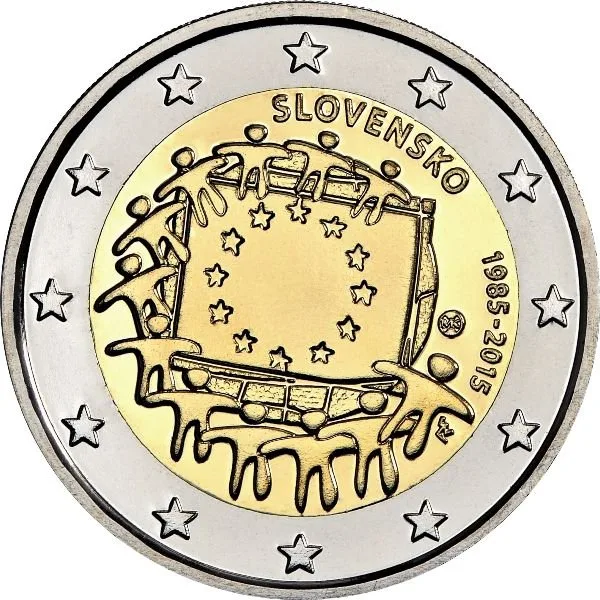
30 Years of the European Flag
Commemorative coin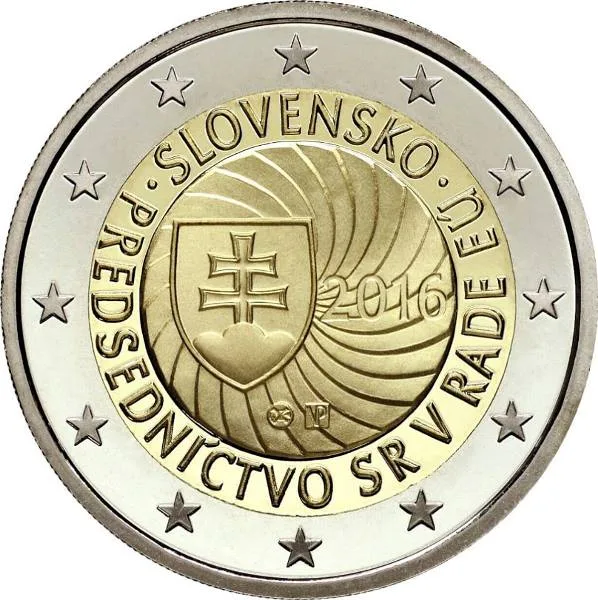
EU Council Presidency Slovakia 2016
Commemorative coin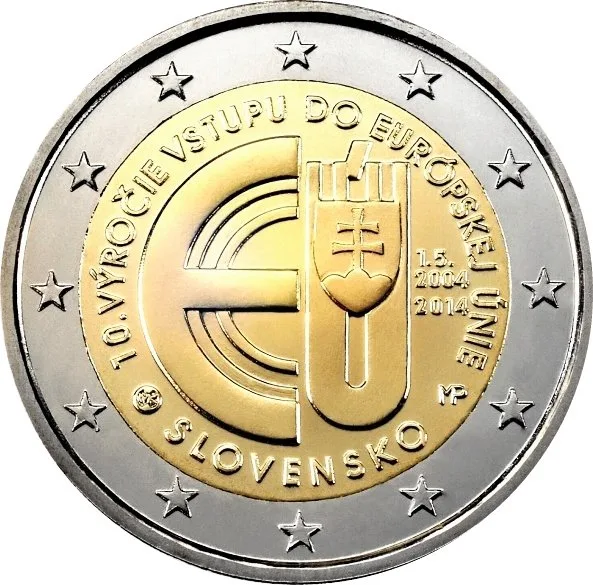
10 Years of Slovakia's EU Accession
Commemorative coin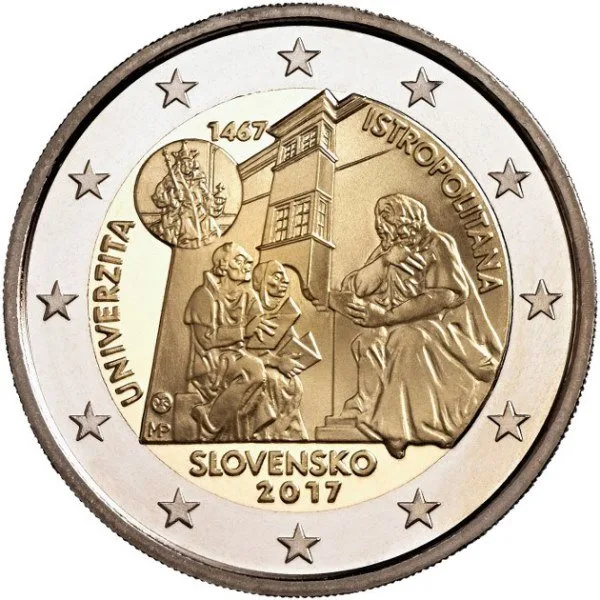
550th Anniversary of the Founding of the Universitas Istropolitana
Commemorative coin