National Animal: Wolf
 + Add to collection In collection ★ Wanted
 At a glance
| Country | Estonia |
|---|---|
| Year | 2021 |
| Issue date | 20 October 2021 |
| Coin type | Commemorative coin |
| Mintage | 1.000.000 (12.000 / – ) |
| Catalogue number | EE-21 G2 |
| Designer | Maria Meos |
| Rarity | €€€€€ what does this mean? |
| Edge lettering |  |
| Market value (approx.) | 3,5 € · guide price, uncirculated Unlock · for members |
Coin description
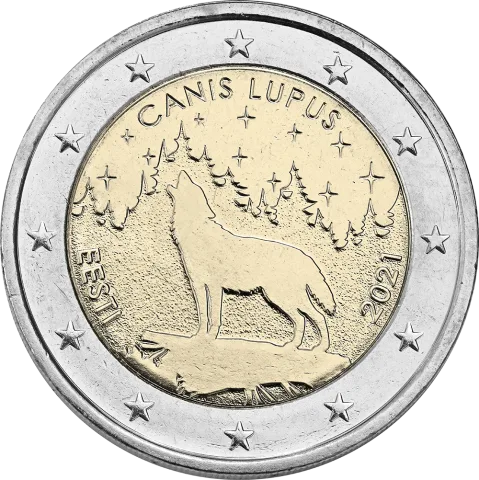
A wolf — Estonia's national animal — howling atop a rock. As wolves are most at home in forests, the background shows a spruce wood characteristic of the Estonian landscape, with a night sky above. The Latin inscription "CANIS LUPUS" appears above the design; along the lower edge the issuing country "EESTI" on the left and the year "2021" on the right.
Further information on the topic
The wolf is considered a keystone species of ecological systems across much of Europe: as an apex predator, it regulates wildlife populations, influences the behaviour of ungulates, and thereby indirectly contributes to the structural diversity of forests. In Estonia, Canis lupus has been present for centuries — the country, with its extensive boreal coniferous forests and sparsely populated landscapes, is one of the few regions in Central and Northern Europe where the wolf was never completely wiped out. Estonia's wolf population fluctuated considerably during the 20th century but recovered and is today estimated at several hundred animals. The forests, which cover around half of the country's territory, offer the wolf both refuge and hunting ground.
In Estonian cultural history, the wolf carries an ambivalent meaning: it appears in folk tales as a threatening yet respect-commanding figure, and the relationship between humans and wolves has been shaped by conflicts of use since the agrarian era. At the same time, the choice of the wolf as the national animal — officially adopted in 1994 — reflects an identification with wilderness, endurance and independence, qualities that also play a role in Estonia's national self-image. Estonia honoured Canis lupus as its national animal in 2021 with a 2-euro commemorative coin, bringing into public awareness an animal that, while rarely seen, is deeply anchored in the country's cultural and ecological memory.
Official issues of the coin
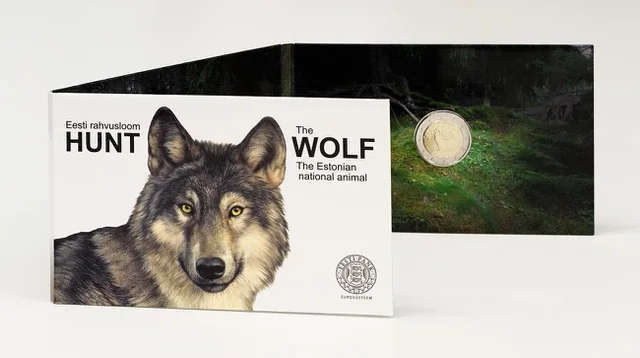 ©Image credit: Eesti Pank
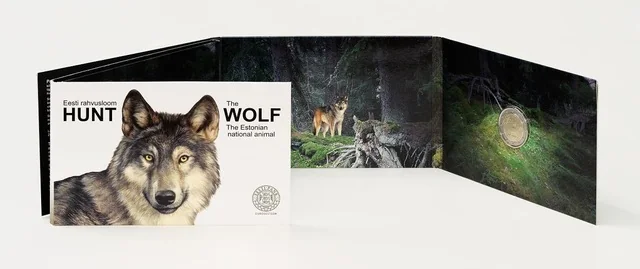 ©Image credit: Eesti Pank
Technical data
| Face value | 2 euro |
|---|---|
| Material | Bimetallic – outer ring: cupronickel; centre: three layers (nickel-brass / nickel / nickel-brass) |
| Weight | 8.5 g |
| Diameter | 25.75 mm |
| Thickness | 2.20 mm |
More 2-euro coins from Estonia
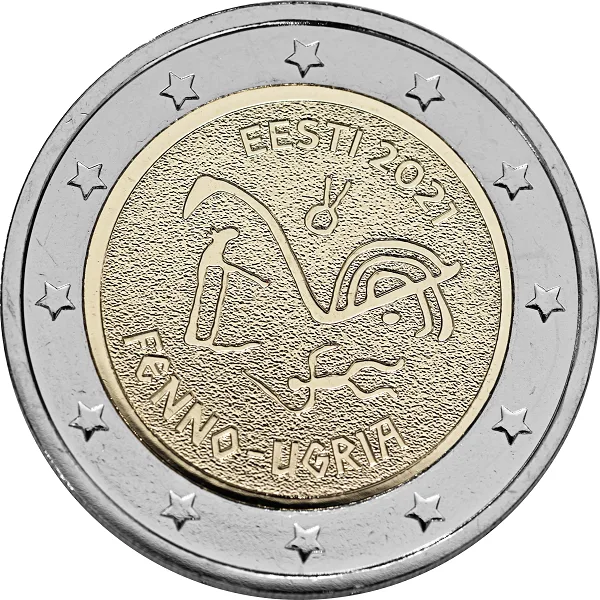
Finno-Ugric Peoples
Commemorative coin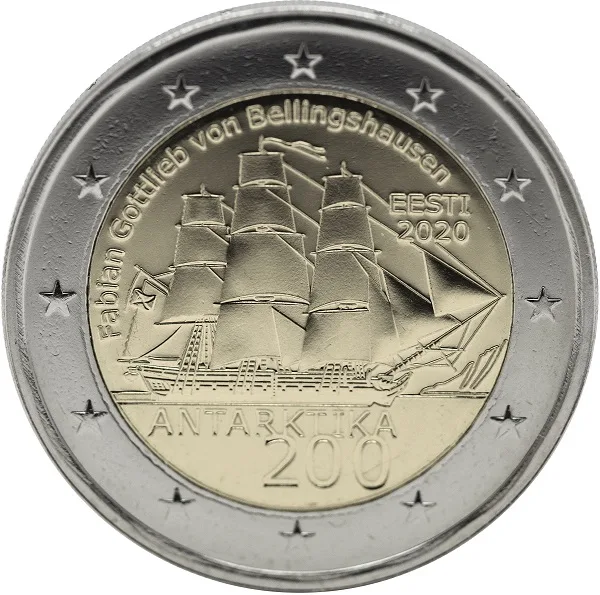
200 Years of the Discovery of Antarctica
Commemorative coin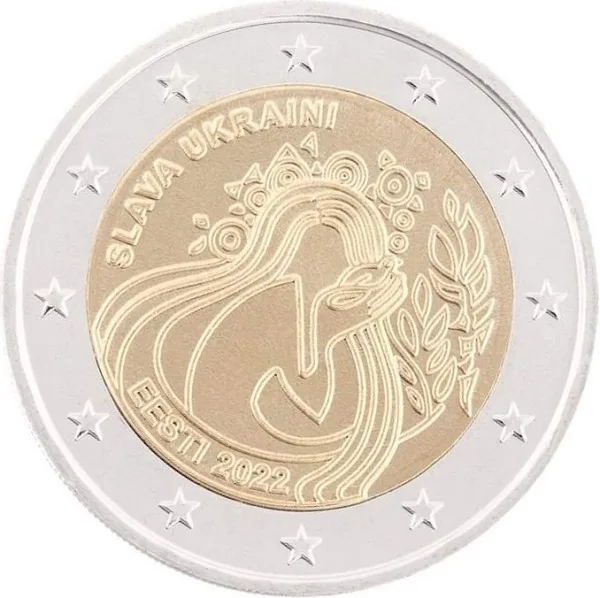
Ukraine and Freedom – Slava Ukraini
Commemorative coin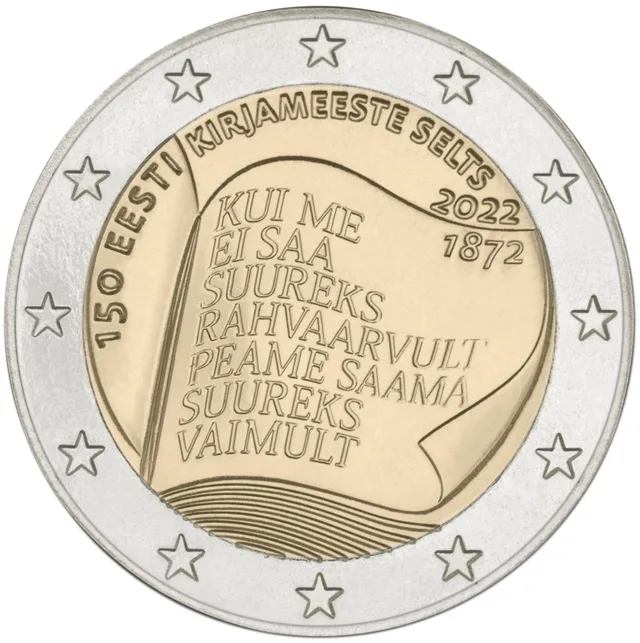
150 Years of the Founding of the Estonian Literary Society
Commemorative coin