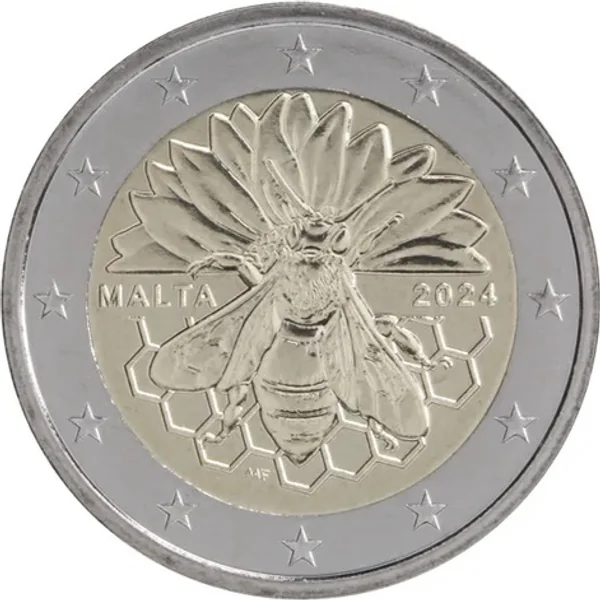
Native Species – The Maltese Honey Bee
 ©Image credit: Numismatische Sammlung der Deutschen Bundesbank + Add to collection In collection ★ Wanted
 At a glance
| Country | Malta |
|---|---|
| Year | 2024 |
| Issue date | 26 August 2024 |
| Coin type | Commemorative coin |
| Mintage | 80.000 (47.500 / – ) |
| Catalogue number | MT-24 G2 |
| Designer | Maria Anna Frisone |
| Rarity | €€€€€ what does this mean? |
| Edge lettering |  |
| Market value (approx.) | 28 € · guide price, uncirculated Unlock · for members |
Coin description
At the centre: a Maltese honey bee (Apis mellifera ruttneri) against a floral background in the upper half of the design and honeycomb cells in the lower half. To the left: the issuing state "MALTA"; to the right: the year "2024". The designer Maria Anna Frisone's initials "MAF" appear within the honeycomb at the lower left.
Further information on the topic
Apis mellifera ruttneri is a subspecies of the western honeybee found exclusively in Malta. Through millennia of geographic isolation on the Maltese archipelago, it has developed genetically distinct traits from related European populations: smaller in body size and adapted to the Mediterranean dry climate and the specific vegetation of the islands. Beekeeping has a long tradition in Malta — even the island's ancient name, "Melite", is linked by some linguists to the Greek word for honey, although the etymology remains disputed. The Maltese honeybee is considered gentle and resilient, but is increasingly threatened by introduced subspecies and hybridisation. Maltese authorities and beekeeping associations have run targeted breeding programmes for years to preserve the gene pool of Apis mellifera ruttneri.
As part of Malta's Native Species series, the 2024 issue puts the spotlight on an animal that plays a central role in the island's ecological balance. The pollination performed by the native bee is indispensable to Maltese agriculture and wild flora — on a small island with limited biodiversity, the loss of individual key species weighs especially heavily. Protecting Apis mellifera ruttneri is therefore not a niche project but part of a broader conservation strategy that Malta, as an EU member, also pursues within the framework of European biodiversity goals.
Technical data
| Face value | 2 euro |
|---|---|
| Material | Bimetallic – outer ring: cupronickel; centre: three layers (nickel-brass / nickel / nickel-brass) |
| Weight | 8.5 g |
| Diameter | 25.75 mm |
| Thickness | 2.20 mm |
More 2-euro coins from Malta

Walled Cities – Ċittadella Gozo
Commemorative coin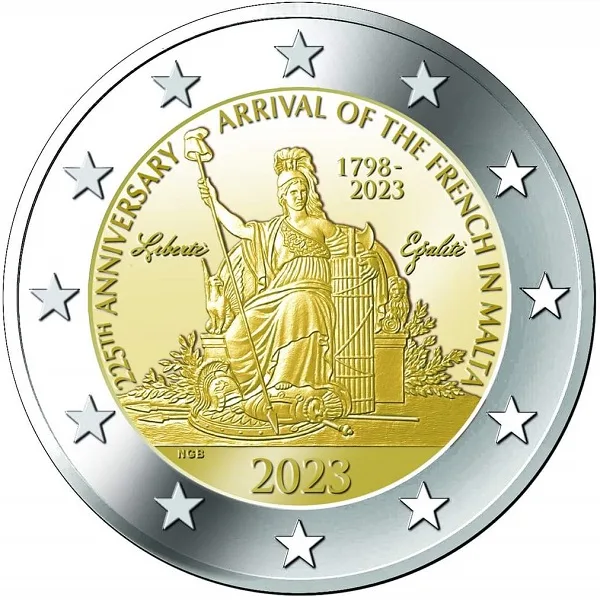
225th Anniversary of the Arrival of Napoleon Bonaparte and the French in Malta
Commemorative coin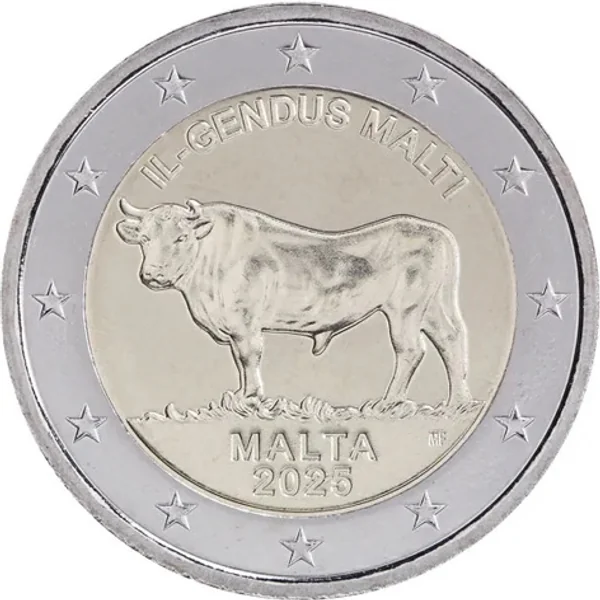
Native Species – The Maltese Ox
Commemorative coin
Walled Cities – Mdina
Commemorative coin