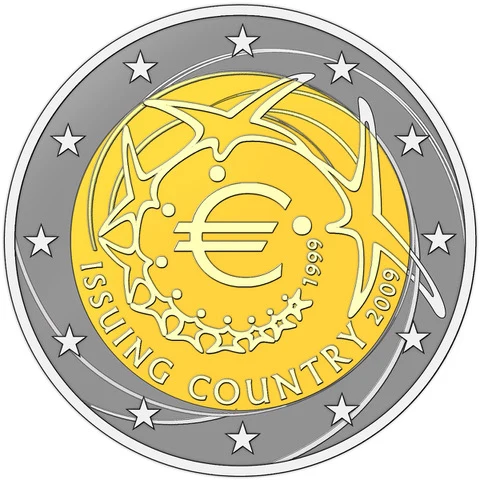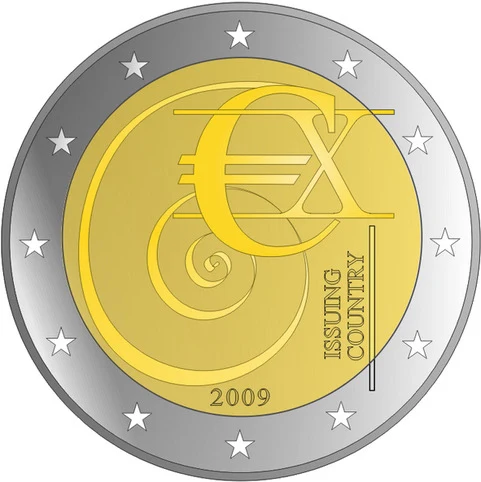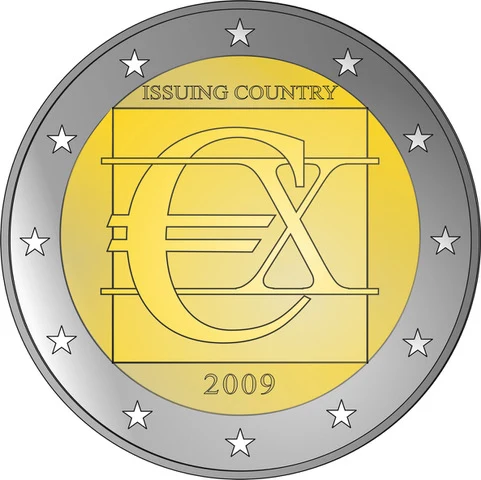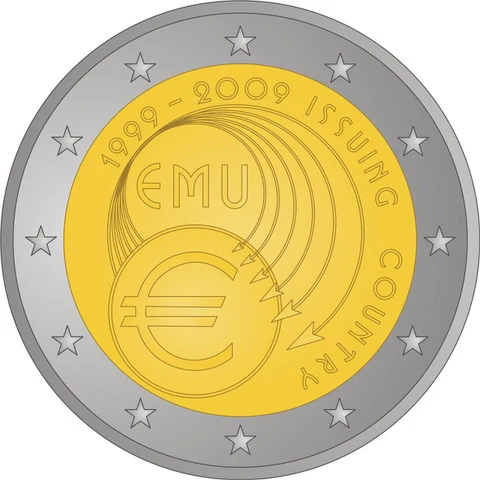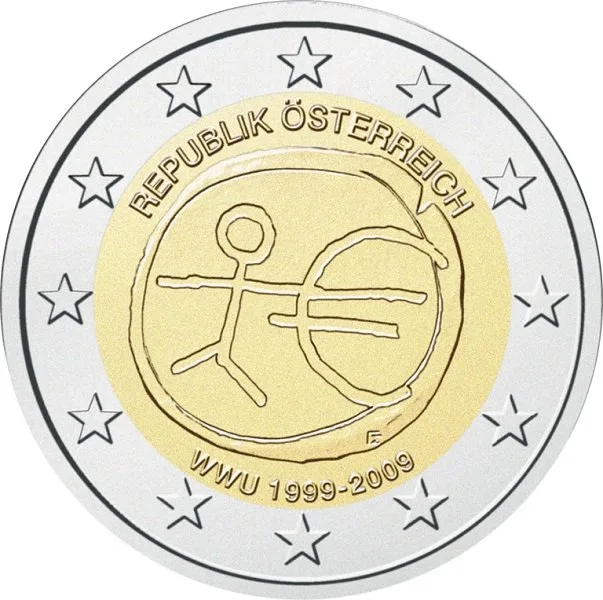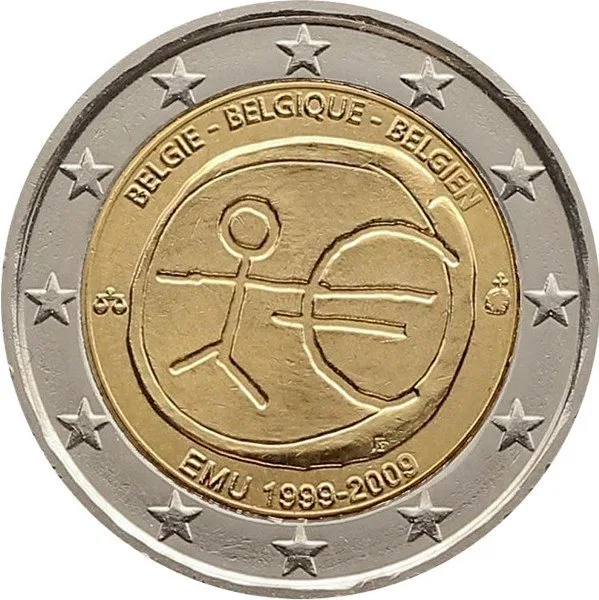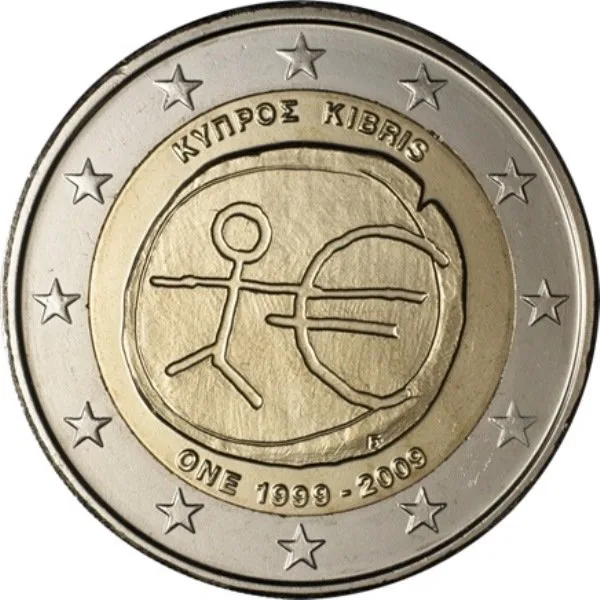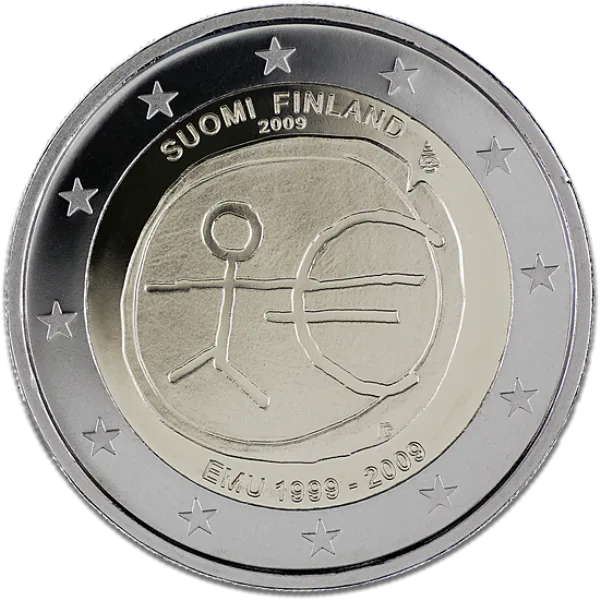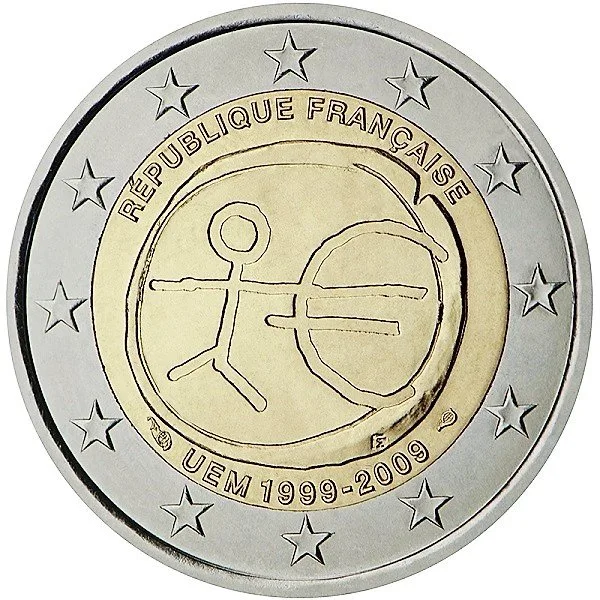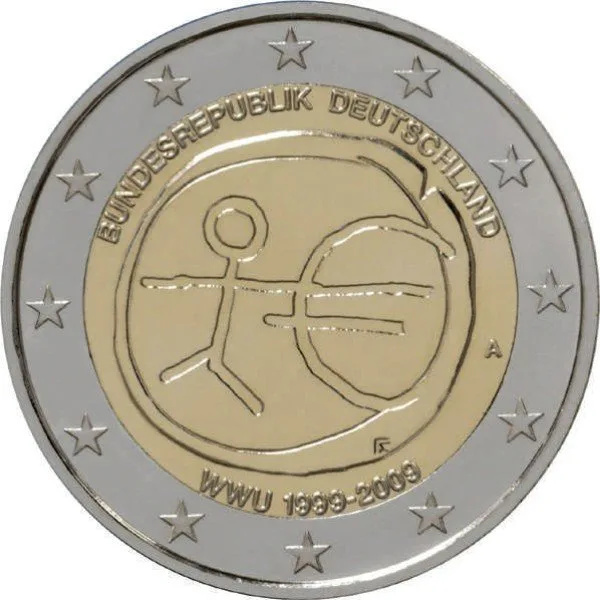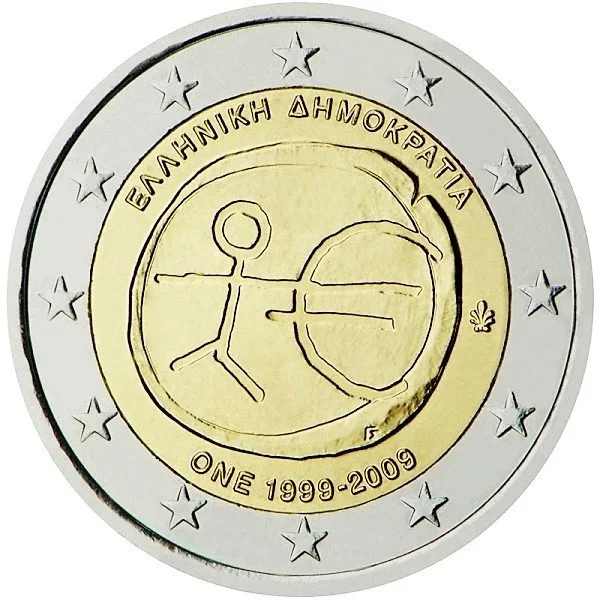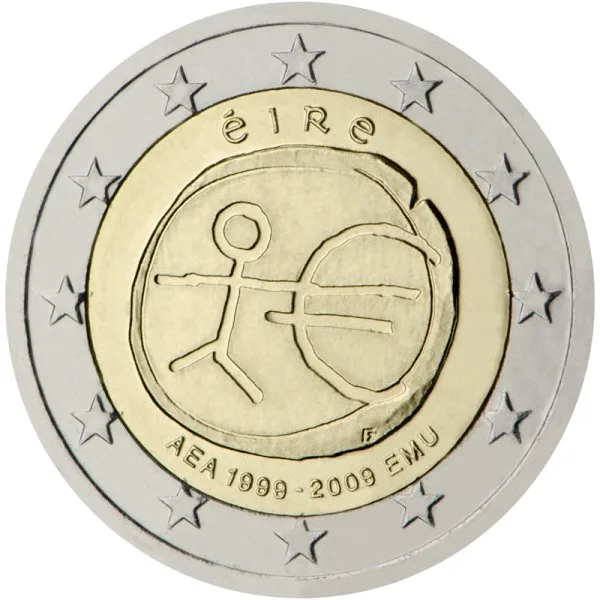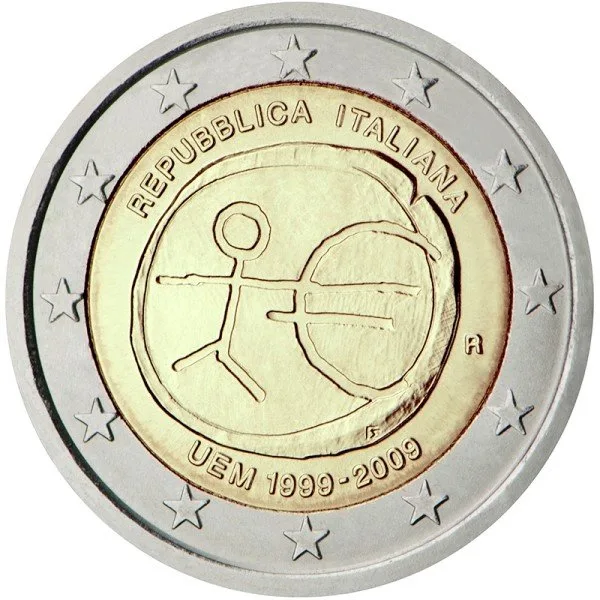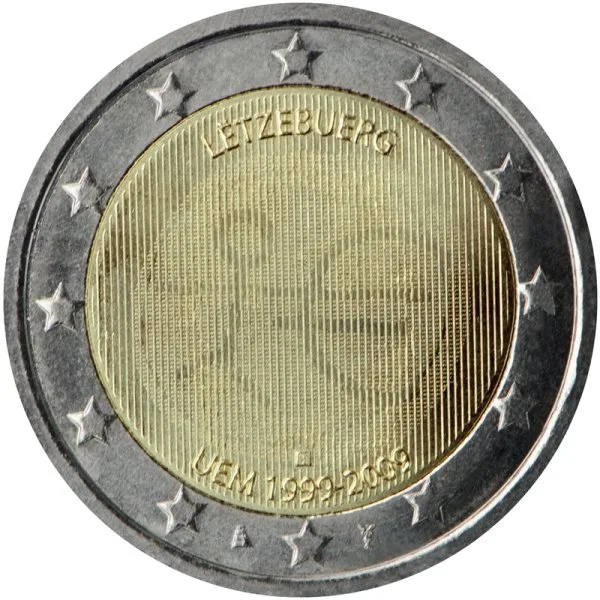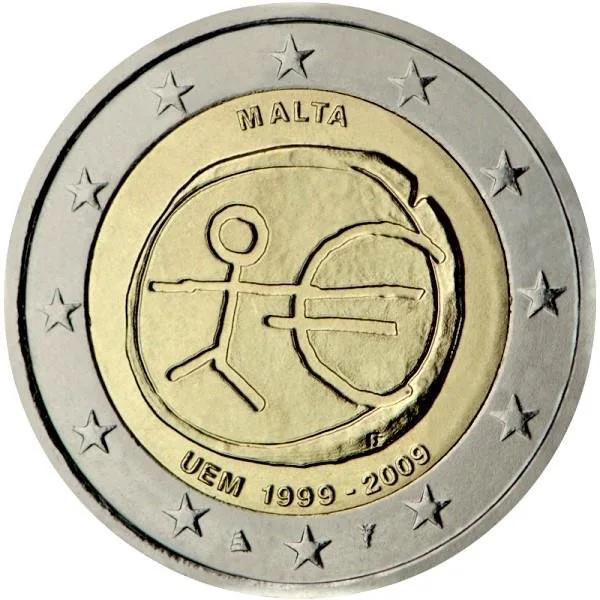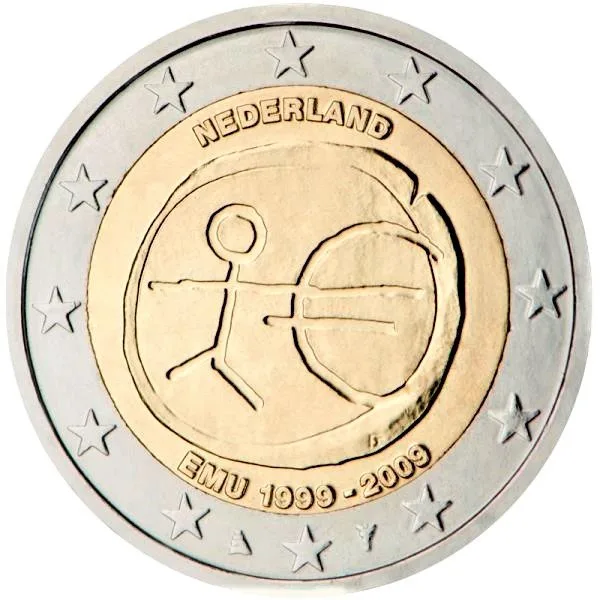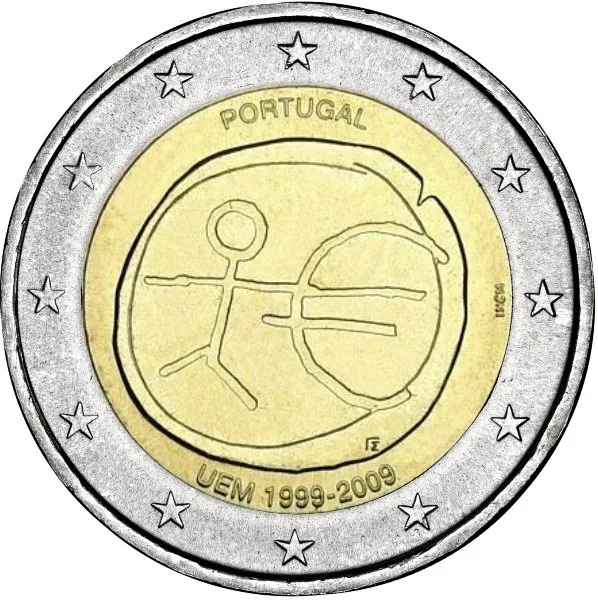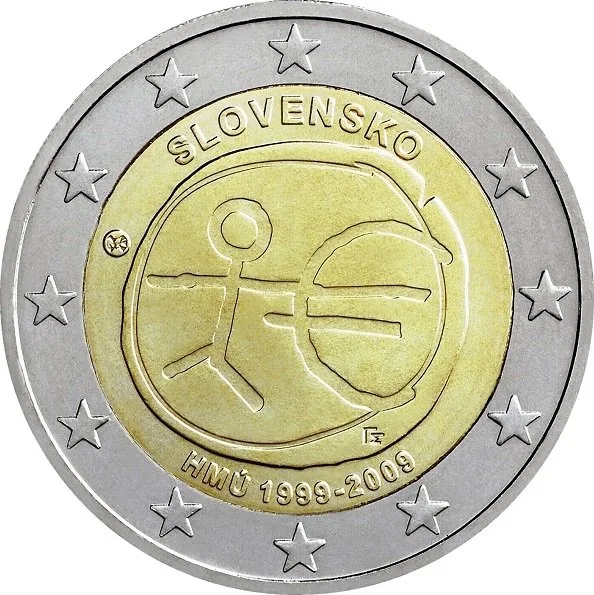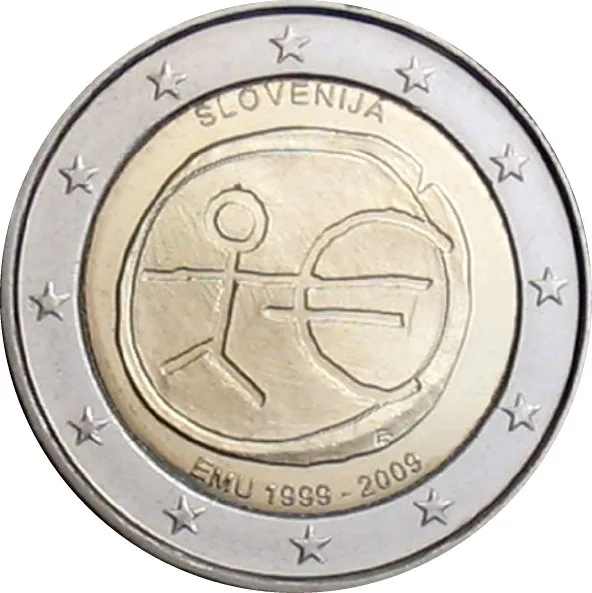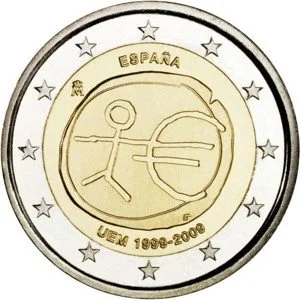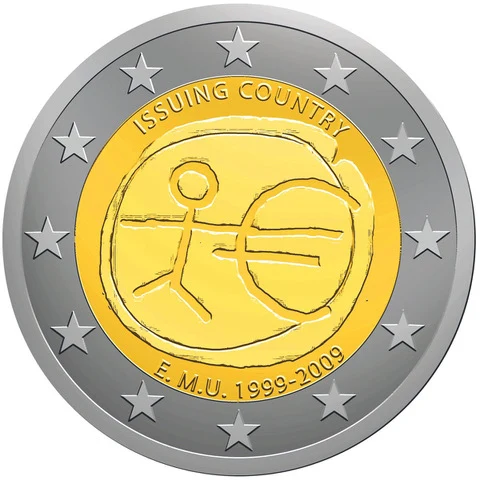
On 1 January 1999 the euro was officially introduced as book money and the European Economic and Monetary Union (EMU) was completed. Even though the banknotes and coins only entered physical circulation three years later, this date is regarded as the actual birth of the common European currency. The 10th anniversary of this milestone in financial history was celebrated in January 2009 with the second 2-euro joint issue of the eurozone.
To determine the design for this special strike, the European Commission decided on a first in 2008 and let the citizens of the European Union vote online on the coin motif. From five designs submitted by European mints, the public chose the design of the Greek sculptor George Stamatopoulos with a clear majority of 41.48 per cent. The deliberately primitive motif – a stick figure whose arm turns into the euro symbol – divided the collecting world, but quickly became an absolute classic. As this was once again a cross-border issue, the special rule applied in 2009 as well: all participating states were allowed to issue their own purely national 2-euro commemorative coin in addition to the joint coin.